The short answer
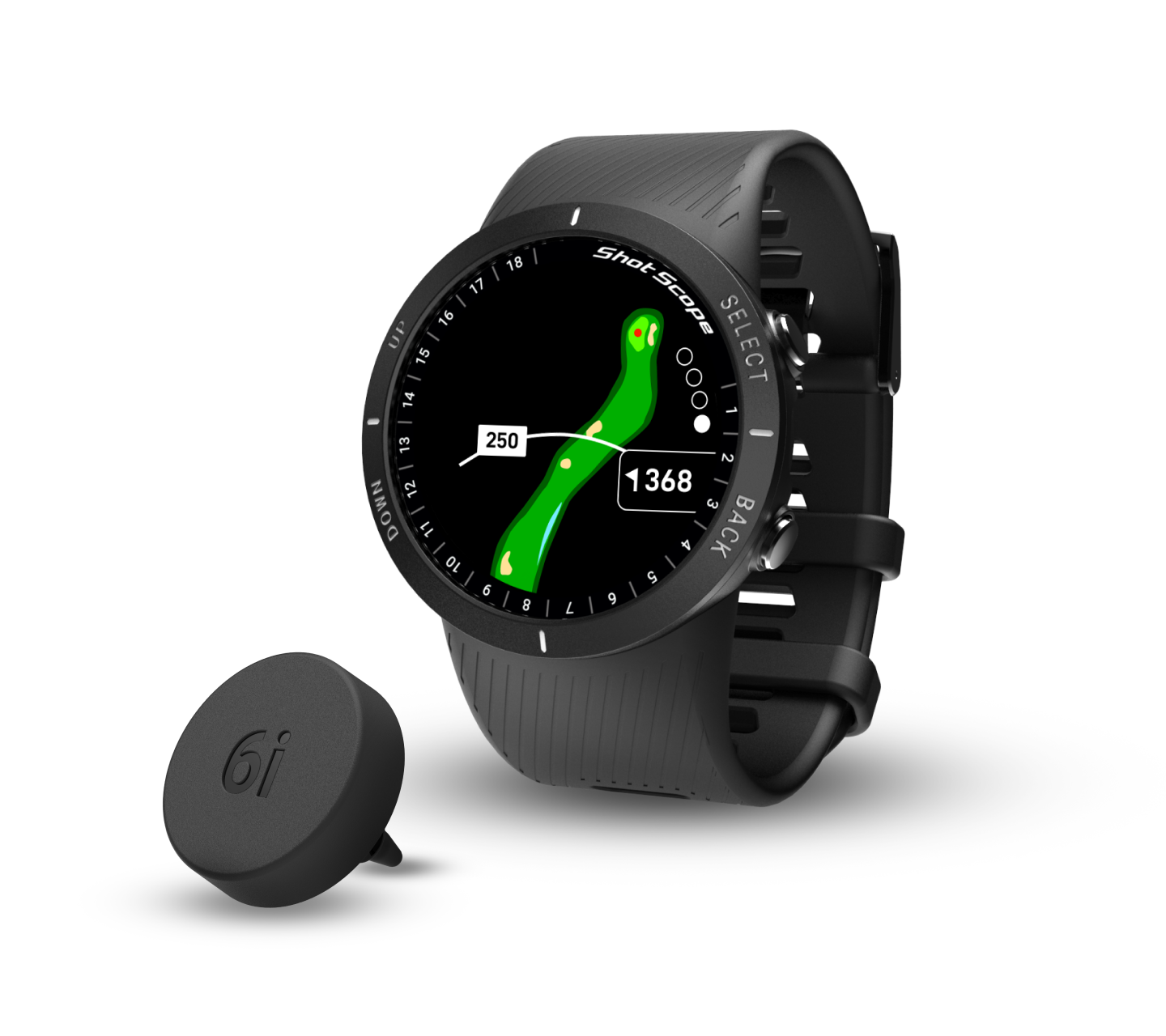
For most high handicappers, the Shot Scope V5 ($199.99) is the best pick: automatic shot tracking, free Strokes Gained, and 36,000 courses — no subscription. If slope matters more than tracking data, the Bushnell iON Elite ($189.99) is the budget slope pick. For slope plus tracking plus wind, the Voice Caddie T11 Pro ($279.99) covers everything with no subscription.
GearScout may earn a commission when you buy through links on this page. Prices, availability, and ratings can change, so confirm details with the retailer before purchasing.
Prices last verified June 2026.
High handicappers lose more strokes to approach distance control and short game patterns than anywhere else on the scorecard. A GPS watch that automatically records where every shot lands — and surfaces that data through strokes gained analysis — tells you exactly where your handicap bleeds. This guide is written for golfers with an 18+ handicap index who want a watch that actively helps them improve, not just count yardages.
Who this is for: High handicappers (18–36 handicap) who play at least 10–15 rounds per year and want measurable improvement feedback. If you play twice a year and just want yardages, any GPS watch will do. If you want to know why your handicap is stuck at 22, this guide is for you.
Quick Picks
| # | Watch | Price | Best for |
|---|---|---|---|
| 1 | Shot Scope V5 | $199.99 | Best overall: automatic shot tracking, Strokes Gained, no subscription |
| 2 | Bushnell iON Elite | $189.99 | Best budget slope GPS: slope-adjusted yardages, no tracking needed |
| 3 | Voice Caddie T11 Pro | $279.99 | Best all-in-one: OLED, slope, shot tracking, wind — no subscription |
| 4 | Garmin Approach S44 | $299.99 | Best Garmin mid-range: 42,000+ courses, ecosystem integration |
| 5 | Garmin Approach S50 | $399.99 | Best premium: AMOLED display, full Garmin Golf features |
Comparison Table
Prices last verified June 2026.
| Watch | Price | Shot Tracking | Slope | Courses | Subscription | Battery |
|---|---|---|---|---|---|---|
| Shot Scope V5 | $199.99 | ✓ Automatic | ✗ | 36,000 | None | ~14 hrs GPS |
| Bushnell iON Elite | $189.99 | ✗ | ✓ Built-in | 38,000+ | None | ~10 hrs GPS |
| Voice Caddie T11 Pro | $279.99 | ✓ Manual | ✓ V-A.I. 3.5 | 40,000+ | None | ~10 hrs GPS |
| Garmin Approach S44 | $299.99 | Manual log (free); stats w/sub | ✓ w/subscription | 42,000+ | Optional $9.99/mo | ~28 hrs GPS |
| Garmin Approach S50 | $399.99 | Manual log (free); stats w/sub | ✓ w/subscription | 42,000+ | Optional $9.99/mo | ~28 hrs GPS |
What We Checked
Our editorial team reviewed current manufacturer specifications, product descriptions, and pricing from official manufacturer and retailer pages — shotscope.com, bushnellgolf.com, voicecaddie.com, and garmin.com — all captured June 9, 2026. We cross-referenced product features against the specific improvement patterns common to 18+ handicap golfers: the gap between knowing your yardage and understanding how your approach patterns affect scoring. We sourced user feedback patterns from golf improvement community discussions and compared watch feature sets against those specific HHC improvement needs. No hands-on testing was conducted; picks are based on researched editorial judgment. Where specifications were not directly extractable from product pages due to JavaScript rendering (Garmin), we cross-referenced with existing GearScout research and manufacturer press context.
Methodology
Five picks were selected using these criteria, weighted for the high handicapper use case:
- Shot tracking capability — The most important feature for HHC improvement. Automatic tracking beats manual logging because high handicappers won't consistently use a manual input feature mid-round without disrupting their game.
- Slope accuracy — High handicappers lose strokes underestimating elevation changes. Watches with reliable slope-adjusted distances earn higher rank at equivalent price points.
- Subscription cost — HHC golfers don't always want a recurring fee. No-subscription models get preference at equal feature levels.
- Interface simplicity — Complex UIs get ignored mid-round. Simpler operation means the feature actually gets used.
- Price tier — $150–$400 is the realistic HHC budget. Watches above $400 are noted but ranked as secondary options.
- Course database size — Minimum 36,000 courses for confident US play coverage.
For internal reference: see our best golf GPS watches for beginners and best golf GPS watches for seniors guides for those specific audiences.
Shot Scope V5 — Best Overall for High Handicappers
Best for: High handicappers who want data-driven improvement; golfers who will review post-round stats; anyone who wants to know where they're losing strokes without paying a monthly subscription.
Avoid if: You need slope-adjusted distances (the V5 gives GPS yardages but no slope); you want a smartwatch form factor with notifications and fitness tracking.
The Shot Scope V5 is the pick that makes the most logical sense for serious high handicappers. At $199.99 — currently on sale from $249.99 — it includes 16 lightweight tracking tags that screw into the grip ends of your clubs. Once set up, the watch automatically detects and records every shot you hit without any button press mid-round. Post-round, you upload to the free Shot Scope app and see over 100 statistics: where your approach shots land relative to the green, how far you carry each club on average, Strokes Gained by category, and Handicap Benchmarking against Shot Scope's database of 200,000+ golfers.
The core GPS function covers 36,000 courses with front, middle, and back yardages plus hazard and dogleg distances. The full hole map on the watch display shows your position relative to the fairway and green. Everything except the hardware cost itself is free — no subscription required, ever.
The Shot Scope brand claims users save 4.1 shots on average — that's a brand claim, not independent data. But the underlying mechanic is sound: golfers who know their actual carry distances choose better clubs and make fewer strategy mistakes.
Key specs (source: shotscope.com, June 9, 2026): 36,000 preloaded courses, 16 automatic tracking tags included, 100+ post-round statistics, Strokes Gained analysis, Handicap Benchmarking, free app with no subscription, ~14-hour GPS battery, four-button navigation, full hole maps with pin placement, digital scorecard.
Price: $199.99 (sale from $249.99) at shotscope.com
Bushnell iON Elite — Best Budget Slope GPS
Best for: High handicappers who primarily want slope-adjusted yardages for course management; golfers who don't want to manage tracking tags; budget-first buyers who want reliable GPS with slope at under $200.
Avoid if: You want shot tracking or post-round performance statistics; you need a full smartwatch with notifications; you're looking for improvement data over time.
The Bushnell iON Elite does one thing extremely well: it delivers slope-adjusted GPS distances without any subscription or complexity. At $189.99 — on sale from $219.99 — it's the most affordable slope-capable GPS watch on this list. For high handicappers who struggle with club selection on hilly courses, slope data meaningfully changes how you play approach shots. An uphill approach that plays 15 yards longer is the difference between the 8-iron you'd normally choose and the 6-iron you actually need.
The iON Elite uses Bushnell's GreenView technology to show an overhead map of the green with a movable pin placement, so you dial in the exact yardage to where the flag is positioned — not just a generic front/middle/back estimate. Dynamic green mapping uses actual hole measurements. 38,000+ courses preloaded.
There's no shot tracking and no strokes gained. If you want improvement analytics, the Bushnell iON Elite is the wrong watch. But if your primary problem is misjudging elevation changes on approach shots, it solves that problem cleanly and cheaply.
Key specs (source: bushnellgolf.com, June 9, 2026): Slope technology built-in, GreenView with movable pin placement, dynamic green mapping, HoleView and shot planning, 38,000+ courses, ~10-hour GPS battery, no subscription, 35.5mm case.
Price: $189.99 (sale from $219.99) at bushnellgolf.com
Voice Caddie T11 Pro — Best All-in-One Alternative
Best for: High handicappers who want slope, shot tracking, AND wind data in one device; golfers willing to pay ~$280 for a premium all-in-one; buyers who want a bright OLED touchscreen for outdoor readability.
Avoid if: You're on a tight $200 budget; you prefer physical buttons to a touchscreen; you need Garmin ecosystem integration or automatic shot detection.
The Voice Caddie T11 Pro packs more golf-specific features into a single watch than anything else on this list. The V-A.I. 3.5 automatic slope calculation adjusts yardages based on elevation — no toggle required. The Super OLED touchscreen is bright and readable in direct sunlight. Wind direction and speed confirmation helps on approach shots and tee shots where a crosswind or headwind changes club selection. Shot and putt tracking gives you post-round data — note that this is manual tracking (you confirm shots on the watch), not automatic like the Shot Scope tag system. Green undulation data with maps shows you how the green slopes. All at $279.99 (currently 20% off from $349.99) with no subscription.
The trade-off: the T11 Pro has more to learn than the Shot Scope V5. For high handicappers who want to become students of their game and can handle an initial setup session, the feature depth rewards that investment.
Key specs (source: voicecaddie.com, June 9, 2026): Super OLED touchscreen, V-A.I. 3.5 automatic slope, wind direction and speed confirmation, shot and putt tracking (manual), green undulation data with map, course layout view with hazard yardages, customizable pin placement, 40,000+ courses, club recommendations, compatible with MyVoiceCaddie app, no subscription.
Price: $279.99 (20% off; was $349.99) at voicecaddie.com
Garmin Approach S44 — Best Garmin Mid-Range
Best for: Existing Garmin ecosystem users; high handicappers who already own Garmin devices and want cohesion; buyers who want 42,000+ courses and Garmin's PlaysLike distances.
Avoid if: You want automatic shot tracking (that requires the Garmin CT10 sensor system, which is sold separately and attaches to club grips); you're opposed to a subscription for full feature unlock.
The Garmin Approach S44 is the right recommendation for someone already in the Garmin ecosystem. It covers 42,000+ courses — the largest database on this list — with PlaysLike yardage adjustments that account for elevation change on the watch itself. Slope and full strokes gained analysis require the Garmin Golf subscription at $9.99/month. Manual shot logging is free with the basic app.
The S44 has a color touchscreen with an impressive 28-hour GPS battery life, connects to other Garmin devices, and has the established Garmin golf GPS interface. The subscription adds $119.88/year — factor that in before choosing Garmin over the no-subscription alternatives.
Key specs (source: garmin.com, June 9, 2026): 42,000+ courses, PlaysLike distances (Garmin Golf subscription required), color touchscreen, 28-hour GPS battery, manual shot logging (free), full Strokes Gained and statistics (subscription), Garmin ecosystem integration.
Price: $299.99 MSRP at garmin.com
Garmin Approach S50 — Best Premium Pick
Best for: Serious high handicappers who play 2–3+ rounds per week; buyers who find the AMOLED display meaningfully better for outdoor readability; Garmin Golf subscribers who want premium hardware to match.
Avoid if: You're satisfied with the S44's standard color display; you're not planning to subscribe to Garmin Golf; casual players who don't need the display upgrade to justify an extra $100.
The Garmin Approach S50 steps up to an AMOLED display — significantly brighter and more readable in direct sunlight compared to the S44's standard color screen. At $399.99, it's the premium tier recommendation for high handicappers who take improvement seriously and are committed to the Garmin Golf ecosystem.
Everything the S44 does, the S50 does — but with a noticeably better display and a slightly slimmer profile. Full strokes gained and slope still require the Garmin Golf subscription. The display upgrade is the primary justification for the $100 premium; if sunlight readability on the course is a real pain point for you, the S50 solves it.
Key specs (source: garmin.com, June 9, 2026): AMOLED display, 42,000+ courses, PlaysLike distances (Garmin Golf subscription), 28-hour GPS battery, manual shot logging (free), full statistics (subscription), slimmer profile vs. S44.
Price: $399.99 MSRP at garmin.com
Buying Guide for High Handicappers
The feature that matters most: shot tracking vs. slope
Most GPS watch guides treat shot tracking and slope as optional extras. For high handicappers, one of them is essential depending on what you're trying to fix:
- Shot tracking (Shot Scope V5, Voice Caddie T11 Pro): If you want to understand why your handicap is what it is — which clubs leave you bad positions, where you lose strokes — shot tracking data is the answer. It's the single most HHC-specific feature on this list.
- Slope (Bushnell iON Elite, Voice Caddie T11 Pro, Garmin with sub): If your main problem is choosing the wrong club because of uphill/downhill elevation, slope-adjusted distances solve that immediately.
The Voice Caddie T11 Pro is the only watch under $400 that includes both without a subscription.
Subscription cost over 3 years
| Watch | Year 1 | 3-Year Total |
|---|---|---|
| Shot Scope V5 | $199.99 | $199.99 |
| Bushnell iON Elite | $189.99 | $189.99 |
| Voice Caddie T11 Pro | $279.99 | $279.99 |
| Garmin S44 (no sub) | $299.99 | $299.99 |
| Garmin S44 (with sub) | $419.87 yr 1 | $659.63 |
| Garmin S50 (with sub) | $519.87 yr 1 | $759.63 |
The Garmin subscription is genuinely useful if you use the slope and analytics. But the 3-year cost comparison reframes whether Garmin is truly the "best value" for a high handicapper who could get free strokes gained from Shot Scope.
Automatic vs. manual shot tracking
The Shot Scope V5 uses physical tags screwed into club grip ends — the watch automatically detects which club you hit and where. Setup takes about 30 minutes. After that, zero mid-round interaction is needed.
The Voice Caddie T11 Pro tracks shots via manual confirmation on the watch face — you interact with the watch after each shot. This works well for focused golfers but may get skipped mid-round when the game is hectic.
For high handicappers who are still working on managing their mental game and routine, automatic tracking (Shot Scope V5) is more likely to actually get used.
What about the best golf rangefinders for high handicappers?
A rangefinder gives exact pin distance; a GPS watch gives course context and potentially tracks your game. They solve different problems. For your first golf tech purchase, a GPS watch with shot tracking adds more value at the HHC level. Once you're using shot tracking data and improving, a rangefinder for precise approach distances is a natural second purchase.
Common Mistakes to Avoid
- Buying a GPS watch for features you won't use. An 18+ handicap golfer doesn't need 40+ customization options. Buy for the three features you'll actually use every round: yardage, scorecard, and ideally shot tracking or slope.
- Skipping shot tracking because setup looks complicated. The Shot Scope V5 setup takes about 30 minutes — screw 16 small tags into your grip ends, configure your bag in the app. After that, tracking is fully automatic. The improvement data is worth the setup.
- Choosing based on brand recognition over feature fit. Garmin is the dominant name in golf GPS. The Shot Scope V5 has better automatic shot tracking at a lower all-in price for the HHC improvement use case. Brand loyalty costs real money here.
- Forgetting to add subscription costs. The Garmin S44 at $299.99 becomes $659+ over 3 years if you subscribe for the features that make it worth buying over the alternatives. Factor the full cost in before deciding.
- Buying a $400 watch before you've used any GPS watch. Start with the Shot Scope V5 or Bushnell iON Elite. Once you know which features you actually use after 10+ rounds, upgrade with that experience informing your decision.
Common questions
Frequently asked questions
- Does shot tracking actually help high handicappers?
- Yes — and it helps HHC more than any other skill level. Automatic shot tracking reveals which clubs leave you the worst approach distances and where you repeatedly lose strokes. Strokes Gained data tells you whether you're losing more to approach shots, the short game, or putting. That's actionable feedback a GPS distance number alone can't give you.
- GPS watch vs. laser rangefinder — which is better for a high handicapper?
- A GPS watch is usually the better first purchase for a high handicapper. It gives distances automatically without aiming, covers hazards and doglegs, and if it has shot tracking, it builds a post-round stat picture. A rangefinder gives more precise point-to-point distances (useful for flag-specific yardages) but requires manual use on every shot. Many HHC golfers eventually use both. See our guide to the best golf rangefinders for high handicappers if you're choosing between the two.
- Is the Garmin Golf subscription worth it at 18+ handicap?
- It depends on how you use it. The $9.99/month subscription unlocks slope, full strokes gained, and green contour maps. If you play 20+ rounds per year and review your stats after rounds, the improvement value is real. If you mainly want distances and a scorecard, you don't need it — the Shot Scope V5 gives you strokes gained for free, and the Bushnell iON Elite gives you slope for free.
- What is the best no-subscription golf GPS watch for high handicappers?
- The Shot Scope V5 ($199.99) is the best no-subscription pick for HHC: automatic shot tracking, Strokes Gained, Handicap Benchmarking, and 36,000 courses — all free. The Bushnell iON Elite ($189.99) is the best no-subscription slope GPS. The Voice Caddie T11 Pro ($279.99) adds slope, shot tracking, and wind data — also no subscription.
References
Sources
Keep reading
Related guides
Best golf GPS watches for beginners: if you only have five minutes, buy for simplicity (2026)
The best beginner golf GPS watches by buyer type, with simple picks from Garmin, Bushnell, Shot Scope, Voice Caddie, and SkyCaddie.
May 29, 2026

Best Golf GPS Watches for Seniors in 2026: 5 Picks for Bigger Numbers, Simpler Controls
The best golf GPS watches for seniors in 2026 — ranked by readability, interface simplicity, and battery life, not marketing fluff.
Jun 7, 2026

Best Golf Rangefinders for High Handicappers (2026): Slope, Simple, Under $300
Five golf rangefinders ranked for high handicappers: slope on every pick, easy flag-lock, and prices between $199 and $300. No tour-grade extras you won't use.
Jun 9, 2026
Best Golf Irons for High Handicappers (2026): 6 Forgiving Sets Compared
Six forgiving iron sets for high handicappers in 2026, matched to swing speed and budget. Callaway, PING, TaylorMade, Cobra, and the best budget pick.
May 30, 2026