
The short answer
Seniors need graphite under 65g, HL lofts, and a forgiving face. PING G440 is the best all-rounder for active seniors. TaylorMade Qi HL fits swing speeds under 80 mph. Srixon ZXiR HL is the pick when carry height is the main problem.
GearScout may earn a commission when you buy through links on this page. Prices, availability, and ratings can change, so confirm details with the retailer before purchasing.
Prices last verified June 2026.
Most articles about irons for seniors lead with forgiveness. That's not wrong — but it's not the whole story. The bigger problem for most golfers over 60 isn't that their irons are unforgiving, it's that their current setup is physically fighting them: a 95g steel shaft they can't swing fast enough to compress, standard lofts that produce a low, skipping ball flight instead of a carrying one, and a set weight that tires them out before the back nine.
This guide starts with the swing-speed question, then matches picks to where your game actually is today.
Prices last verified June 2026. All product assessments are based on manufacturer specifications, authorized retailer product pages (2nd Swing, Golf Discount), and published reviews (GolfInsiderUK PGA Pro testing, SeniorGolfSource). No hands-on testing was conducted for this article; we distinguish between research-based editorial judgment and claimed hands-on results throughout.
The 85-mph test: which category of senior iron you need
Before looking at specific models, a single question cuts through most of the confusion:
What is your driver swing speed?
- Under 75 mph: You need a Super GI iron — oversized, with HL (weakened) lofts, a graphite shaft under 55g, and maximum perimeter weighting. Standard game improvement irons will work, but HL variants with weaker lofts are noticeably better at this speed.
- 75–85 mph: Game improvement irons with senior/A flex graphite (55–65g range). The PING G440, TaylorMade Qi HL, and Callaway Elyte X are your tier.
- Above 85 mph: Standard game improvement irons in regular flex graphite. The PING G440 or Callaway Elyte X without the senior-flex requirement.
If you don't know your driver swing speed, most PGA Superstore locations and certified fitters can measure it in minutes for free. It's worth doing before spending $900–$1,100 on a new iron set.
Quick Picks
- Best all-rounder: PING G440 Irons — premium game improvement with exceptional stopping power; available in SR graphite
- Best for under 80 mph: TaylorMade Qi HL Irons — weaker lofts, Fujikura senior graphite, $899.99 on sale
- Best for maximum forgiveness: Callaway Elyte X Irons — oversized AI face for consistent distance on off-centre hits
- Best hybrid-iron combo: Cobra DS-ADAPT MAX — hollow body, A-flex graphite, hybrid long irons built in
- Best for carry height: Srixon ZXiR HL — 2–3° weaker lofts per club, 50g KBS MAX A-flex graphite
- Best feel for frequent players: Mizuno JPX925 Hot Metal HL — softest feel on this list with high-launch HL lofts
- Budget pick: Cleveland Halo XL Full-Face — maximum mishit recovery at $899.99; verify stock (being discontinued)
Comparison Table
Prices last verified June 2026. Verify at retailer before ordering — iron set prices change seasonally and by configuration.
| Pick | Price | Senior flex avail. | Shaft weight | 7-iron loft | Forgiveness tier | Best for |
|---|---|---|---|---|---|---|
| PING G440 | ~$1,099.99 | ✅ SR graphite (ALTA CB Blue) | ~55g | ~30° | Game Improvement | Active seniors 80–90 mph |
| TaylorMade Qi HL | $899.99 | ✅ A-flex graphite (Fujikura NX TCS 50) | 50g | ~31° | Game Improvement | Slower swingers under 80 mph |
| Callaway Elyte X | ~$999–$1,099 | Confirm at fitting | Varies | ~30° | Max Game Improvement | Confidence + forgiveness |
| Cobra DS-ADAPT MAX | ~$799–$999 | ✅ A-flex graphite (KBS PGI 65) | 65g | ~32° | Game Improvement | Inconsistent strikers |
| Srixon ZXiR HL | ~$999–$1,099 | ✅ A-flex graphite (KBS MAX 50) | 50g | ~33° | Super GI | Carry height problems |
| Mizuno JPX925 Hot Metal HL | ~$999–$1,099 | Confirm at fitting | Varies | ~32° | Game Improvement | Frequent players, feel matters |
| Cleveland Halo XL | $899.99 | Confirm — verify stock | Varies | ~30° | Super GI | Budget, max forgiveness |
Methodology
We evaluated iron sets based on four criteria weighted for how seniors actually lose strokes:
- Senior flex graphite availability — confirmed via 2nd Swing product pages and manufacturer spec sheets (June 2026). A set is on this list only if a senior/A flex graphite option is confirmed to exist, or if the stock configuration is already appropriately lightweight.
- Shaft weight — sourced from manufacturer and retailer spec pages. Prioritised sets with graphite options at 65g or lighter.
- Loft specification — higher lofts (or HL variants with weaker lofts) produce higher launch for slower swing speeds. Loft data sourced from 2nd Swing product pages.
- Forgiveness tier — scored based on GolfInsiderUK PGA Pro testing data (tested 40+ irons in a structured session with a launch monitor), cross-referenced with manufacturer head design descriptions and editorial consensus from SeniorGolfSource and GolfMonthly.
This is a research-based editorial guide. No hands-on testing was conducted for this specific article. See our individual product notes for which claims come from manufacturer pages, which come from third-party testing, and what we have not confirmed ourselves.
What We Checked
For each product, we verified:
- Senior/A flex graphite shaft availability via 2nd Swing (authorized dealer) product pages
- Stock shaft weight from product specifications
- Official retailer pricing (taylormadegolf.com for TaylorMade; golfdiscount.com for Cleveland; authorized dealer consensus for others)
- Image URLs from PING official CDN, TaylorMade official Demandware CDN, and 2nd Swing authorized retailer CDN (all confirmed HTTP 200, June 2026)
- Manufacturer technology claims cross-referenced with GolfInsiderUK PGA Pro testing notes where available
- Cleveland Halo XL discontinuation flagged from GolfInsiderUK editorial note, June 2026
What we did not confirm: live prices for Cobra DS-ADAPT MAX, Srixon ZXiR HL, and Mizuno JPX925 Hot Metal HL (sourced from editorial range estimates — verify at retailer). Hands-on testing. Fitting session results.
Our Top Picks
Best all-rounder: PING G440 Irons
The PING G440 is the benchmark for senior iron performance for a specific reason: it delivers forgiveness without looking like it apologizes for your swing speed. The PurFlex cavity badge maintains ball speed across the face on mishits, which is where most seniors lose the most distance. The ALTA CB Blue graphite shaft is available in SR (senior) flex — unusually, PING builds this shaft directly into the stock offering rather than making senior golfers pay for a custom upcharge.
The longer 4, 5, and 6 irons (part of PING's improved set gapping design) also help seniors who struggle most in the long-iron range. The result is more consistent distance gaps through the bag — less of the "I don't know how far that 5-iron goes" problem that compounds scoring issues.
Best for: Senior golfers with driver swing speeds between 80–90 mph who play regularly and want forgiveness paired with a clean, less bulky look at address.
Avoid if: Your swing speed has dropped below 75 mph and launch height is your primary challenge. The Srixon ZXiR HL or TaylorMade Qi HL will serve you better.
Note: PING does not list iron prices on ping.com. Expect approximately $1,099.99 for a standard 4-PW set from authorized dealers. Get fitted before ordering — PING's lie angle system and color codes make a genuine performance difference, and their in-store fitting is worth the trip.
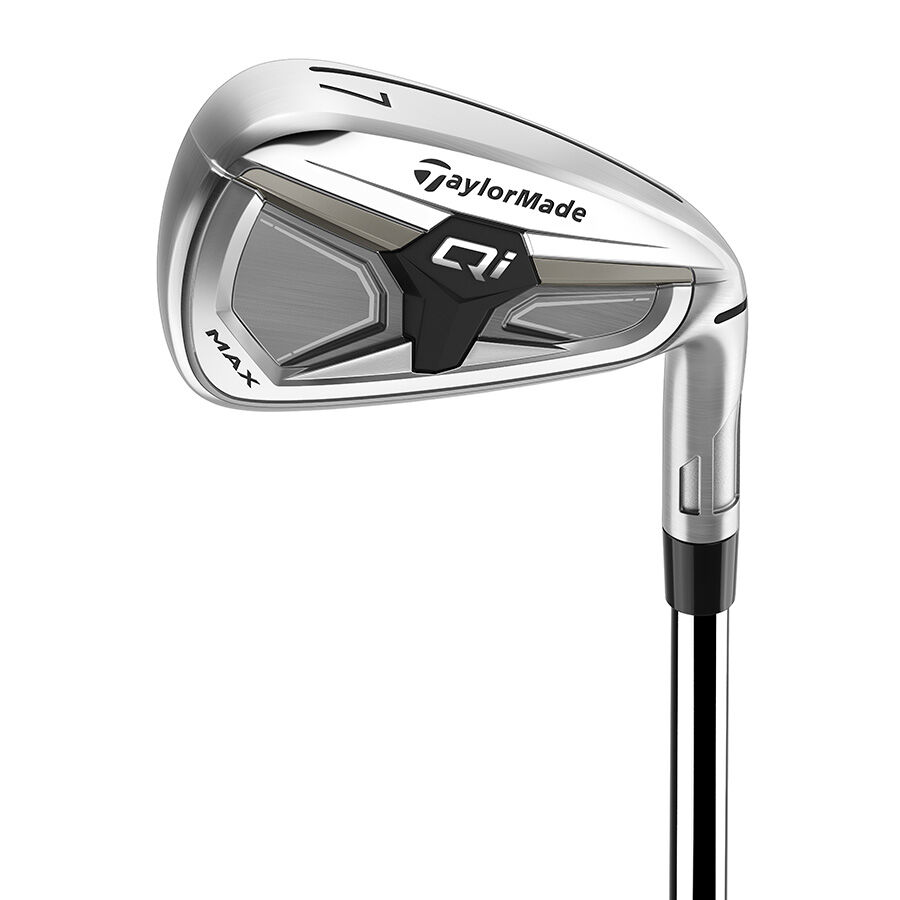
Best for slow swing speeds: TaylorMade Qi HL Irons
The Qi HL is TaylorMade's game-improvement iron specifically designed for golfers who need more launch than the standard Qi produces. The "HL" (High Launch) designation means weaker lofts and a lighter overall package — the Fujikura Speeder NX TCS 50 shaft comes in senior (A) flex at approximately 50g, which is among the lightest stock graphite options on any major-brand iron set.
For golfers whose driver swing speed is under 80 mph, the Qi HL's lighter build lets you actually swing through the ball rather than struggling to generate clubhead speed with a shaft that's too heavy. The result is more consistent ball speed and carry distance — not through better head technology (though the FLTD CG progression is solid), but simply because the shaft isn't fighting you.
As of June 2026, the Qi HL is on sale at $899.99 (was $999.99) at taylormadegolf.com, with the newer Qi Max HL ($1,099.99) having superseded it. The Qi HL is still a current buy — TaylorMade supports it with shaft options and standard warranty — but stock in senior flex may deplete as the Qi Max HL takes over shelf space.
Best for: Senior golfers under 80 mph driver swing speed who want a TaylorMade iron with a proven senior-flex graphite setup at the best value price point on this list.
Avoid if: You still swing 85 mph or above — the Qi Max or Qi Max HL is the appropriate current-generation pick. The Qi HL's weaker lofts can create gapping problems for faster swingers.
View TaylorMade Qi HL at taylormadegolf.com
Best for maximum forgiveness: Callaway Elyte X Irons
The Elyte X is the most forgiving iron in Callaway's 2025 game-improvement family. The oversized profile gives inconsistent ball strikers more room to work with, and the AI10X face — trained on real player impact data — reduces the side spin that turns off-centre hits into wide misses. For senior golfers who make highly variable contact, the Elyte X is the pick where technology can actively reduce the score cost of imperfect ball-striking.
The Speed Frame construction stiffens the chassis at impact to transfer energy more efficiently into the shot, while urethane microspheres absorb vibration. The result is a club that produces good distance on quality strikes and doesn't punish you severely on the rest.
Price note: Golfweek reported $999.99 (steel) and $1,099.99 (graphite) at launch in January 2025. Verify current pricing at callawaygolf.com — prices may have changed. Confirm graphite shaft senior flex availability at point of sale.
Best for: Any senior golfer who wants the most forgiving option on this list regardless of aesthetics; especially good for those who make highly inconsistent contact and prioritise keeping mishits playable.
Avoid if: You find the oversized profile visually off-putting at address — the Elyte X has a noticeably larger head than the G440 or JPX925.
View Callaway Elyte X on Amazon
Best hybrid-iron combo: Cobra DS-ADAPT MAX Irons
Cobra's DS-ADAPT MAX takes a different approach to the long-iron problem: instead of trying to make a traditional-looking 4-iron easier to hit, it replaces the long irons with hybrid-shaped heads that are inherently easier to launch. The SPEEDSHELL face insert (23% more face flex than the previous DS-ADAPT generation) adds ball speed on off-centre hits, while the hollow body construction moves the CG low for high launch across the set.
The A-flex graphite option (KBS PGI 65, 65g) is confirmed available at 2nd Swing. For seniors who struggle most in the 4–6 iron range — which is where most recreational golfers lose the most yards from inconsistent contact — the DS-ADAPT MAX's hybrid-shaped long irons are a more practical engineering answer than a traditional GI iron with a slightly wider sole.
Exact pricing not confirmed at press time; verify at cobragolf.com. Expected ~$799–$999 based on Cobra GI iron tier positioning.
Best for: Senior golfers who know their 4–5 iron is unreliable and want the long-iron problem solved structurally, not just with a wider sole.
Avoid if: You prefer a traditional-looking iron set without hybrid elements; or you need a very specific set makeup (the MAX graphite version is 5-GW, not 4-PW).
View Cobra DS-ADAPT MAX at cobragolf.com
Best for carry height: Srixon ZXiR HL Irons
The Srixon ZXiR HL is the most targeted pick on this list for a specific problem: if your main issue is that your ball flight stays too low and doesn't carry far enough — especially with longer irons — the ZXiR HL addresses this more directly than any other option here.
The "HL" designation means 2–3° weaker lofts per club vs the standard ZXiR. Combined with the lightest stock graphite on this list (KBS MAX 50 A-flex at 50g), the ZXiR HL is engineered from the ground up around the needs of slow-swing-speed golfers who need trajectory more than anything else. The i-ALLOY material (10% softer than 431 stainless) also produces a noticeably softer, quieter feel at impact than most super-GI irons.
Pricing not confirmed live; estimate ~$999–$1,099 based on Srixon Super GI tier. Verify at srixon.com or 2nd Swing before ordering.
Best for: Seniors whose primary complaint is ball flight that's too low and doesn't carry far enough; golfers for whom HL lofts will create better distance gaps vs their woods and hybrids.
Avoid if: You already carry the ball reasonably well — the weak lofts will create gapping problems against your fairway woods and hybrids if your ball flight isn't actually low.
View Srixon ZXiR HL at 2nd Swing
Best for frequent players: Mizuno JPX925 Hot Metal HL Irons
Mizuno irons have a feel reputation that's genuinely earned. The JPX925 Hot Metal HL delivers that characteristic Mizuno feedback — clear, quiet, and informative — in a game-improvement head with HL lofts engineered for slower swing speeds. For senior golfers who play three or more rounds per week and care about the quality of their iron play as much as the numbers, the JPX925 HL rewards that frequency with feedback their other clubs don't match.
The Chromoly 4140M face with Harmonic Impact Technology produces a sound profile that distinguishes good strikes from average ones in a way that oversized GI irons often can't. That feedback loop matters for improvement and enjoyment, especially for the golfer who has played for decades and remembers what quality iron play feels like.
Pricing not confirmed live; estimate ~$999–$1,099 based on Mizuno GI tier pricing. Confirm graphite senior flex availability and pricing at mizunousa.com before ordering.
Best for: Senior golfers who play frequently and want the best feel available in a high-launch GI iron; golfers who care about shot quality as much as score.
Avoid if: Feel isn't a priority and you're mainly optimising for forgiveness or budget.
View Mizuno JPX925 Hot Metal HL at 2nd Swing
Budget pick: Cleveland Halo XL Full-Face Irons
The Cleveland Halo XL Full-Face earns a spot on this list specifically because of its full-face design — the sweet spot extends to the extreme toe and heel of the face, which significantly reduces the penalty for off-centre contact at the edges where most high-handicap seniors mishit most frequently. The Baffler rails also prevent the sole from digging, which helps on turf interaction for golfers with shallower attack angles.
Important availability note: GolfInsiderUK (2026) reports that Cleveland is discontinuing this iron line. Check current availability at golfdiscount.com or Amazon before purchasing. If it's out of stock, the Srixon ZXiR HL or TaylorMade Qi HL are the next best alternatives at a similar price tier.
Best for: Budget-conscious seniors who want maximum mishit recovery at the lowest price on this list.
Avoid if: Stock is limited or the line is sold through (check before buying). Also avoid if feel and feedback matter to you — the Halo XL prioritises mishit recovery over feedback quality.
View Cleveland Halo XL at Golf Discount
Buying Guide: What Actually Matters for Senior Irons
1. Shaft weight first, head design second
This is the most important section of this guide. Most senior golfers lose more distance from swinging a shaft that's too heavy to accelerate properly than from an unforgiving clubhead. A 95g steel shaft requires meaningfully more effort to swing than a 55g graphite shaft. If you're fighting your shaft, no head design will fix it.
Target shaft weights by swing speed:
- Under 75 mph driver: 45–55g graphite in senior/A flex
- 75–85 mph: 55–65g graphite in senior/A flex or regular graphite
- 85–95 mph: regular graphite (65–75g) or light steel
2. What HL actually means (and why it matters more than it sounds)
HL stands for High Launch. The practical implication: if a standard 7-iron is 30°, the HL version might be 32–33°. That 2–3° difference produces a higher, more carrying ball flight at the same swing speed. For seniors who have lost carry distance, weak lofts at the factory level are more reliable than trying to launch the ball higher through swing mechanics changes.
One caveat: weaker lofts mean your distances per club are shorter. A 33° "7-iron" hits like a standard 6-iron. This is fine — but it changes how you think about club selection on the course. Your 7-iron is now doing 6-iron duty, so your 3-iron equivalent is a hybrid or fairway wood. HL sets are designed around this, which is why they typically include extra hybrids or have a modified set makeup.
3. When to buy a hybrid-iron combo set instead of pure irons
If you currently carry a 4-iron that you rarely hit well, a hybrid-iron combo set is a practical upgrade. The Cobra DS-ADAPT MAX effectively builds this in: the long irons have hybrid-shaped heads that are inherently easier to launch than traditional-profile long irons.
If you're buying a traditional iron set, pair it with a 4-hybrid or 5-hybrid in your bag configuration. Most senior golfers hit a 22° hybrid further and more consistently than a 4-iron — this is a fitting issue, not a preference one.
4. Get fitted before spending $1,000+
Iron fitting at PING, PGA Tour Superstore, or a local certified fitter takes 30–60 minutes and ensures the shaft weight, flex, lie angle, and grip size are correct for your swing. For PING specifically, their color-coded lie angle system makes a genuine difference to how straight the ball goes. A $1,100 set of irons that's 2° upright hits the ball left consistently; the same set at the right lie angle hits it straight.
Common Mistakes to Avoid
- Buying regular-flex steel because it "feels more solid" — heavier shafts reduce clubhead speed for most seniors, which means less distance regardless of how "solid" they feel
- Ignoring the HL designation — standard-lofted GI irons with "forgiving heads" still produce a lower ball flight at slow swing speeds; HL lofts address this at the factory level
- Buying the head design a fitting pro recommends in regular flex and adding a lighter shaft — shaft weight selection is part of fitting, not an afterthought; always fit shaft and head together
- Assuming Amazon's PING listings are accurate — PING does not sell new clubs on Amazon; third-party Amazon listings are typically inflated above authorized dealer MSRP
- Not verifying Cleveland Halo XL stock before recommending it to yourself — the discontinuation means inventory varies widely by region and time of year
FAQs
Common questions
Frequently asked questions
- What flex should senior golfers use in irons?
- Most senior golfers benefit from senior (A) flex graphite shafts, especially if their driver swing speed has dropped below 85 mph. Senior flex tips are softer than regular flex, which helps launch the ball higher and reduces vibration on off-centre hits. If you're between 85–95 mph with a driver, regular flex graphite is often the better call — it's still much lighter than steel but gives you better control.
- How much lighter should senior iron shafts be?
- Most standard GI irons come with 85–105g steel shafts. Seniors typically benefit from graphite shafts in the 50–65g range. That 30–50g reduction sounds small, but it translates into noticeably easier acceleration through the downswing, which adds clubhead speed and launch height — especially in the long irons where the effect is greatest.
- What does 'HL' mean on golf irons?
- HL stands for High Launch. In practice, it means the irons in that set have 1–3° weaker lofts than the standard version of the same model. A standard 7-iron might have 30° of loft; the HL version might have 32–33°. That extra loft produces a higher, more carrying ball flight — which is what most seniors need to maintain green-stopping distance.
- When should a senior switch from steel to graphite shafts?
- The practical trigger is when you start losing consistent carry height with your current irons, or when your wrists and elbows are feeling the impact more than they used to. Most fitting professionals recommend graphite at 70 mph driver swing speed or below. At 80–90 mph, it's a preference call, but lighter graphite almost always helps seniors swing more freely without changing their technique.
- Should seniors use game improvement or players irons?
- Game improvement irons for virtually all seniors. The forgiveness difference between a players iron and a game improvement iron — measured in ball speed on off-centre hits — is significant enough that it affects every round, not just your worst rounds. The one exception: if you still swing above 90 mph with a driver and consistently compress the ball well, a smaller GI iron like the PING G440 may be more appropriate than an oversized super-GI.
References
Sources
- GolfInsiderUK: Best Golf Irons for Seniors 2026 (PGA Pro tested)
- SeniorGolfSource: 7 Best Irons for Seniors 2025
- TaylorMade Qi HL Irons product page
- Golfweek: Callaway Elyte irons — price and specs
- 2nd Swing: PING G440 Iron Set specs
- 2nd Swing: TaylorMade Qi HL Iron Set specs
- 2nd Swing: Cobra DS-ADAPT MAX Iron Set specs
- 2nd Swing: Srixon ZXiR HL Iron Set specs
Keep reading
Related guides

Best Golf Drivers for Seniors (2026): 7 Picks for Slow Swing Speeds
Best golf drivers for seniors in 2026, ranked by senior-flex availability, launch angle, and forgiveness for swing speeds under 85 mph.
Jun 3, 2026

Best Golf Balls for Seniors (2026): Low Compression Picks That Add Distance
The best golf balls for seniors are low-compression picks that fully compress at 65–85 mph. Our top 7 picks ranked by compression, distance, and feel.
May 31, 2026
Best Golf Irons for High Handicappers (2026): 6 Forgiving Sets Compared
Six forgiving iron sets for high handicappers in 2026, matched to swing speed and budget. Callaway, PING, TaylorMade, Cobra, and the best budget pick.
May 30, 2026
Best Golf Irons for Beginners (2026): 7 Picks for Every Budget and Swing
The best golf irons for beginners in 2026, matched to your budget, swing speed, and biggest flaw. Plain-English picks — no fitting jargon required.
Jun 2, 2026