The short answer
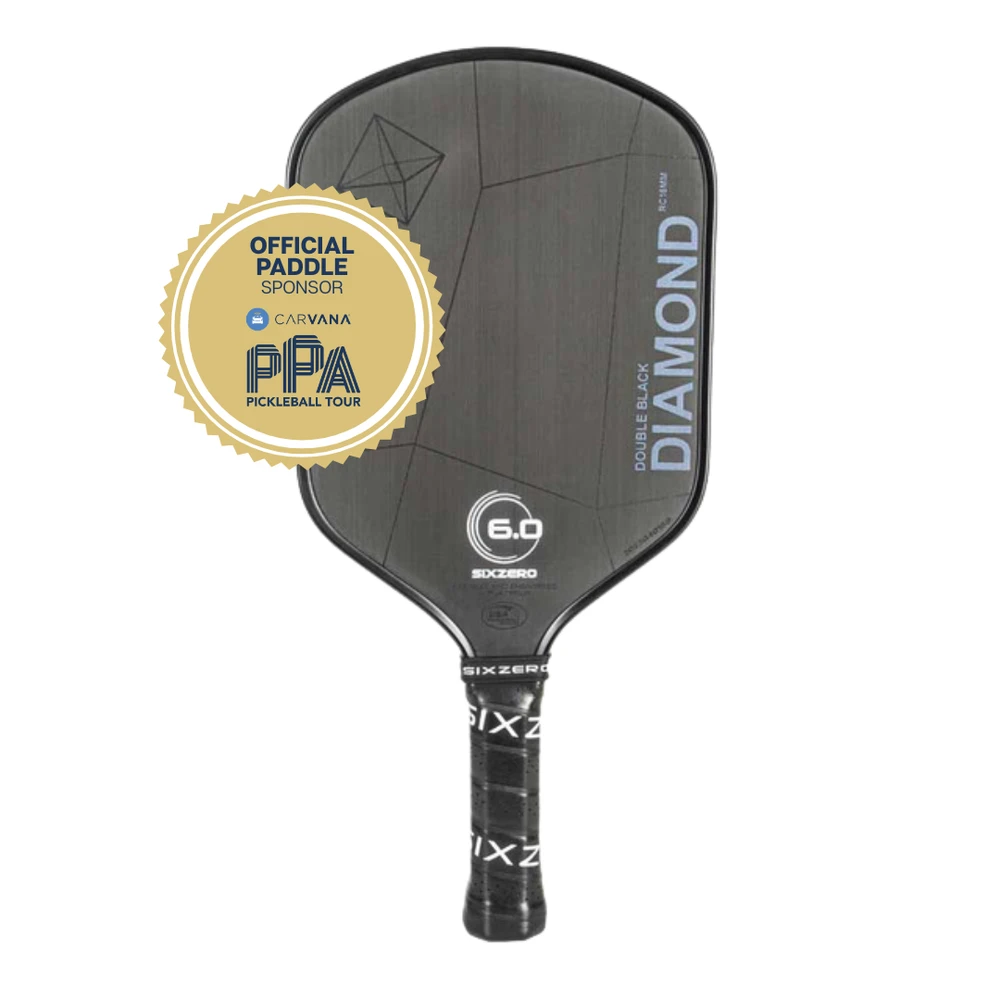
For most improving players, the best control pickleball paddle is the Six Zero Double Black Diamond Control 16mm: a soft, forgiving raw-carbon paddle, in stock near $180. Want to spend less? The Ronbus Quanta R1.16 is the value pick at $119.99. Control comes from a soft core, a forgiving shape, and carbon dwell — not power.
GearScout may earn a commission when you buy through links on this page. Prices, availability, and ratings can change, so confirm details with the retailer before purchasing.
Prices last verified July 2026.
Control paddles win the soft game. If you keep popping resets long, sailing third-shot drops, or losing hands battles at the kitchen line, the fix is usually not a better swing — it is a paddle that slows the ball down and hands you a bigger margin for error. This guide ranks seven control paddles from $99.99 to $249.95 and matches each one to a player type, so you buy the feel you need instead of the most-hyped name.
Every price, spec, and image here was verified on July 28, 2026 against the manufacturer or an authorized retailer. Where a spec is not published — or a paddle is out of stock — we say so instead of guessing.
Quick Picks
| Best for | Pick | Why it wins |
|---|---|---|
| Best overall control | Six Zero Double Black Diamond Control 16mm | Soft, forgiving hybrid; in stock near $180 |
| Best value | Ronbus Quanta R1.16 | True 16mm raw-carbon control at $119.99 |
| Best budget | Vatic Pro Prism 16mm | Raw-carbon control under $100, your choice of shape |
| Best standard shape | Paddletek Tempest Wave Pro-C | Big widebody sweet spot, plush core |
| Best premium touch | Selkirk LUXX Control Air Invikta | InfiniGrit grit plus premium soft feel |
| Best power-control blend | JOOLA Perseus Pro IV 16mm | Certified elongated frame, calmed by a 16mm core |
| Cult elongated (check stock) | CRBN 1 X-Series 16mm | Foam-perimeter stability — but backordered |
Comparison Table
Prices last verified July 2026. Paddle prices move on frequent brand sales, so confirm the live price at the retailer before you buy.
| Paddle | Price | Core | Shape | Face | Best for | Watch-out |
|---|---|---|---|---|---|---|
| Six Zero Double Black Diamond Control | $180 | 16mm | Hybrid | Toray 700K raw carbon | Most improving players | Not a power paddle |
| Ronbus Quanta R1.16 | $119.99 | 16mm | Elongated | Raw T700 carbon | Value seekers | Smaller brand community |
| Vatic Pro Prism 16mm | $99.99 | 16mm | Pick your shape | Raw T700 carbon | Budget control | Buy from the official store |
| Paddletek Tempest Wave Pro-C | $149.99 | 14.3mm | Standard | PT-700 raw carbon | Widebody forgiveness | Shorter 5.25 in handle |
| Selkirk LUXX Control Air Invikta | $200 | Undisclosed | Elongated | InfiniGrit | Premium touch and spin | Core mm not published |
| JOOLA Perseus Pro IV 16mm | $249.95 | 16mm | Elongated | Textured carbon | Power-control blend | Priciest; needs a controlled swing |
| CRBN 1 X-Series 16mm | $179.99 | 16mm | Elongated | Raw T700 carbon | Elongated stability | Backordered — check stock |
Methodology
We ranked these paddles for the soft game specifically: how much the core slows the ball (dwell), how forgiving the face is on off-center hits, shape and sweet-spot size, and swing weight. Price and value were weighted for an improving player upgrading from a starter paddle, not for a sponsored pro.
We checked every manufacturer or authorized-retailer page on July 28, 2026 for current price, specs, stock, and a live product image, and confirmed each image link returned an official brand or authorized-retailer asset. Where a figure is the maker's spec rather than something we could confirm independently — like core softness — we treat it as a claim, not a measurement.
What We Checked
What competitors miss is that "control" is not one number. Most lists equate control with a 16mm core and stop there. Core thickness matters, but shape, core softness, and face texture matter just as much — which is why the 14.3mm Paddletek Tempest Wave Pro-C can play softer and more forgiving than some 16mm blades. We ranked on the whole picture, not the spec-sheet shortcut.
Who this is for: the 3.0 to 4.5 player who over-hits, wants a bigger reset margin, and is ready to spend $120 to $250 on a paddle they will not outgrow in a month. If you have never held a paddle, start cheaper — see our beginner picks linked below.
We did not play-test all seven paddles in one controlled session, and we do not publish spin-RPM numbers we cannot verify. Rankings are researched editorial judgment built from manufacturer specs, certification status, and the current price and stock we confirmed on July 28, 2026.
What "control" actually means
Core thickness and softness
A thicker core (16mm is the control standard) compresses more on impact, slows the ball, and keeps it on the face a hair longer — that extra dwell is what "feel" is. But a soft core matters as much as a thick one. That is how a 14.3mm paddle tuned for softness can rival a stiff 16mm blade for touch.
Shape and the sweet spot
Standard and hybrid shapes spread the sweet spot wider and lower, so off-center hits still behave. Elongated shapes push the sweet spot up and forward for reach and leverage, at the cost of a little forgiveness. If you miss center often, favor a standard or hybrid shape.
Raw carbon and dwell
Nearly every control paddle now uses a raw carbon face (Toray T700 and similar). The gritty, unpainted weave grips the ball for a fraction longer, adding dwell and spin on soft shots so you can shape resets and drops instead of just blocking them.
Swing weight and handle
A lower, more balanced swing weight means faster hands at the kitchen and less arm fatigue — both help control. A longer 5.5-inch handle suits two-handed backhands; a shorter handle frees up face length. Match the handle to how you actually swing.
Our top picks
Best overall control: Six Zero Double Black Diamond Control 16mm
The Double Black Diamond Control earns its name. A 16mm core and a forgiving hybrid shape give it one of the softest, most stable feels in the category, while the Japanese Toray 700K raw carbon face keeps enough grit for spin on resets. At $180 at Pickleball Central at our last check, it is the paddle most improving players should buy first — and unlike some rivals here, it is in stock.
Best for: 3.0 to 4.5 players who want maximum forgiveness and a plush reset feel.
Avoid if: you want a long, thin blade for reach, or you prioritize put-away power.
Best value: Ronbus Quanta R1.16
The Quanta R1.16 delivers a true 16mm raw-carbon control build for $119.99 — roughly half the price of the premium picks. The elongated head with a 5.5-inch handle suits two-handed backhands, and it is USAP PBCoR .43 approved for sanctioned play. You give up the brand-name resale halo, not the on-court feel.
Best for: players who want real 16mm control on a budget.
Avoid if: you want a widebody shape or a big-brand community and resale value.
Best budget: Vatic Pro Prism 16mm
At $99.99, the Prism 16mm is the most paddle-per-dollar in this guide, and Vatic lets you choose the shape — elongated V7, widebody Bloom, or hybrid Flash — plus a 14mm or 16mm core. The raw Toray T700 face gives it dwell and grip that punch above the price. Buy from Vatic directly to avoid counterfeit marketplace listings.
Best for: a first serious control paddle under $100, or a low-risk way to try a shape.
Avoid if: you want a premium build or top-tier resale value.
Best standard shape: Paddletek Tempest Wave Pro-C
Proof that control is not only about a thick core: the Tempest Wave Pro-C runs a thinner 14.3mm core but plays soft and forgiving thanks to a plush core and a standard 16 by 8-inch widebody shape with a huge sweet spot. Paddletek's PT-700 raw carbon face adds spin, and it was $149.99 on sale at our last check.
Best for: players who want a big, forgiving widebody and dislike elongated blades.
Avoid if: you specifically want a 16mm core or a longer handle for two-handers.
Best premium touch: Selkirk LUXX Control Air Invikta
Selkirk's LUXX Control Air pairs a thick control build with the InfiniGrit face — a gritty surface that adds bite to touch shots without giving up softness — in the elongated Invikta shape for reach and leverage at the net. It was $200 on sale (regular $280) at our last check. Note that Selkirk does not publish the core thickness on the product page, so we do not quote a number.
Best for: players who want a premium, spin-friendly touch paddle with reach.
Avoid if: you want the lightest or cheapest option, or you need a published core spec.
Best power-control blend: JOOLA Perseus Pro IV 16mm
The Perseus is a power frame, but the 16mm build calms it into a control-capable all-court paddle — the reason so many strong players carry it. It is elongated for reach, uses a textured carbon face, and is both UPA-A pro certified and USAP PBCoR .43 certified. At $249.95 it is the priciest pick here, and it rewards a controlled swing.
Best for: strong 4.0-plus players who want control without giving up finishing power.
Avoid if: you are budget-focused or want a pure soft-touch paddle.
Cult elongated control (check stock): CRBN 1 X-Series 16mm
The CRBN 1 is a longtime control favorite: an elongated 16mm blade with a foam-reinforced perimeter that widens the effective sweet spot and steadies off-center hits, plus a raw T700 face for dependable dwell. The catch on our last check: it was sold out and backordered at CRBN, so treat it as a buy-when-it-returns pick rather than an in-stock option.
Best for: players who want a stable, long control blade and can wait for stock.
Avoid if: you need a paddle today or prefer a forgiving widebody.
Buying Guide
Start with your shape. A forgiving hybrid or widebody (Six Zero, Paddletek) gives you the biggest margin for error; an elongated blade (Ronbus, Selkirk, JOOLA, CRBN) trades a little forgiveness for reach and leverage. If you hit two-handed backhands, favor a 5.5-inch handle.
Then set your budget. Under $130 gets you a genuine 16mm raw-carbon control paddle (Vatic Pro, Ronbus). The $150 to $200 tier buys premium feel, more grit, and stronger brand support (Paddletek, Six Zero, Selkirk). Above $200 you are paying for a certified, all-court frame (JOOLA) — worth it only if you want control and power in one paddle.
Finally, check certification and stock. If you might play sanctioned pickleball, confirm the paddle is on the USA Pickleball or UPA approved list before buying. Buy from the manufacturer or an authorized retailer — it protects you from counterfeits and secures the real warranty. New to the sport? Our beginner pickleball paddle picks start cheaper and softer. For more, see our racket sports guides.
Common mistakes
- Buying a power paddle, then blaming your hands when resets sail long.
- Assuming a thicker core is always more control — shape and core softness matter as much (see the 14.3mm Tempest Wave Pro-C).
- Chasing a pro's paddle instead of the shape and swing weight that fit you.
- Paying full price during a sale week — control paddles discount often.
- Ordering a backordered paddle you need this weekend instead of an in-stock equal.
- Buying a cut-price paddle from an unknown marketplace seller and getting a counterfeit.
Common questions
Frequently asked questions
- Is a 16mm core better for control?
- Generally yes: a thicker core slows the ball and lengthens dwell, giving more feel on dinks and resets. But it is not the only factor — a softer core and a forgiving shape can make a 14.3mm paddle like the Paddletek Tempest Wave Pro-C play as controlled as some 16mm blades.
- Control or power for an improving player?
- For most 3.0 to 4.5 players, control. Keeping balls in play, landing third-shot drops, and winning the dinking exchange wins more points than extra pop. You can add power later; you cannot fake touch.
- Does an elongated or standard shape control better?
- Standard and hybrid shapes have larger, more forgiving sweet spots, which most players read as control. Elongated shapes add reach and leverage but shrink the sweet spot slightly. If you miss the center often, go standard or hybrid.
- How much should I spend on a control paddle?
- $100 to $130 buys a genuine 16mm raw-carbon control paddle such as the Vatic Pro Prism or Ronbus Quanta. $150 to $250 buys premium feel, more grit, and brand support. Spending more mainly buys certification and all-court versatility, not more control.
- Do I need a USA Pickleball approved paddle?
- For casual rec play, no. For sanctioned leagues or tournaments, yes — confirm the paddle is on the USA Pickleball or UPA approved list before buying. Several picks here, including the JOOLA Perseus and Ronbus Quanta, list current certification.
- Why is control better on a raw carbon face?
- Raw carbon such as Toray T700 grips the ball for a fraction longer, which adds dwell and spin on soft shots and helps you shape resets and drops. It is one reason nearly every paddle in this guide uses a raw carbon face.
References
Sources
- Six Zero Double Black Diamond Control 16mm — Pickleball Central (authorized retailer)
- Ronbus Quanta R1.16 — Ronbus official product page
- Vatic Pro Prism — Vatic Pro official product page
- Paddletek Tempest Wave Pro-C — Paddletek official product page
- Selkirk LUXX Control Air Invikta — Selkirk official product page
- JOOLA Perseus Pro IV 16mm — JOOLA official product page
- CRBN 1 X-Series 16mm — CRBN official product page
Keep reading
Related guides

Best pickleball paddles for beginners (2026)
The best beginner pickleball paddles for control, value, tennis converts, and first tournament play.
May 29, 2026

Best Pickleball Paddles for Advanced Players (2026): 9 Ranked by Twist Weight
Nine advanced pickleball paddles ranked by published twist weight - 5.88 to 7.05 - with verified US prices from $75.00 to $279.99, checked September 2026.
Sep 2, 2026

Best Pickleball Shoes for Women (2026): 8 Picks Ranked by the Width You Can Buy
Women's pickleball shoes ranked by the widths and size runs you can actually buy - 8 verified picks from $75 to $149.95, checked August 2026.
Aug 15, 2026

Best portable tennis ball machine: ranked by loaded carry weight (2026)
Eight portable tennis ball machines ranked by what you actually carry — machine plus a full hopper — with verified prices, weights and hopper capacities.
Aug 10, 2026