The short answer
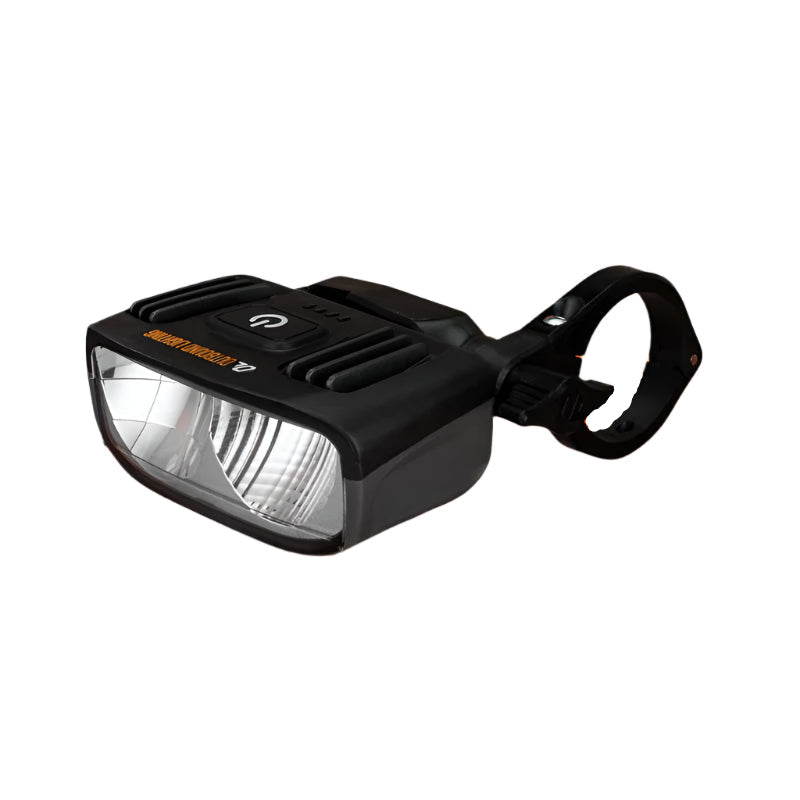
For road cycling, run a front and a rear, both in daytime flash. Our best overall headlight is the Outbound Detour ($184.99), whose automotive-style cutoff beam lights the road without blinding traffic; the best rear is Garmin's Varia RTL515 ($199.99) radar taillight. On a budget, the Blackburn Dayblazer 1000 and 125 cover both ends for about $130.
GearScout may earn a commission when you buy through links on this page. Prices, availability, and ratings can change, so confirm details with the retailer before purchasing.
Prices last verified July 2026.
Road cycling is where bike lights matter most and where the marketing is the most misleading. You share fast, open roads with cars, you ride at dawn and dusk into low sun, and the number every light is sold on — lumens — barely tells you how useful the beam actually is. The two questions that matter for a road rider are simpler: can drivers see you (daytime and night), and can you see the road. This guide answers both with seven picks from $54.99 to $399.99, ranked not by raw lumens but by usable beam pattern, honest runtime at the brightness you will actually ride, daytime visibility, and whether rearview radar is worth it. Our best overall headlight is the Outbound Lighting Detour ($184.99), whose automotive-style cutoff beam lights the road evenly without blinding oncoming traffic; the best rear is Garmin's Varia RTL515 ($199.99) radar taillight, which warns you of cars coming up behind.
Every price, spec, stock status, and image here was verified on July 29, 2026 against Mike's Bikes, an authorized retailer, and each product image links to an official retailer asset. The honest framing up front: a road setup is a front and a rear, not one light, and the two upgrades that genuinely change road riding — daytime running lights and rearview radar — are the two things generic "best bike lights" lists bury. We have not run a controlled beam-and-runtime lab test of these exact seven lights ourselves; where a figure is a maker's spec or an independent reviewer's finding rather than something we measured, we say so.
Quick Picks
| Best for | Pick | Why it wins |
|---|---|---|
| Best overall headlight (see-with) | Outbound Lighting Detour | Automotive-grade cutoff beam lights the road evenly and does not blind oncoming drivers — beam quality over raw lumens |
| Best rear / biggest safety upgrade | Garmin Varia RTL515 | Rearview radar warns you of approaching cars up to 140 m back, and doubles as a daytime taillight |
| Best value front (bright + simple) | Blackburn Dayblazer 1000 | 1000 lumens and a real daytime mode for $74.99 |
| Best compact front | Lezyne Micro Drive 800+ | Tiny, light 800-lumen front with a daytime flash, $64.99 |
| Best budget rear (daytime-bright) | Blackburn Dayblazer 125 | 125-lumen daytime BLITZ mode and 270° visibility for $54.99 |
| Best smart rear (brake alert) | Lezyne Saddle Ai Alert 250 | Aero saddle-rail rear that flashes a brake-light pattern when you slow |
| Best radar + camera | Garmin Varia RCT715 | Radar plus a 1080p camera that auto-saves footage around an incident |
Comparison Table
Prices last verified July 2026. Light prices and stock move, and street prices on the Garmin units often dip below list — so confirm the live figure at the retailer before you buy.
| Light | Price | Type | Max lumens | Runtime (usable mode) | Road standout |
|---|---|---|---|---|---|
| Blackburn Dayblazer 125 | $54.99 | Rear | 125 | 3h flash (125 lm) | Cheapest genuinely daytime-bright rear |
| Lezyne Micro Drive 800+ | $64.99 | Front | 800 | mode-dependent; daytime flash | Compact, light be-seen-plus front |
| Blackburn Dayblazer 1000 | $74.99 | Front | 1000 | 1.5h at 1000 lm; 3h at 500 lm | Most lumens per dollar |
| Lezyne Saddle Ai Alert 250 | $74.99 | Rear | 250 | mode-dependent | Auto brake-alert flash, aero mount |
| Outbound Lighting Detour | $184.99 | Front | about 1200 | 1.7h High; 4.2h Medium; 8.5h Low | Shaped cutoff beam, does not blind traffic |
| Garmin Varia RTL515 | $199.99 | Rear + radar | 65 (day flash) | up to 16h day flash; 6h solid | Rearview radar (to 140 m) + taillight |
| Garmin Varia RCT715 | $399.99 | Rear + radar + cam | tail light | up to 4-6h with recording | Radar plus 1080p incident camera |
Lumens and runtimes are each maker's published figures. Note how little the lumen number tells you: the 1000-lumen Dayblazer runs a flood beam for 1.5 hours at full power, while the roughly 1200-lumen Outbound spends its output on a shaped road beam — two very different lights that a lumen-only table would rank as near-equals.
Methodology
We ranked these seven lights for road cycling specifically — not mountain biking, not pure urban commuting. Road riding rewards a particular set of things: being seen in daylight (when most riding and most car-bike conflicts happen), a front beam that lights the road without dazzling drivers, enough runtime to cover a real ride at a brightness you will actually use, and — increasingly — rearview radar. So the order within each category is driven first by how well the light serves a road rider, then by value at the price.
We checked every Mike's Bikes product page on July 29, 2026 for the model, US price, in-stock status, runtime specs, and a live product image; we confirmed each image link returned an official retailer asset (HTTP 200, image content-type) and each buy link resolved (HTTP 200). We treated a maker's lumen or runtime figure as a claim, not our own measurement, and we cross-referenced beam behavior and radar usefulness against independent reviews (road.cc and GearJunkie on the Outbound beam; DC Rainmaker on Garmin Varia radar). We deliberately kept only lights that were genuinely in stock this run at a US price — which is why several famous models that were sold out did not make the list.
What We Checked
What competitors miss is that lumens are a marketing number, not a measure of a good road light. Two things matter far more, and both get buried under the headline figure.
- Usable beam pattern beats raw lumens. A cheap 1000-lumen flood throws a bright round hot-spot that lights the sky and the ditch as much as the road, washes out your near field, and dazzles oncoming drivers. A shaped beam with a horizontal cutoff — like the Outbound Detour's automotive-style optic — puts the same light on the road where you need it and keeps it out of drivers' eyes. On dark roads, beam shape is the difference between seeing and being blinded by your own light bouncing back.
- Honest runtime is the runtime at the brightness you ride. Makers headline the longest number, which is always the lowest mode. The Blackburn Dayblazer 1000 runs 1.5 hours at its full 1000 lumens and 15 hours at 100 — quote the wrong one and you are stranded in the dark. Plan around the mode you will actually use, and carry a charge for long rides.
The two road-specific upgrades competitors under-explain are daytime running lights and rearview radar. A rear (and front) daytime flash makes you conspicuous when most riding happens; a controlled study of permanent bicycle running lights (Madsen et al., 2013) found riders using one had roughly 19% fewer personal-injury crashes — evidence that daytime visibility helps, though it is research, not a promise about any one light. Rearview radar (Garmin Varia) is the bigger leap: it alerts you to cars approaching from behind before you hear them, which DC Rainmaker's long-running reviews rate as genuinely useful in both city and rural riding. Be clear-eyed, though — a light or radar is not a force field. It buys you visibility and warning, not immunity, and radar tells you a car is there, not that it has seen you.
Who this is for: road riders assembling a real front-plus-rear setup who are tired of buying a light on its lumen number and finding it dazzles, dies early, or does not help in daylight. We did not field-test these seven ourselves; this is researched editorial judgment from manufacturer and authorized-retailer specs, independent beam and radar reviews, and the price, stock, and images we confirmed on July 29, 2026.
What actually matters in a road bike light
Beam pattern (front lights)
Decide first whether you need to be seen or to see. On lit streets in daylight, a bright flash is enough (be-seen). On unlit roads at night you need a see-with beam — and there, shape matters more than lumens. A road-optimized cutoff beam (the Outbound Detour) lights the surface evenly and far without blinding traffic; a bare flood (most sub-$100 lights) is fine as a be-seen light but harsher and less useful on genuinely dark roads.
Lumens (and why the number lies)
For road riding, 400 to 800 lumens covers most be-seen and semi-dark use; 1000-plus helps on fully unlit roads, but only if the beam is shaped well. More lumens in a bad beam is just more glare. Treat lumens as a rough ceiling, not a ranking.
Runtime
Match runtime to your longest ride at the brightness you will use, then add margin. Front lights burn through their top mode fast (often 1.5 to 2 hours), so many riders run a middle mode and keep the boost for descents. USB-C charging (all seven here) and pass-through charging (the Outbound) make topping up easy.
Daytime running mode
A dedicated daytime flash — Blackburn's BLITZ, Lezyne's Day Flash, Garmin's day mode — is the feature most likely to prevent a daytime incident, which is when most riding happens. Every pick here has one; use it front and rear, day and night.
Rearview radar
Radar is the road upgrade that has no equivalent in a normal light. The Garmin Varia units detect vehicles up to 140 m behind and alert you on a paired Edge computer or your phone. If you ride open roads with traffic, it is the single most valuable thing on this list — which is why two of our seven are radar taillights. It pairs naturally with a head unit; see our road bike computer guide.
Mounting and visibility angle
A rear light aimed flat and mounted where it is not blocked by a saddlebag matters as much as its lumens. Aero seatposts need a light shaped to fit (the Lezyne Saddle Ai Alert clamps to the saddle rails); round posts take anything. Look for wide side visibility (270°) at junctions.
Our top picks
Best overall headlight: Outbound Lighting Detour ($184.99)
The Detour is the headlight that makes the case for beam quality over lumens. Outbound comes from an automotive-lighting background, and the Detour uses a shaped optic with a clean horizontal cutoff: it spreads roughly 1200 lumens evenly across the road ahead, adds sidemarker lights for junction visibility, and — crucially — does not throw glare into oncoming drivers' eyes. Reviewers (road.cc, GearJunkie) single out the beam and the USB-C pass-through charging, which lets you run it off a power bank for effectively unlimited runtime. It is the priciest front here, and its High mode (1.7 hours) is shorter than a bare flood at similar lumens — that is the trade for a beam that is genuinely usable on dark roads.
Best for: road and gravel riders who ride unlit roads and want the most usable beam.
Avoid if: you only need a daytime be-seen light or want the lowest price — the Dayblazer 1000 or Micro Drive 800+ are plenty.
Best rear and biggest safety upgrade: Garmin Varia RTL515 ($199.99)
The Varia RTL515 is the light most road riders should add next after a basic front and rear. It is a daytime taillight (65-lumen flash visible up to a mile) with rearview radar built in: it detects vehicles approaching from behind up to 140 m away and pushes visual and audible alerts to a paired Garmin Edge or the Varia phone app, including a peloton mode that is gentle on riders behind you. DC Rainmaker's reviews — the definitive radar coverage — rate the real-world usefulness highly in both city and rural riding, while being honest that radar warns you a car is there, it does not stop it. At 71 g with an IPX7 rating and up to 16 hours in day-flash mode, it is the easiest big upgrade on this list.
Best for: anyone riding open roads with traffic who wants advance warning of cars.
Avoid if: you only ride car-free paths, or you have no head unit or phone to show the radar (the light still works, but you lose the display).
Best value front: Blackburn Dayblazer 1000 ($74.99)
The Dayblazer 1000 is the most lumens-per-dollar front here and a genuinely good value be-seen-and-see light. You get 1000 lumens, a BLITZ daytime mode, USB-C charging, and a simple, tough package for $74.99. The honest caveat is the one this whole guide is about: it is a flood beam, not a shaped road beam, and 1000 lumens only lasts 1.5 hours (drop to the 500-lumen mode for 3 hours). For lit roads, daytime riding, and occasional dark stretches it is excellent; for regular unlit-road riding the Outbound's beam is worth the upgrade.
Best for: riders who want a bright, simple front with a daytime mode on a budget.
Avoid if: you ride unlit roads often and want a shaped, non-dazzling beam.
Best compact front: Lezyne Micro Drive 800+ ($64.99)
The Micro Drive 800+ is a tiny, 135-gram front that punches above its size. Its 800 lumens make it a strong be-seen light with enough output for semi-lit roads, it has a daytime flash among its six modes, and Lezyne's build quality and USB-C charging are a step up in feel. As with every light, the headline runtime is the lowest mode, so plan around the brightness you will run. It is the front to buy if you want something small and light that disappears on the bars until you need it.
Best for: riders wanting a light, compact, quality front for mixed be-seen and light see-with use.
Avoid if: you need a strong see-with beam for fully dark roads.
Best budget rear: Blackburn Dayblazer 125 ($54.99)
The Dayblazer 125 is the cheapest rear here that is genuinely bright enough for daytime. Its 125-lumen BLITZ mode is made to be seen in daylight, it spreads light across 270 degrees so drivers see you at junctions, and it charges over USB-C. Runtime is modest at full brightness (about 3 hours flashing, 1.6 hours solid high), so it suits shorter rides or riders who charge often. As a do-everything taillight that costs less than a jersey, it is the easy budget pick.
Best for: the cheapest daytime-capable rear; a solid all-round taillight.
Avoid if: you want radar or an aero saddle-rail mount.
Best smart rear: Lezyne Saddle Ai Alert 250 ($74.99)
The Saddle Ai Alert 250 brings brake-light behavior to a road rear without needing a computer. Its Ai Alert technology senses when you decelerate and automatically brightens and changes its flash pattern to warn riders and drivers behind you that you are slowing, then settles once you stop. It puts out up to 250 lumens, mounts cleanly to the saddle rails (tidy on aero seatposts), and offers 270-degree visibility. It is a premium price for a non-radar rear, but the automatic brake alert and clean mount are genuinely useful in a group or in traffic.
Best for: riders who want an automatic brake-alert rear and a tidy saddle-rail mount.
Avoid if: you do not run a saddle-rail mount or want the cheapest rear.
Best radar plus camera: Garmin Varia RCT715 ($399.99)
The Varia RCT715 adds a 1080p camera to the same radar-and-taillight package as the RTL515, continuously recording and automatically saving footage before, during, and after a detected incident. If you want radar and a rear camera in one unit — for evidence after a close pass — this is the one to get. Be realistic about the camera, though: DC Rainmaker found the footage unstabilized and merely okay, and recording drops battery life to roughly 4 to 6 hours. Buy it for the radar-plus-record combination and the peace of mind, not for cinema-grade video.
Best for: riders who want radar plus a rear incident camera in a single unit.
Avoid if: you want good video quality, or you only need radar — the RTL515 is $200 less.
Buying Guide
Start with the system, not the single light: a road rider needs a front and a rear, and should run both in daytime flash even on sunny rides. If you want the best-performing setup and only want to buy once, pair the Outbound Detour front with the Garmin Varia RTL515 rear — the most usable beam plus the biggest safety upgrade. That is around $385 together, which is real money, so here is the honest tiering.
On a budget, the Blackburn Dayblazer 1000 front and Dayblazer 125 rear cover both ends for about $130 and do everything a daytime-and-lit-road rider needs. Want a smaller front? Swap in the Lezyne Micro Drive 800+. Ride open roads with traffic? Add radar — the RTL515 is the value pick, and the Varia RCT715 adds a camera if you want footage of close passes. Want an automatic brake-alert rear without a computer? The Lezyne Saddle Ai Alert 250 is the clean aero choice.
A note on where the money goes: spend on the rear before the front for daytime road safety (a bright daytime rear and, ideally, radar do more to prevent the common rear-end conflict than extra front lumens), and spend on beam shape before lumens for night riding. If you already run a Garmin head unit, the radar's value climbs — the alerts show up right on your computer. See our road bike computer guide, and if you are still kitting out, the beginner helmet guide and the Zwift smart-trainer guide, or browse the cycling hub.
Common mistakes
- Buying on lumens alone. A shaped beam at 1200 lumens lights the road better than a bare flood at 1500 and does not blind drivers. The number is a ceiling, not a ranking.
- Reading the headline runtime. That figure is always the lowest mode. Check the runtime at the brightness you will actually ride — a 1000-lumen front may last only 1.5 hours at full power.
- Skipping daytime running mode. Most riding and most car-bike conflicts happen in daylight; run a front and rear daytime flash even on sunny days.
- Treating radar as protection. Rearview radar warns you a car is approaching; it does not mean the driver has seen you, and it is not a substitute for lane position and mirrors-and-shoulder-checks awareness.
- Buying only a front. Drivers approach mostly from behind on the road — a bright daytime rear (and ideally radar) is at least as important as your headlight.
- Ignoring the mount. A rear hidden behind a saddlebag or a light that will not fit an aero post is a light that does not work. Match the mount to your bike before you buy.
- Paying without checking. Light prices and stock move, and the Garmin units often sell below list — confirm the live price and availability at the retailer before you check out.
Common questions
Frequently asked questions
- How many lumens do I need for road cycling?
- For being seen on lit roads and in daylight, 400 to 800 lumens up front is plenty. For seeing on fully unlit roads at night, 1000 or more helps — but only if the beam is shaped well. Lumens are a rough ceiling, not a ranking: a well-shaped 1200-lumen beam like the Outbound Detour's lights the road better than a cheap 1500-lumen flood and does not blind oncoming drivers.
- What is the difference between a see-with and a be-seen bike light?
- A be-seen light exists to make you visible to others — a bright flash is enough, and it works day or night on lit roads. A see-with light illuminates the road ahead so you can ride in the dark, which needs more output and, more importantly, a beam shaped to light the surface without dazzling traffic. On the road you always want a be-seen rear; add a see-with front if you ride unlit roads.
- Do I really need bike radar for road cycling?
- You do not strictly need it, but rearview radar (Garmin Varia) is the single most useful road upgrade on this list. It alerts you to vehicles approaching from behind up to 140 m away, on a paired Garmin Edge or your phone, so you are not surprised. Be clear that radar is a warning aid, not protection — it tells you a car is there, not that the driver has seen you.
- Are daytime running lights worth it on a bike?
- Yes. Most riding, and most car-bike conflicts, happen in daylight, and a dedicated daytime flash makes you far more conspicuous. A controlled study of permanent bicycle running lights found riders using one had roughly 19 percent fewer personal-injury crashes. That is research about visibility in general, not a guarantee about any one light, but it is why every pick here has a daytime mode you should use front and rear.
- Should I buy a front and rear light, or just one?
- Both. On the road, vehicles mostly approach from behind, so a bright daytime rear is at least as important as your headlight — arguably buy the rear first. The best simple setup is a see-with or be-seen front plus a daytime-bright rear, both running a flash in daylight. Riders on open roads with traffic should add radar to the rear.
- How long do these bike lights actually last on a charge?
- Less than the headline number, because makers quote the longest (lowest) mode. The Blackburn Dayblazer 1000 runs 1.5 hours at its full 1000 lumens but 15 hours at 100; the Outbound Detour does about 1.7 hours on High. Plan around the brightness you will actually ride, keep a USB-C charge handy for long rides, and note the Outbound supports pass-through charging from a power bank.
References
Sources
- Outbound Lighting Detour — price, specs, image (Mike's Bikes, authorized retailer)
- Garmin Varia RTL515 — price, specs, image (Mike's Bikes)
- Garmin Varia RCT715 — price, specs, image (Mike's Bikes)
- Blackburn Dayblazer 1000 Front Light — price, specs, image (Mike's Bikes)
- Blackburn Dayblazer 125 Taillight — price, specs, image (Mike's Bikes)
- Lezyne Micro Drive 800+ Front — price, specs, image (Mike's Bikes)
- Lezyne Saddle Ai Alert 250 Rear — price, specs, image (Mike's Bikes)
- Outbound Detour beam pattern (automotive cutoff) — independent review (GearJunkie)
- Garmin Varia RTL515 rearview radar — in-depth review (DC Rainmaker)
- Safety effects of permanent running lights for bicycles: a controlled experiment (Madsen et al., Accident Analysis & Prevention)
Keep reading
Related guides

Best bike computers for road cycling (2026): 7 picks by rider type
The best road cycling GPS computers for 2026, from the $249 COROS DURA to the Garmin Edge 1050, ranked by training depth, maps, battery, and price.
Jul 28, 2026

Best smart trainers for Zwift (2026): 6 picks by budget and setup
The best Zwift smart trainers for 2026, from the value Wahoo KICKR CORE 2 to premium motion trainers, ranked by virtual shifting, accuracy, and setup.
Jul 28, 2026

Best bike helmets for beginners (2026)
The best beginner bike helmets for commuting, fitness rides, trail paths, and budget-conscious new cyclists.
May 29, 2026

Best electric bike for commuting: ranked by battery watt-hours (2026)
Nine commuter e-bikes ranked by published battery watt-hours - 345.6 to 733 Wh - with verified US prices, claimed range and what each one ships with.
Sep 1, 2026