
The short answer
Flat pedals rule out every clipless MTB shoe, so you are choosing on two things: rubber compound and sole stiffness. The Five Ten Freerider Pro ($159.95) is the benchmark compound; Ride Concepts' Vice ($110) is the cheapest pick with a named compound and a published weight. No brand publishes a durometer.
GearScout may earn a commission when you buy through links on this page. Prices, availability, and ratings can change, so confirm details with the retailer before purchasing.
Prices last verified August 2026.
If you ride flat pedals, most "best mountain bike shoe" guides are useless to you. They rank clipless shoes — the ones with a cleat pocket bolted into the sole — alongside flats, as if the two were interchangeable. They are not. A clipless shoe on a flat pedal is a stiff plastic plate skating on steel pins.
This page only lists shoes that work on flat pedals, ranked by the things you can actually verify: the rubber compound each brand publishes, whether there is a stiffening plate, weight where it exists, and — the part nobody else publishes — whether your size is in stock right now.
The constraint filter: what flat pedals rule out
Flat pedals are not a preference here, they are a hardware fact. Your bike has platform pedals with pins. That single constraint eliminates most of what gets recommended under "MTB shoes."
What it rules out completely:
- Every clipless shoe. Any shoe with a two-bolt SPD cleat pocket. The recessed channel that houses the cleat is a hard, hollow void exactly where the pedal pins need to bite. Brands hide this in their naming: at Ride Concepts,
Tallacis flat andTallac Clipis clipless. At Crankbrothers, the Stamp line is flat and the Mallet line is clipless. At Shimano, the GF prefix is flat while GE, XC, RC and RX are all clipless. Same brand, near-identical silhouette, opposite sole. - Stiff cross-country soles. A full-length carbon plate is designed to transfer power through a cleat. On flats you need enough flex for the sole to deform around the pins.
- Hard-compound running and approach shoes. Grip on a flat pedal is friction against small steel points, not tread depth against dirt. Hard-wearing rubber is exactly wrong.
What it does not rule out: lace closures, dial closures, mid-tops, canvas uppers, or a stiffening plate. Those are all still live choices, and this page treats them as such.
What the constraint costs you: less than you would think. Ride Concepts prices the flat and clipless versions of the same shoe within about 10% of each other — Tallac $188 flat vs Tallac Clip $210, Hellion $176 vs Hellion Clip $198, Accomplice $144 vs Accomplice Clip $154. Choosing flats does not put you in a cheaper, worse tier of product.
Quick Picks
Ranked by how well each satisfies the flat-pedal constraint first, general quality second.
| Pick | Price | Rubber compound | Why it wins |
|---|---|---|---|
| Five Ten Freerider Pro | $159.95 | Stealth S1 (Dotty tread) | The compound the whole category is benchmarked against |
| Ride Concepts Tallac | $188.00 | MaxGrip | Only pick with every size in stock; lightest published weight |
| Ride Concepts Vice | $110.00 | HighGrip + RC Fuzion | Cheapest pick that still names a compound and publishes a weight |
| Shimano SH-GF800 | $200.00 | ULTREAD GF | Only pick with a published shank plate; BOA dial |
| Crankbrothers Stamp Trail Lace | $159.99 | Unnamed "high-friction" | Tread engineered around a specific pedal body |
| Fox Union Flat (2026) | $169.99 | Ultratac | Molded internal stiffening plate |
| Ride Concepts Livewire | $122.00 | HIGH GRIP | Best size availability in the test — 35 of 45 variants in stock |
Comparison Table
Prices last verified August 2026. Stock counts are live variant counts captured the same day from each retailer's product feed; they move fast.
| Pick | Rubber compound | Price | Stiffening plate | Weight (M9) | Closure | In-stock variants | Best for |
|---|---|---|---|---|---|---|---|
| Five Ten Freerider Pro | Stealth S1, Dotty tread | $159.95 | Not published | Not published | Lace | In stock | The benchmark compound |
| Ride Concepts Tallac | MaxGrip | $188.00 | Not published | 395 g | Lace | 26 of 26 | Long days, hike-a-bike |
| Ride Concepts Vice | HighGrip, RC Fuzion hex | $110.00 | Not published | 424 g | Lace | 26 of 30 | Getting in cheap |
| Shimano SH-GF800 | ULTREAD GF | $200.00 | Yes — reinforced shank | Not published | BOA dial | 12 of 20 | Stiffer platform, dial fit |
| Crankbrothers Stamp Trail Lace | "High-friction rubber" | $159.99 | No — moderately flexible | Not published | Lace | 12 of 21 | Crankbrothers Stamp pedal owners |
| Fox Union Flat (2026) | Ultratac | $169.99 | Yes — molded internal | Not published | Lace | 17 of 48 | A plate without a dial |
| Ride Concepts Livewire | HIGH GRIP | $122.00 | Not published | 400 g | Lace | 35 of 45 | Actually getting your size |
Why the mainstream picks fail this constraint
Two specific failures worth naming.
The clipless listicle. The head term "best mountain bike shoes" pulls 1,000 searches a month in the US and the pages ranking for it mix both pedal systems in one list — BikeMag's 2025 roundup is the clearest example. If you land there from a flat-pedal search, roughly half the recommendations are unusable, and nothing on the page tells you which half. That is the entire reason this page exists.
The clearance trap. Fox's Union Flat is the sharpest current case. The 2026 version lists at $169.99 at Mike's Bikes with 17 of 48 size and colour variants in stock. The previous generation is simultaneously sitting at $97.97 at InCycle, down from $149.95 — a 42% discount on a shoe with the same name. It looks like the obvious buy until you check the stock: 7 of 64 variants left, starting at EU 42.
Specialized's flats are further down the same road. The 2FO Roost Flat shows $29.97 against a $119.99 list — a 75% cut — with 6 of 69 variants in stock. The 2FO DH Flat is $26.97 from $149.99 with 2 of 115. Those are not bargains, they are the last two pairs in the warehouse. Neither made this list for that reason.
Methodology
Seven shoes, five brands, $110 to $200. Every pick had to clear three gates:
- Flat-specific. No clipless model, and no flat variant whose product images could not be confirmed as the flat version. Ride Concepts' BOA flat models were dropped on this rule: the
Accomplice BOAandHellion Elite BOAproduct pages serve images whose filenames readaccomplice-clip-boaandhellion-boa-clip, and a possibly-mislabelled photo is not worth the risk. - Source-backed price. Every price came from structured retailer data — Shopify variant JSON from the brand's own store, or JSON-LD from an authorized dealer — not from a search snippet. Each is listed with its source in the research brief.
- Buyable in more than a token number of sizes. This eliminated several tempting clearance items, including the Ride Concepts Wildcat Flat at $60 (down from $140, two sizes left) and the Crankbrothers Stamp Lace at $139.99 (2 of 20 variants).
How the ranking was decided. Constraint satisfaction first: does the brand publish a compound, and is the sole built to deform around pins rather than resist them. Then verifiable spec — plate, weight, closure. Then price. Availability was used as a tiebreaker, which is why the Livewire is on the list at all.
What this ranking is not. It is not a grip test. See below.
What We Checked
Plain statement first: we have not ridden these shoes. No one at GearScout has done a back-to-back grip comparison on a set of pinned pedals, and this page does not pretend otherwise. What we did instead was check the things that can be checked, and one of those checks produced the most useful finding on this page.
Five brands, five rubber names, zero published durometers. Grip is the single reason a flat-pedal shoe exists, and the industry-standard way to describe rubber softness is a Shore A durometer number. We looked for one on every product page in this test on 7 August 2026. Here is the complete set of what the brands publish:
- Five Ten — "Stealth S1"
- Ride Concepts — "MaxGrip" (Tallac) and "HighGrip" (Vice, Livewire)
- Shimano — "ULTREAD GF", described as "slow rebounding"
- Fox — "Ultratac"
- Crankbrothers — "high-friction rubber compound"
Not one number. Five marketing names and one brand that does not even bother with a name. This matters because every guide ranking these shoes "by grip" — including the tested-and-ranked ones — is reporting a subjective impression, not test data. Ride Concepts is the only brand that gives you anything to work with, and only within its own range: MaxGrip sits above HighGrip in its hierarchy, so the $188 Tallac is the grippier of its shoes and the $110 Vice and $122 Livewire are not. That comparison does not extend across brands.
We counted the stock. Every in-stock figure in the tables above is a live variant count pulled from each retailer's own product feed on 7 August 2026, not a "check availability" hand-wave. The spread is wider than it should be for a category this small: the Tallac had every one of its 26 variants available, the Livewire 35 of 45 across three colourways, and the Fox Union Flat 17 of 48 with nothing below EU 41. If you wear an unusual size, that column matters more than the compound column.
We counted the flat lineups. Shimano's entire US flat-pedal range is two SKUs — the GF800 and the GF800 GTX — against dozens of clipless XC, RC, RX and GE models on the same store. Ride Concepts, a much smaller company, sells five distinct flat models. That asymmetry is worth knowing when you wonder why the big brands seem to have so little for you.
What we could not verify. Weight is published for only three of the seven picks, all Ride Concepts. Five Ten's manufacturer site returns HTTP 403 to automated requests, so nothing on this page comes from adidas directly — the Freerider Pro's price, stock and image all come from Al's Sporting Goods, an authorized dealer. We did not estimate any figure that a brand declined to publish.
The picks in detail
Five Ten Freerider Pro — $159.95
Best for: riders who want the compound everything else is measured against. Avoid if: you want to compare sizes on one page — Five Ten's US retail is unusually fragmented.
Stealth S1 rubber with the Dotty tread, an impact-resistant toe box, and a lace closure. It is the most-searched product in this entire category by a wide margin, and the reason is straightforward: it got there first and the compound has never been convincingly beaten.
The frustration is buying one. Worldwide Cyclery and Bicycle Warehouse both list Five Ten as one separate product per size and colourway, so there is no single page where you can see what fits. Al's Sporting Goods is the exception and the reason it is linked here. Note also that the standard Freerider — the $110 version — has been delisted at that dealer, so the Pro is the model to buy if you want this compound from a source you can check.
Ride Concepts Tallac — $188.00
Best for: long days with hike-a-bike, and anyone tired of finding their size gone. Avoid if: you want the cheapest route to a named compound.
The only shoe in this test with every single variant in stock, and the lightest published weight at 395 g per shoe in M9. MaxGrip rubber on a hexagon outsole with reverse-hex relief at the toe and heel, EVA midsole, D3O High Impact Zone insole, a Cordura mesh bonded upper, TPU mud guard and a fully gusseted tongue.
The D3O insole is the genuinely unusual part — it is an impact-absorbing material more common in body armour, and no other pick here has one. If your rides involve pushing up as much as riding down, the combination of the lightest weight and the most protective insole is the strongest case on this list.
Ride Concepts Vice — $110.00
Best for: the cheapest way into a shoe that publishes what it is made of. Avoid if: you want the grippier of Ride Concepts' two compounds, or the lightest option.
HighGrip rubber with the RC Fuzion pattern — the brand describes it as "sloped-angle inverse hexagons, varying in diameter for improved pedal contact" — over a cup outsole with 3 mm of EVA, a suede upper, internal TPU toe protection and the same D3O insole as the Tallac.
Two things stand out at this price. It carries a size range of 7 to 15, the widest here by some distance. And at 424 g it is the heaviest published weight in the test, which is the trade you make for suede and a cup sole at $110.
Shimano SH-GF800 — $200.00
Best for: a stiffer platform and a dial instead of laces. Avoid if: you are price-sensitive, or you want to know what it weighs.
The most expensive pick, and the only one that publishes a reinforced shank plate. Also the only dial closure here — a BOA with a pull tab. ULTREAD GF rubber, described as "slow rebounding". TORBAL 2.0 midsole, which allows deliberate torsional movement at the heel. A stated "Volume Trail Last" — tighter at the ball of the foot, more volume through the toe box and heel — which is more fit information than any other brand on this list offers.
Shimano publishes neither a weight nor a number for how much the shank stiffens the sole, so "stiffer" is their word, not a measurement. Sizes run EU 38–48.
Crankbrothers Stamp Trail Lace — $159.99
Best for: riders already running Crankbrothers Stamp pedals. Avoid if: you are on another pedal brand and want a tread optimised for it.
The outsole uses the brand's "Match" tread and is, in their words, "optimized for the Crankbrothers Stamp pedal body, though designed to work with any flat pedal." The lug depth is specifically designed to absorb pins. Moderately flexible midsole, synthetic upper with a lace pocket and perforations, TPU-reinforced toebox.
This is the one pick where brand loyalty is a real technical argument rather than marketing. It is also the only shoe here whose rubber has no name at all — just "high-friction rubber compound," which is a description, not a spec.
Fox Union Flat (2026) — $169.99
Best for: a stiffening plate without paying for a dial. Avoid if: you need a size below EU 41.
Ultratac rubber over a low-profile, custom-tuned EVA midsole with a molded internal stiffening plate, plus a molded cap over the toe for rock strikes. One of only two picks on this list with a published plate, and the cheaper of the two by $30.
Watch the generation. The 2026 shoe is $169.99; the version before it is clearing at $97.97 with almost no sizes left. If your size happens to be in that remnant, take it — otherwise the current model is the one that will actually fit.
Ride Concepts Livewire — $122.00
Best for: anyone whose size sells out before they get there. Avoid if: you want MaxGrip, or a more protective upper.
HIGH GRIP rubber on a hexagonal tread, a cup outsole glued and stitched, dual-density EVA insole, synthetic canvas upper with abrasion and weather resistance, lace closure with an elastic tuck, and 400 g per shoe at M9 — lighter than the cheaper Vice.
It earns its place on availability: 35 of 45 variants in stock across three colourways, the best in the test. Canvas is the compromise — less protective than the Vice's suede or the Tallac's Cordura — but for $122 with a real chance of getting your size, it is the practical pick.
Buying Guide
Start with the compound, then stop pretending you can rank it. Every shoe here has a soft, high-friction rubber designed to deform around pins. Any of them will feel dramatically better than a running shoe. Beyond that, no published number lets you rank one against another, so do not pay a premium chasing a grip difference nobody has quantified.
Then pick your sole stiffness, which is a real, published difference. Two picks state an internal plate: the Shimano GF800 (reinforced shank) and the Fox Union Flat (molded internal plate). A plate steadies your foot on long, rough descents and reduces arch fatigue. It also deadens pedal feel, which is exactly what some riders buy flats to keep. The Crankbrothers Stamp Trail is explicitly on the other side — "moderately flexible" — and the Ride Concepts trio sit in between with EVA and cup soles.
Then closure. Laces on six of seven picks, all with a lace pocket or elastic tuck so nothing catches a chainring. The BOA dial on the GF800 buys micro-adjustment mid-ride and costs you $200 and a failure point.
Then, honestly, availability. This is a small category and the size curve is thin. Before you fall for a shoe, check that it exists in your size — the in-stock column above is the starting point, but confirm on the retailer page, because those numbers move within days.
A note on budget. The useful range starts at $110 and tops out at $200, and the $90 difference buys weight, upper material and a plate — not a step-change in grip. If money is tight, the Vice at $110 or the Livewire at $122 give you the same category of rubber as the $200 shoe.
Pedals and shoes are one purchase. If you are still choosing pedals, decide the pedal system first — our guide to gravel bike pedals covers the clipless side of that decision, and it is the same fork in the road. If you concluded you want clipless after all, our road cycling shoes for wide feet and indoor cycling shoes guides cover cleated fit. More cycling buying guides live on the cycling hub.
Common mistakes to avoid
- Buying a shoe labelled "MTB" without checking the sole. The single most expensive mistake here. Look for the cleat pocket. If the brand offers a "Clip" version of the same name, the one without it is yours.
- Assuming skate shoes are close enough. They are the right shape and the wrong rubber. Skate outsoles are built to resist abrasion on grip tape; flat-pedal rubber is built to deform around steel. A skate shoe will slip off a pinned pedal in the wet.
- Paying up for grip you cannot verify. Nobody publishes a durometer. Pay up for a plate, a lighter shoe, or a better upper — those are real, published differences.
- Ignoring the size column on a clearance deal. A 75% discount with six variants left is a liquidation, not a bargain.
- Buying a stiff sole because stiffer sounds better. On flats, a plate is a genuine trade-off, not an upgrade. Some riders switch to flats specifically for pedal feel and then buy it away.
- Matching shoe brand to pedal brand out of habit. It only carries a technical argument with the Crankbrothers Stamp pairing. Everywhere else the pins are pins.
FAQs
Common questions
Frequently asked questions
- What is the difference between flat pedal and clipless mountain bike shoes?
- A clipless shoe has a recessed two-bolt cleat pocket moulded into the sole; a flat-pedal shoe has an uninterrupted slab of soft, high-friction rubber. Brands often sell both under one model name — Ride Concepts' Tallac is flat, Tallac Clip is clipless. Crankbrothers splits them by line: Stamp is flat, Mallet is clipless.
- Can I just use skate shoes on flat pedals?
- They are the right shape and the wrong rubber. Skate outsoles are compounded to resist abrasion against grip tape, whereas flat-pedal rubber is compounded to deform around steel pins. A skate shoe holds acceptably in the dry and slides off pins in the wet. It is the most common and least comfortable way to learn this.
- What do rubber names like Stealth S1, MaxGrip and Ultratac actually tell me?
- Less than they suggest. They are marketing names, not specifications. As of August 2026 none of the five brands in this guide publishes a Shore A durometer number for its flat-pedal compound, so there is no way to rank grip across brands from published data. Within Ride Concepts' own range, MaxGrip sits above HighGrip.
- Do I need a stiff sole for flat pedals?
- It is a trade-off, not an upgrade. A stiffening plate — published on the Shimano GF800 and the Fox Union Flat — steadies your foot on long rough descents and cuts arch fatigue, but it deadens the pedal feel that many riders switch to flats to get. The Crankbrothers Stamp Trail deliberately goes the other way with a moderately flexible midsole.
- How much should I spend on flat pedal mountain bike shoes?
- The useful range runs from about $110 to $200. The extra $90 buys a lighter shoe, a better upper and possibly a stiffening plate — not a step change in grip, since no brand publishes data that would let you rank grip anyway. The $110 Ride Concepts Vice and $122 Livewire use the same category of soft compound as the $200 Shimano.
- Does my shoe brand need to match my pedal brand?
- Only in one case here. The Crankbrothers Stamp Trail's outsole is explicitly optimised for the Crankbrothers Stamp pedal body, though the brand states it works with any flat pedal. Every other pick treats pins as pins. Brand-matching elsewhere is habit, not engineering.
- Why is it so hard to find my size in flat pedal shoes?
- The segment is small. Shimano's entire US flat range is two SKUs against dozens of clipless models, and clearance stock is often down to a handful of variants — the previous-generation Fox Union Flat was at 7 of 64 when we checked. Availability varies enormously: the Ride Concepts Tallac had all 26 variants in stock the same day.
References
Sources
- Ride Concepts — men's flat-pedal shoe line, prices and per-variant stock
- Ride Concepts Men's Vice — HighGrip compound, weight and size range
- Ride Concepts Men's Livewire — HIGH GRIP compound and weight
- Shimano SH-GF800 — ULTREAD GF outsole, shank plate and BOA closure
- Crankbrothers Stamp Trail Lace — Match tread and pedal-matched outsole
- Fox Union Flat (2026) — Ultratac compound and internal stiffening plate
- Five Ten Freerider Pro — Stealth S1 Dotty outsole, price and availability
- Fox Union Flat previous generation — clearance price and remaining stock
- Specialized 2FO Roost Flat — clearance price and remaining stock
Keep reading
Related guides

Best Gravel Bike Pedals (2026): 7 Verified Clipless Picks by Budget + System
The best gravel bike pedals for 2026: 7 verified clipless picks ($58–$325) by budget and cleat system — SPD, Crankbrothers, and Time ATAC.
Aug 3, 2026

Best Road Cycling Shoes for Wide Feet (2026): 6 True Wide-Last Picks
The best road cycling shoes for wide feet in 2026: 6 true wide-last picks from Shimano, Fizik and Lake, ranked by fit with verified prices ($180-$400).
Jul 30, 2026
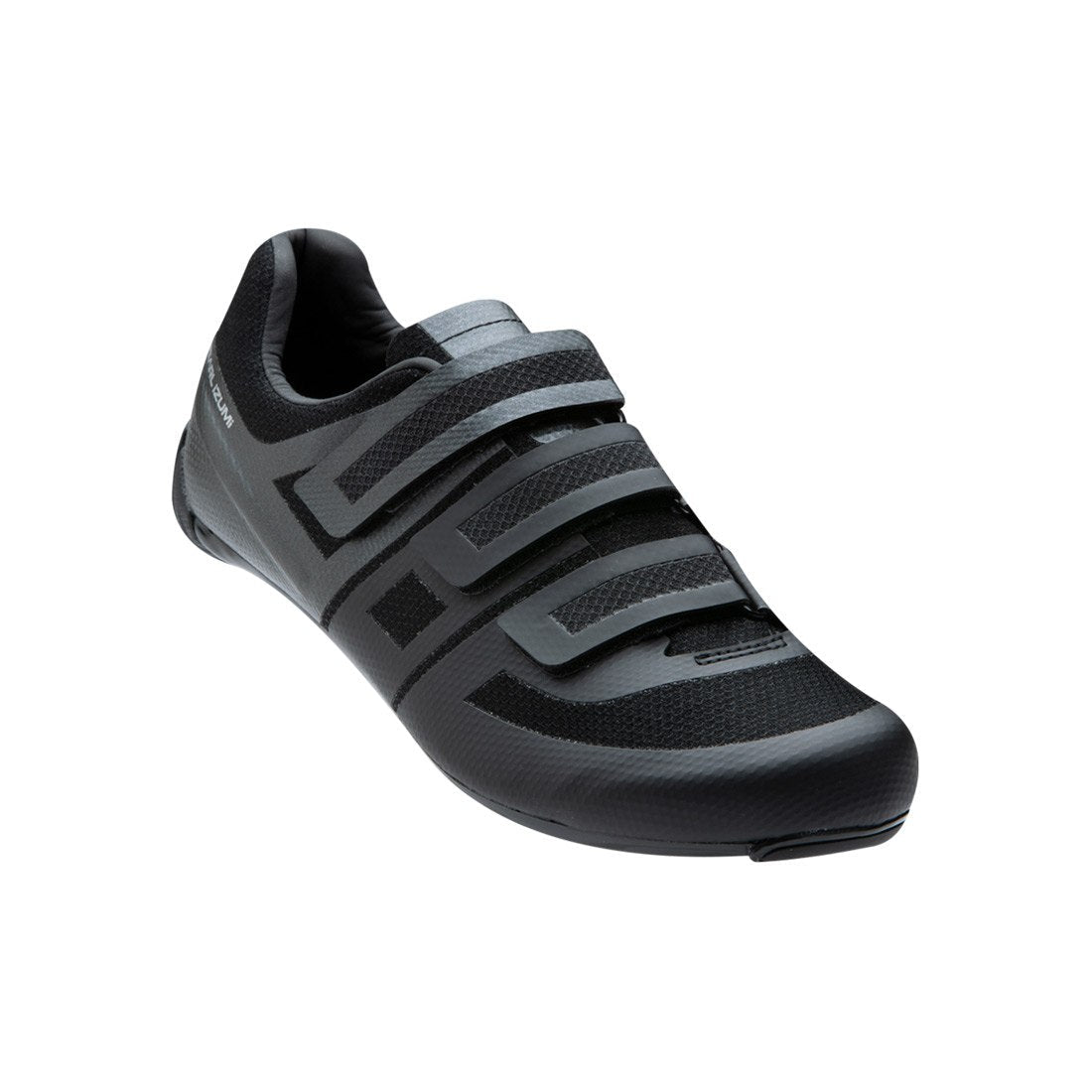
Best Indoor Cycling Shoes (2026): 7 Peloton & SPD Picks by Cleat System
The best indoor cycling shoes for 2026, sorted by cleat: 7 verified Peloton (Delta) & SPD picks from Pearl Izumi, Tommaso, Shimano & Peloton ($60-$190).
Jul 31, 2026

Best electric bike for commuting: ranked by battery watt-hours (2026)
Nine commuter e-bikes ranked by published battery watt-hours - 345.6 to 733 Wh - with verified US prices, claimed range and what each one ships with.
Sep 1, 2026