The short answer
For most beginners, the Cleveland CBX4 ZipCore in 54° or 56° is the right first extra wedge — forgiving cavity back, wide dynamic sole, available at every golf retailer. If you've never escaped a bunker and dread sand traps, get the Cleveland Smart Sole 4 instead: wider sole, lower price, purpose-built for new golfers. Budget under $50? The Wilson Harmonized is genuinely good enough to start.
GearScout may earn a commission when you buy through links on this page. Prices, availability, and ratings can change, so confirm details with the retailer before purchasing.
Prices last verified June 2026.
Most beginner golfers spend hours shopping for drivers and irons, then grab whatever wedge is on sale. That's backwards. Your wedges are the clubs you reach for on every approach that misses the green — which, for a beginner, is a lot of approaches. A forgiving wedge doesn't fix your swing, but it does turn a chunked chip into something that still reaches the green.
This guide is built around one question: what's your biggest problem around the greens right now? The answer determines which wedge belongs in your bag.
If you only have five minutes
- Most beginners: Get a 54° or 56° sand wedge with 10–14° of bounce. The Cleveland CBX4 ZipCore at $179.99 is the all-around best choice. If $180 feels steep, the Cleveland Smart Sole 4 at $119.99 is specifically designed for new golfers and has an even more forgiving sole.
- Budget under $50: Wilson Harmonized. It does the job.
- Scared of bunkers specifically: PING BunkR Wedge ($187). Purpose-engineered for sand escapes.
- Play in thick rough or bump-and-run conditions: TaylorMade Hi-Toe 4 ($149–$179). Full-face grooves work from any angle.
- Want to add spin as you improve: Callaway Jaws CB 12 (~$129–$139). Cavity back with OPUS grooves.
- How many wedges: Start with one. A 54–56° sand wedge. Add a gap wedge only after you've played 10+ rounds.
Prices last verified June 2026.
Quick Picks
These are not ranked 1–5. Each pick is the right answer for a specific type of beginner.
| Buyer type | Pick | Why |
|---|---|---|
| "I've never escaped a bunker" | Cleveland Smart Sole 4 (~$119.99) | Ultra-wide three-tiered sole; harder to duff than any other wedge on this list |
| All-around improving beginner | Cleveland CBX4 ZipCore ($179.99) | Best balance of forgiveness and growth potential; our top recommendation for most buyers |
| Budget under $50 | Wilson Harmonized (~$40–$50) | Classic design, gets the job done, won't break the budget |
| Bunker phobia | PING BunkR Wedge ($187) | Designed specifically for bunker escapes; high bounce + heel-toe weighting |
| Courses with rough / bump-and-run shots | TaylorMade Hi-Toe 4 (~$149–$179) | Full-face grooves forgive wide-open shots and thick-rough lies |
| Wants spin control to grow into | Callaway Jaws CB 12 (~$129–$139) | Cavity back + OPUS grooves; good forgiveness with more spin potential |
The three things that actually matter for beginning wedge buyers
1. Bounce angle (the one spec beginners most need to understand)
Bounce is the angle between the bottom of the wedge sole and the ground. It sounds technical but the practical effect is simple: more bounce = the club skips across the turf instead of digging in.
For beginners, more bounce is almost always better. When you hit slightly behind the ball (a fat shot), a high-bounce wedge (10–14°) lets the sole deflect off the turf and still make something approaching clean contact. A low-bounce wedge (4–8°) — which is what tour pros prefer because they pick the ball cleanly — digs straight into the ground on the same shot.
All five picks in this guide have 10° or more of bounce. Steer clear of "tour-grind" or "low bounce" wedges until you're regularly making solid contact.
2. Sole width (wider is more forgiving)
A wider sole is harder to dig with. Cleveland's Smart Sole 4 has the widest sole on this list — that's the entire point of the product. The CBX4 ZipCore has a dynamic sole that automatically optimizes for the loft angle. Wider soles forgive fat shots, thick rough lies, and tight fairway chips that go slightly wrong.
Tour wedges have narrow, thin soles because tour players hit down steeply and precisely. Beginners don't — and shouldn't buy equipment designed for that technique.
3. How many wedges to carry (hint: probably one)
Most beginner iron sets come with a pitching wedge (typically 45–48°). Adding one sand wedge in the 54–56° range covers bunkers, short pitches, and chip shots. That's it for year one.
The "three wedge setup" (pitching, gap, sand) is for golfers who've played enough to identify a yardage gap. The "four wedge setup" (pitching, gap, sand, lob) is for low handicappers who need precision at specific yardages. If you've played fewer than 20 rounds, start with one extra wedge and add from there.
Comparison Table
Prices last verified June 2026.
| Pick | Price | Bounce | Sole | Best for | Avoid if |
|---|---|---|---|---|---|
| Cleveland Smart Sole 4 | ~$119.99 | 14° (S model) | Widest — three-tiered arch | Absolute beginners, bunker struggles | Want to grow into it long-term |
| Cleveland CBX4 ZipCore | $179.99 | 10–14° (varies by loft) | Wide cavity; dynamic by loft | All-around improving beginners | Budget-constrained |
| Wilson Harmonized | ~$40–$50 | 8–12° (varies) | Standard blade | Budget-first, casual golf | Want maximum forgiveness |
| PING BunkR | $187.00 | 14° | Wide cavity, heel-toe weighted | Bunker-phobic beginners | Already comfortable in sand |
| TaylorMade Hi-Toe 4 | ~$149–$179 | 10° (56°) | Moderate — versatile grind | Rough play, bump-and-run | Tight courses, firm lies |
| Callaway Jaws CB 12 | ~$129–$139 | 12° | Tri-sole cavity | Improving beginners wanting spin | Absolute beginners (get CBX4 instead) |
Methodology
No members of the GearScout editorial team personally tested these products head-to-head for this article. Our picks are based on sourced product specifications, manufacturer pages (Dunlop/Cleveland, TaylorMade, PING, Wilson), retailer listings (2nd Swing, Golf Discount), competitor SERP analysis (thegolfinglad.com, golfgear360.com, Golf Monthly), and DataForSEO buyer-intent data captured June 2026.
Products were selected and ranked by how well they serve the specific buyer archetypes in this article — not by brand preference or affiliate rate. The Cleveland CBX4 ZipCore appears in every credible beginner-wedge guide because its cavity-back forgiveness and dynamic sole design genuinely serve new golfers better than tour blades. The Wilson Harmonized is included because it's the legitimate budget answer, not because there's an affiliate relationship driving it.
Prices fluctuate. We captured these prices in June 2026. Verify at the retailer before purchasing.
Our top picks
Best for absolute beginners: Cleveland Smart Sole 4
If you've never used a wedge independently of the ones that came with your set — meaning you've never had to deliberately think about how to chip, pitch, or escape a bunker — start here.
The Smart Sole 4's three-tiered arch sole is the widest you'll find on any wedge from a major manufacturer. Cleveland specifically designed it to make bunker shots and chip shots easier for golfers who aren't yet making consistent ball-first contact. The sole deflects aggressively off sand and turf, which means fat shots that would skull a thin-soled wedge still produce acceptable results.
It's available in Sand (58°) and Gap (52°) variants. Most beginners want the Sand variant first.
Best for: First-time wedge buyers who mostly fear bunkers and duffed chips. Avoid if: You've played more than a season and want a club you'll use for 3+ years — the Smart Sole 4 is a starter tool, not a grow-into-it wedge.
Note: Verify new availability before purchasing — pre-owned pricing at 2nd Swing suggests this model may be approaching end-of-product-cycle.
Best all-around: Cleveland CBX4 ZipCore
For most beginners who want one good wedge they can use for the next two to three years, this is the answer.
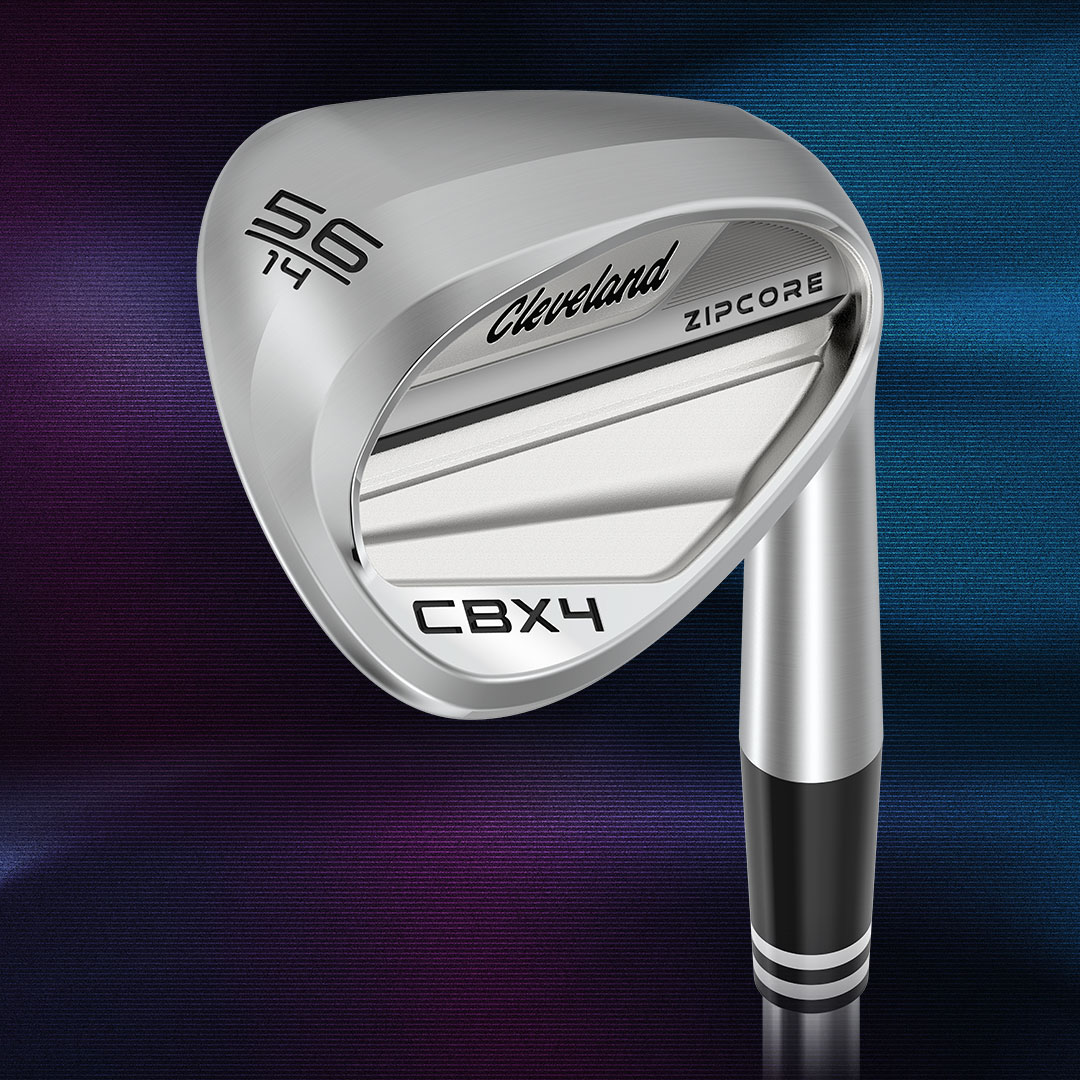
The CBX4 ZipCore is Cleveland's flagship game-improvement wedge — a cavity-back design with the ZipCore low-density core technology that shifts weight toward the perimeter, increases MOI, and dampens vibration on mishits. The sole automatically adjusts its grind shape based on loft (V-shape at higher lofts, S-shape for sand-focused lofts) so it works across all shot types without requiring a dedicated adjustment.
Every credible beginner wedge guide cites the CBX4 ZipCore or its predecessor (CBX2, CBX ZipCore) as the leading recommendation. That consensus reflects real-world performance — it's forgiving enough for beginners without sacrificing the spin and control that matter as you improve.
Best for: Beginners who want one forgiving wedge they can grow with. Avoid if: Budget is the primary constraint — the Smart Sole 4 or Wilson Harmonized cost significantly less.
Best budget pick: Wilson Harmonized
At ~$40–$50, the Wilson Harmonized doesn't offer modern forgiveness features — but it doesn't need to for a beginner who just needs a wedge to chip with and isn't ready to commit $150+.
The Harmonized is a classic blade-style design available in every standard loft from 50° to 64°. It has a traditional feel, decent turf interaction, and is widely available at Amazon, Golf Galaxy, and Dick's Sporting Goods. It's genuinely good enough. If you start with a Harmonized and find yourself playing every week, you'll know exactly which forgiveness feature you're missing when it's time to upgrade.
Best for: Budget-first beginners, casual golfers unsure they'll stick with it. Avoid if: You're committed to improving quickly — a forgiving cavity-back like the CBX4 makes a more noticeable difference.
Best for bunker-phobic beginners: PING BunkR Wedge
If you consistently fail to escape bunkers and it's the part of your game you dread most, the PING BunkR Wedge addresses that problem directly.
The BunkR is a cavity-back wedge engineered around bunker play: wide sole, 14° bounce, and heel-toe weighting that keeps the head stable through sand. The cavity-back construction also gives it more general forgiveness than a tour blade, so it's not limited to bunker shots — but that's where it earns its price tag.
At $187, it's the most expensive pick in this list. That premium is justified if sand traps are costing you multiple strokes per round.
Best for: Beginners who dread sand traps specifically. Avoid if: You're already comfortable in bunkers — the Smart Sole 4 or CBX4 provide better all-around value.
Best for rough and bump-and-run: TaylorMade Hi-Toe 4
The Hi-Toe 4 earns its spot for beginners who play on courses with thick rough or who prefer low running shots over high flop shots.
The full-face raw steel grooves grip the ball across the entire face — including the heel and toe, which are where beginners' off-center hits tend to land. Raw steel construction means the face weathers and rusts over time, which actually adds spin friction as the club ages. The versatile grind handles bump-and-run shots, punch shots, and wide-open flop attempts from rough.
Best for: Beginners who play on wooded or rough-heavy courses; players who chip low. Avoid if: Budget is a concern or you primarily play tight, firm fairways.
Best for improving beginners: Callaway Jaws CB 12
The Callaway Jaws CB 12 is worth considering for beginners who are past the "what is a wedge" stage and already making somewhat consistent contact — and want a wedge that rewards improvement with more spin.
The OPUS groove platform bites harder than standard grooves, and the Tri-Sole prevents digging on mishits. The 12° bounce is ideal for most course conditions. At ~$129–$139, it's priced between the Smart Sole 4 and CBX4.
Note: Our research could not confirm this product's image from official Callaway sources due to website security restrictions — verify product details with a Callaway authorized retailer such as PGA Tour Superstore or Golf Galaxy.
Best for: Improving beginners who want spin control and growth potential. Avoid if: You're a true first-timer — the Cleveland options are more forgiving.
Editorial Notes
GearScout has not conducted hands-on testing of these wedges. Our assessments are based on sourced product specifications, manufacturer pages (Dunlop/Cleveland, TaylorMade, PING, Wilson), authorized retailer listings (2nd Swing, Golf Discount, PGA Tour Superstore), competitor SERP analysis, and DataForSEO buyer-intent data captured June 2026. We state this plainly because the distinction between research-based editorial judgment and personal testing matters.
What the evidence supports: The Cleveland CBX4 ZipCore's cavity-back design and ZipCore internal core technology are well-documented manufacturer specifications. Multiple independent reviewer sources (thegolfinglad.com, golfgear360.com, Golf Monthly) consistently cite this wedge as the leading forgiving option for beginners — not as a paid endorsement pick, but because its design features (wide sole, high bounce, cavity cavity back) address the specific contact errors new golfers make.
What we can't confirm: We cannot verify how any of these wedges feel on a miss that's specific to a given swing type. "Forgiveness" as felt at impact varies by player and contact quality. What we can confirm is the design specifications that create that forgiveness — bounce angle, sole width, cavity-back perimeter weighting — and those are documented from manufacturer sources.
The Callaway Jaws CB 12 caveat: This product was included based on competitor analysis (golfgear360.com, thegolfinglad.com) and was among the most consistently cited beginner options in the SERP. However, we could not confirm current pricing from an official Callaway source, and we could not obtain a product image from official sources. We have flagged this clearly in the product section. Verify pricing and availability with a Callaway authorized retailer before purchasing.
Bounce angle guidance: The 10–14° bounce recommendation for beginners is industry-standard advice backed by fitter and equipment guidance from multiple golf education sources. It is not a controversial claim — it reflects how bounce geometry physically interacts with turf on fat shots, which beginners produce more often than clean ball-first strikes.
Buying Guide
What loft do beginners need? Start with 54° or 56°. That covers bunkers and chips from 40–80 yards. If your pitching wedge is 45° or weaker, check for a gap — a 52° gap wedge may fit better as your first purchase.
Bounce: always choose high. For beginners, 10–14° bounce is the right range. It prevents the leading edge from digging into turf on mishits. Low-bounce (4–8°) wedges are designed for precise ball-first contact that beginners rarely produce consistently.
Cavity back vs. blade. Cavity-back wedges (CBX4, Smart Sole 4, PING BunkR, Callaway CB 12) have perimeter weighting that stabilizes the head on off-center hits. Traditional blade wedges (Wilson Harmonized) have less forgiveness but lower price tags. For beginners who care about improvement speed, cavity back is the better investment.
How much to spend. The right range for most beginners is 00–80. Under 0, you get the Wilson Harmonized — functional but not optimized for forgiveness. Over 80, you're paying for tour performance features that beginners cannot yet access. The CBX4 ZipCore at 79.99 and Smart Sole 4 at 19.99 sit in the sweet spot.
When to add a second wedge. After 10+ rounds, notice where you're losing strokes. Consistent gap between pitching wedge and sand wedge? Add a gap wedge. Struggling from 80+ yards? Add a gap wedge. Need more height on flop shots? Consider a lob wedge — but only once you're making consistent contact.
Common mistakes to avoid
- Buying three wedges before you can chip with one. Start with a sand wedge. Add a gap wedge only after 10+ rounds reveal a specific yardage gap.
- Matching your wedge to your iron set brand. Wedge and iron brands don't need to match. Pick the most forgiving design for your skill level, not the one with the right logo.
- Buying a tour-style blade because you saw it on TV. Vokey SM10, Titleist, tour grinds — these are precision instruments for professionals and skilled amateurs who pick the ball cleanly. They punish the fat shots and heavy contact that beginners make constantly.
- Ignoring bounce angle. Picking a wedge with 4–8° of bounce because it "looks cool" will make bunker shots and chip shots harder, not easier. Beginners should always choose 10–14°.
- Skipping the sand wedge and buying a lob wedge instead. Lob wedges (60°+) require precise contact to work — the narrow blade digs viciously on mishits. Buy a sand wedge first.
- Forgetting that prices change. Every price in this guide was verified in June 2026. Confirm current pricing before purchasing.
Common questions
Frequently asked questions
- How many wedges should a beginner carry?
- Start with one: a sand wedge in the 54–56° range covers bunkers, chip shots, and pitches from 40–80 yards. Most beginner iron sets include a pitching wedge, so adding one sand wedge gives you the two most-used short-game clubs. Add a gap wedge (50–52°) only if you find a big yardage gap between your pitching wedge and sand wedge. Lob wedges (60°+) can wait until year two.
- What loft should my first extra wedge be?
- A 54° or 56° sand wedge for most beginners. It covers bunker escapes (where beginners lose the most strokes) and short pitch shots. If your pitching wedge is 45° or less, you may have a big gap and should consider a 52° gap wedge instead. A fitter at any golf retailer can check your pitching wedge loft in 30 seconds.
- What does bounce angle mean — and how much do I need as a beginner?
- Bounce is the angle between the sole of the wedge and the ground. More bounce (10–14°) means the sole skips across the turf rather than digging in — which is exactly what you want when your contact isn't perfect yet. All five picks in this guide have 10° or more of bounce. Less bounce (4–8°) is designed for tour players who hit down steeply and pick the ball cleanly — skip it until you have consistent ball-striking.
- Is the Wilson Harmonized good enough for a beginner?
- Yes, genuinely. The Harmonized is a classic design at ~$40–$50 that does what a beginner needs a wedge to do: hit chip shots, pitch over bunkers, and get the ball up from greenside rough. It won't protect you from chunked shots as well as the Cleveland CBX4 or Smart Sole 4, but if budget is the constraint, it's a legitimate option. Most beginners who start with a Harmonized don't need to replace it until they're actually improving.
- Should I match my wedge brand to my iron set?
- No. Wedges and irons don't need to be from the same brand. The most common beginner mistake is buying whatever wedge came with their set (usually a basic pitching wedge) and thinking that's what a "matching set" requires. Pick the wedge that fits your short-game problem — not the one that matches the shaft color on your irons.
References
Sources
- Cleveland Smart Sole 4 Wedge product page
- Cleveland CBX4 ZipCore Wedge product page
- TaylorMade Hi-Toe 4 Wedge product page
- PING BunkR Wedge at 2nd Swing
- Wilson Harmonized Wedge — Wilson.com
- Competitor analysis: thegolfinglad.com best wedges for beginners 2026
- Competitor analysis: golfgear360.com best wedges for beginners 2026
- DataForSEO search volume data — captured 2026-06-04
Keep reading
Related guides
Best golf wedges for high handicappers (2026)
The 6 most forgiving golf wedges for high handicappers, ranked by how well they prevent chunked chips, failed bunker escapes, and thin flops.
May 31, 2026
Best Golf Irons for Beginners (2026): 7 Picks for Every Budget and Swing
The best golf irons for beginners in 2026, matched to your budget, swing speed, and biggest flaw. Plain-English picks — no fitting jargon required.
Jun 2, 2026

Best Golf Putters for Beginners (2026): 5 Picks That Help You Two-Putt
The best golf putters for beginners in 2026 — matched to your stroke type, budget, and the exact reason your starter set putter is failing you.
Jun 3, 2026
Best golf push carts for walking (2026)
Six golf push carts compared by fold speed, trunk space, stability, bag fit, and current source-backed prices.
May 29, 2026