The short answer
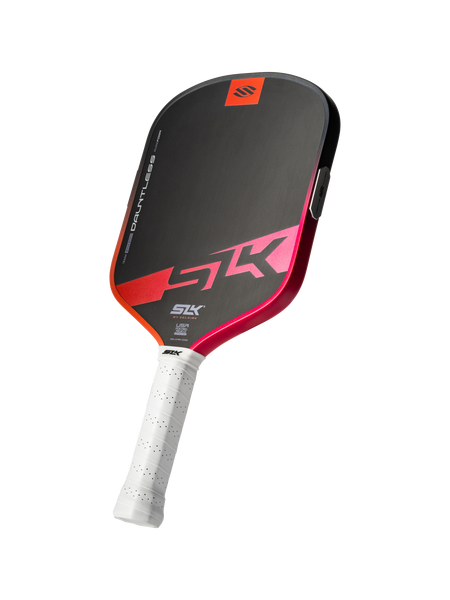
For most intermediate players (about 3.0 to 4.5), the sweet spot is a 14 to 16mm raw-carbon all-court paddle around $100 to $150 — like the Selkirk SLK Dauntless or Six Zero Sapphire. You get the spin, control, and forgiveness to keep improving without paying $220-plus for a stiff pro paddle you do not need yet.
GearScout may earn a commission when you buy through links on this page. Prices, availability, and ratings can change, so confirm details with the retailer before purchasing.
Prices last verified August 2026.
You have outgrown your first paddle. Your dinks and drives have real intent now, you are winning longer rallies, and that $50 beginner paddle with the smooth composite face has stopped biting the ball the way it used to. This guide ranks the six best pickleball paddles for intermediate players — the roughly 3.0 to 4.5 player ready for a first serious paddle — by the specs that actually change your game at this level, then matches each one to a style of play.
Here is who this is for, and the one thing most "best of" lists miss (what competitors miss): intermediate players make two opposite mistakes. Some cling to a cheap $40 to $70 fiberglass beginner paddle long after their strokes developed, capping their spin and control. Others over-correct and buy a $220 to $280 "pro" paddle because a 5.0 player uses it — then find it stiff, hard to control, and rough on the arm, offering power they cannot yet harness. The intermediate answer sits in between: a raw carbon fiber all-court paddle, 14 to 16mm thick, around $100 to $150, matched to your emerging style. Every pick below fits that brief on a budget that makes sense — you just choose the flavor.
GearScout may earn a commission when you buy through links on this page, at no cost to you. Prices and stock were verified at each retailer on August 2, 2026 and can change — confirm before you buy.
Quick Picks
- Best overall (most forgiving): Selkirk SLK Dauntless — a 16mm raw-carbon widebody with the biggest, most forgiving sweet spot here.
- Best value: Six Zero Sapphire — a respected-brand raw-carbon paddle for $99.
- Best budget: Ronbus Beta Ripple R1.14 — a former $250 thermoformed paddle on clearance for $70.
- Best for control and touch: Vatic Pro V-Sol Pro 16mm — a plush 16mm foam-core paddle at $110.
- Best from a trusted USA brand: Paddletek Bantam ESQ-C — controllable power and spin with warranty backing.
- Best for power: 11Six24 Pegasus Power 2 — a widebody power paddle that keeps a big sweet spot.
Not sure you have actually outgrown your first paddle yet? Start with our beginner pickleball paddle guide — the paddles here are the step up from those softer, cheaper starters.
Comparison Table
Prices last verified August 2026 at each brand's official store. All specs are as published by the manufacturer. Core thickness is your control-versus-power dial — thicker (16mm) plays softer and more controlled, thinner (13 to 14mm) plays poppier and more powerful.
| Paddle | Price | Core | Face | Shape | Best for |
|---|---|---|---|---|---|
| Selkirk SLK Dauntless | $150 | 16mm | T700 raw carbon | Widebody | Best overall / forgiveness |
| Six Zero Sapphire | $99 | 13mm | Toray raw carbon | Standard | Best value |
| Ronbus Beta Ripple R1.14 | $70 | 14mm | T700 raw carbon | Standard | Best budget |
| Vatic Pro V-Sol Pro 16mm | $110 | 16mm foam | Toray T700 raw carbon | Standard | Best control / touch |
| Paddletek Bantam ESQ-C | $200 | 12.7 / 14.3mm | PT-700 raw carbon | All-court | Power + spin + control |
| 11Six24 Pegasus Power 2 | $210 | 16mm | Carbon HexGrit | Widebody | Best power |
Two things jump out of that table. First, all six use a raw carbon fiber face — that gritty, spin-grabbing surface is the single biggest upgrade from a beginner paddle, and it is the line between this list and a starter paddle. Second, the price spread runs from $70 to $210, but the sweet spot clusters at $99 to $150; the two roughly $200 picks are the ceiling, not the recommendation.
Methodology
We built this list by pulling the current, published specifications and live US prices for all six paddles from each brand's own store on the same day in August 2026, then ranking by what matters to an improving player rather than by marketing copy. We prioritized a raw carbon fiber face (for spin and durability), a core in the 13 to 16mm intermediate band, and a shape that suits a developing game, then organized the picks by role and led with value. We confirmed each paddle is a current, in-stock model with a live price, verified every buy link resolves, and checked every product image against the brand's own listing. Prices and stock were verified August 2, 2026 — confirm the price at the retailer before you buy, since it can move (the Ronbus is a clearance price and may not last).
What We Checked
We are transparent about our evidence: GearScout did not play-test these six paddles on a court. Instead, we compared the manufacturers' published specs — face material, core thickness, shape, weight, and construction — side by side, then verified each paddle's current US price, stock, and product image against the brand's live listing (every image returned an HTTP 200 image file; every buy link resolved). For on-court feel, we lean on the reputations that independent playtesters (Pickleball Studio, JohnKew, Pickleheads) have built over many hours of testing, and we say so plainly rather than dressing spec sheets up as hands-on reviews. We deliberately did not quote per-paddle spin RPM numbers: the databases that publish them are paywalled or script-gated, and the honest truth is we did not run a ball machine, so we will not print a number we cannot stand behind. The one thing competitors bury: at this level a $99 raw-carbon paddle will take you from 3.0 to 4.5 just fine, so you do not need to spend $250.
The picks in depth
Best overall: Selkirk SLK Dauntless — $150
The Dauntless is the paddle we would hand most intermediates who want one do-everything stick. It pairs a 16mm control core with a T700 raw carbon face on a widebody 15.95 by 8 inch head, so the sweet spot is large and forgiving — exactly what an improving player needs while contact is still inconsistent. Selkirk tunes it to lean toward control without giving up put-away power, and it comes from the biggest name in US pickleball with real warranty support. At $150 it undercuts the $220-plus pro paddles while covering the vast majority of what they do.
- Best for: the improving all-court player who wants the largest, most forgiving sweet spot in a single paddle.
- Avoid if: you want elongated reach and leverage (this is a widebody) or the lightest possible swing.
Best value: Six Zero Sapphire — $99
Six Zero built its name on premium thermoformed paddles; the Sapphire brings the brand's Toray raw carbon face down to $99. It uses a thinner 13mm core, so it plays poppier and more powerful than the 16mm control paddles here — a lively, forgiving all-court paddle that flatters an aggressive intermediate. If your beginner paddle has a smooth composite face that has stopped biting the ball, this is the cheapest way to feel what a genuine raw-carbon face does for your spin.
- Best for: the value hunter who wants a respected-brand raw-carbon paddle with a poppy, lively feel.
- Avoid if: you are building a soft dinking and reset game and want a thicker 16mm control core.
Best budget: Ronbus Beta Ripple R1.14 — $70 (clearance, was $250)
This is the steal of the list. The Beta Ripple was a $250-tier thermoformed raw-carbon paddle, and Ronbus is clearing it at $70 as newer models arrive. You get a 14mm T700 raw carbon paddle — genuine intermediate specs — for beginner-paddle money. The catch is honest: it is a clearance price, so stock and cost can vanish without warning, and the 14mm core is power-leaning rather than control-first. But dollar for dollar, nothing else here comes close.
- Best for: the buyer who wants the most paddle per dollar and can live with clearance-stock uncertainty.
- Avoid if: you need guaranteed availability or a thicker 16mm control core.
Best for control and touch: Vatic Pro V-Sol Pro 16mm — $110
Vatic made its name selling premium specs cheaply, and the V-Sol Pro is its modern foam-core paddle: a 16mm EPP foam core with an EVA perimeter ring and a Toray T700 raw carbon face, at 8.0 oz. Foam-core construction, a 2026 trend, gives a plush, connected feel with a large sweet spot and excellent spin — a genuinely control-first paddle at $110. It also comes in an elongated (V7) shape and a widebody (Bloom) shape if the standard does not suit you.
- Best for: the improving player developing a soft game who wants plush control and strong spin without overpaying.
- Avoid if: you are wary of newer foam-core construction (less long-term durability data than thermoformed) or you want maximum raw power.
Best from a trusted USA brand: Paddletek Bantam ESQ-C — $199.99
If you want a proven mainstream brand with warranty backing and a long track record, Paddletek is it. The Bantam ESQ-C uses a PT-700 unidirectional raw carbon face for heavy spin, comes in a 12.7mm (poppier) or 14.3mm (more control) core at 7.5 to 7.8 oz, and was designed with pro Andrea Koop for controllable power and a large, consistent sweet spot on a roughly 16 by 8 inch head. It is the priciest all-rounder here, and part of what you pay for is the brand and support — but it is a paddle you can grow into for years.
- Best for: the buyer who values a proven USA brand, warranty support, and controllable power with spin.
- Avoid if: you are chasing value — three cheaper picks cover the same intermediate sweet spot.
Best for power: 11Six24 Pegasus Power 2 — $209.99
11Six24 is one of the boutique brands intermediates gravitate toward, and the Pegasus Power 2 is its widebody power paddle: a 16mm core with a carbon fiber HexGrit face, 8.0 to 8.3 oz, and a 5.75 inch handle. The widebody shape keeps the sweet spot generous even though the paddle is tuned for put-away pace — a rare pairing of power and forgiveness. It is the most expensive pick here and comes from the newest brand, so treat it as a "buy it because you specifically want power," not a default.
- Best for: the aggressive intermediate who wants put-away power without a punishingly small sweet spot.
- Avoid if: you want a legacy brand or a lighter, control-first paddle.
Want to go all-in on one attribute instead? See our best pickleball paddles for control and best pickleball paddles for spin guides for style-maximizing picks.
Buying Guide
The five specs that actually matter when you step up to an intermediate paddle:
- Face material. This is the single biggest upgrade from a beginner paddle. Raw carbon fiber (Toray, T700, PT-700) has a gritty texture that grabs the ball for far more spin and holds that texture longer than the smooth fiberglass or composite faces on cheap paddles. Every paddle here has a carbon face — insist on one.
- Core thickness. A 16mm core plays softer: more control, touch, and forgiveness, which helps you develop your dinks, resets, and soft game. A 14mm core (and the Sapphire's thinner 13mm) plays poppier: more power and put-away pace, less control. Most improving players are better served by 16mm; aggressive bangers prefer the thinner cores.
- Shape. Standard (Sapphire, V-Sol Pro) balances everything. Widebody (Dauntless, Pegasus) has the biggest, most forgiving sweet spot — the safest choice while your contact is inconsistent. Elongated adds reach, leverage, and spin but shrinks the sweet spot and demands better timing — great for former tennis players, risky for everyone else.
- Weight. Most sit between 7.5 and 8.3 oz. Heavier paddles hit a heavier ball and are more stable but load the arm more; lighter paddles are quicker at the net. If your elbow talks to you, lean lighter and softer and add lead tape later if you want more mass.
- Construction. Thermoformed unibody and foam-core paddles (all of these) deliver more power and a bigger sweet spot than older cold-pressed paddles — the reason a $100 paddle today outplays a $150 paddle from a few years ago.
The pro-paddle trap. The most expensive mistake at this level is buying the $220 to $280 paddle a 5.0 pro endorses — a JOOLA Perseus, a CRBN TruFoam, a ProKennex Black Ace. Those are stiff, high-swingweight power tools tuned for players with elite hand speed and control; on a developing game they are harder to control, hand you power you cannot yet aim, and can aggravate your arm. Buy the paddle that fits your game today.
The $99 truth. Three of our six picks are $110 or less, and our best overall is $150. Thermoformed and foam-core construction has pushed real performance down-market — you do not need to spend $200-plus to get a raw-carbon paddle that will carry you from 3.0 to 4.5. Put the difference toward court time and coaching.
Take care of it. Raw carbon edges chip, and thermoformed or foam cores can crack if you smack the ground or the fence — the honest trade-off for the added power. Use the edge guard if the paddle ships with one, and resist tomahawking the court after a missed put-away.
Common mistakes to avoid
- Clinging to a fiberglass beginner paddle. If the face has gone smooth and your dinks and drives lack bite, you have outgrown it — the carbon-face upgrade is the fix.
- Buying the pro's paddle. Endorsement paddles are built for pro hands. Fit the paddle to your game, not your favorite player's.
- Chasing power when you need control (or the reverse). Decide what your game is missing before you shop — 16mm for touch, 14mm for pop.
- Ignoring face material. A smooth or worn composite face kills spin no matter the price. Raw carbon is the upgrade that matters.
- Buying elongated for reach you cannot use. The smaller sweet spot punishes inconsistent contact. Unless you are a tennis convert with fast, grooved swings, start standard or widebody.
- Overspending on a $250 pro paddle. It will not fix a developing game — and it may hurt your arm.
FAQs
What makes a pickleball paddle right for intermediate players?
The jump from a beginner paddle is mostly two things: a raw carbon fiber face (Toray, T700, or PT-700) that grabs the ball for real spin, and a thicker 14 to 16mm core that adds control and forgiveness. Aim for a thermoformed or foam-core all-court paddle around $100 to $150, then match the shape and thickness to your style.
How much should an intermediate spend on a paddle?
The sweet spot is $100 to $150. Three of our six picks are $110 or less, and even a $70 clearance paddle (Ronbus Beta Ripple) or a $99 paddle (Six Zero Sapphire) will outplay almost any beginner paddle. You do not need the $220 to $280 pro paddles that dominate generic lists.
Is a 14mm or 16mm paddle better for intermediates?
A 16mm core plays softer and more controlled — better for developing your dinks, resets, and soft game, which is where most intermediates improve fastest. A 14mm (or thinner) core plays poppier with more power and put-away pace but less control. Most improving players should start at 16mm; aggressive bangers prefer the thinner cores.
Do I need a raw carbon fiber paddle?
It is the single biggest upgrade from a beginner paddle. Raw carbon (often Toray T700) has a gritty surface that generates far more spin and holds its texture longer than the smooth fiberglass or composite faces on cheap paddles. Every paddle in this guide has a carbon face for exactly that reason.
Standard, widebody, or elongated shape?
Widebody paddles (Selkirk SLK Dauntless, 11Six24 Pegasus) have the biggest, most forgiving sweet spot — the safest choice while your contact is inconsistent. Standard paddles (Six Zero Sapphire, Vatic V-Sol Pro) balance everything. Elongated paddles add reach, leverage, and spin but shrink the sweet spot and demand better timing — a good fit for former tennis players, a risky one for everyone else.
Should I buy the same paddle my favorite pro uses?
Usually not. Pro paddles are often stiff, high-swingweight power tools tuned for elite hand speed; on a developing game they are harder to control and can aggravate your arm. Buy the paddle that fits your current level — you can always upgrade once your game demands it.
Still deciding where you sit? If you are newer than you think, drop back to the beginner pickleball paddle guide; to dial in one attribute, see the control and spin guides; or browse every guide on the racket sports hub.
Common questions
Frequently asked questions
- What makes a pickleball paddle right for intermediate players?
- The jump from a beginner paddle is mostly two things: a raw carbon fiber face (Toray, T700, or PT-700) that grabs the ball for real spin, and a thicker 14 to 16mm core that adds control and forgiveness. Aim for a thermoformed or foam-core all-court paddle around $100 to $150, then match the shape and thickness to your style.
- How much should an intermediate spend on a pickleball paddle?
- The sweet spot is $100 to $150. Three of our six picks are $110 or less, and even a $70 clearance paddle (Ronbus Beta Ripple) or a $99 paddle (Six Zero Sapphire) will outplay almost any beginner paddle. You do not need the $220 to $280 pro paddles that dominate generic lists.
- Is a 14mm or 16mm pickleball paddle better for intermediates?
- A 16mm core plays softer and more controlled — better for developing your dinks, resets, and soft game, which is where most intermediates improve fastest. A 14mm (or thinner) core plays poppier with more power and put-away pace but less control. Most improving players should start at 16mm; aggressive bangers prefer the thinner cores.
- Do I need a raw carbon fiber pickleball paddle?
- It is the single biggest upgrade from a beginner paddle. Raw carbon (often Toray T700) has a gritty surface that generates far more spin and holds its texture longer than the smooth fiberglass or composite faces on cheap paddles. Every paddle in this guide has a carbon face for exactly that reason.
- Should I get a standard, widebody, or elongated paddle shape?
- Widebody paddles (Selkirk SLK Dauntless, 11Six24 Pegasus) have the biggest, most forgiving sweet spot — the safest choice while your contact is inconsistent. Standard paddles (Six Zero Sapphire, Vatic V-Sol Pro) balance everything. Elongated paddles add reach, leverage, and spin but shrink the sweet spot and demand better timing — a good fit for former tennis players, a risky one for everyone else.
- Should I buy the same paddle my favorite pro uses?
- Usually not. Pro paddles are often stiff, high-swingweight power tools tuned for elite hand speed; on a developing game they are harder to control and can aggravate your arm. Buy the paddle that fits your current level — you can always upgrade once your game demands it.
References
Sources
Keep reading
Related guides

Best pickleball paddles for beginners (2026)
The best beginner pickleball paddles for control, value, tennis converts, and first tournament play.
May 29, 2026
Best pickleball paddles for control (2026): 7 soft, forgiving picks
The best control pickleball paddles for 2026, from the $99.99 Vatic Pro Prism to the premium JOOLA Perseus, ranked by soft feel, shape, and forgiveness.
Jul 28, 2026
Best pickleball paddles for spin (2026): 6 gritty raw-carbon picks
The best spin pickleball paddles for 2026, from the $99.99 Vatic Pro Prism Flash to the certified JOOLA Scorpeus, ranked by raw-carbon grit, not fake RPM.
Jul 30, 2026

Best Pickleball Paddles for Advanced Players (2026): 9 Ranked by Twist Weight
Nine advanced pickleball paddles ranked by published twist weight - 5.88 to 7.05 - with verified US prices from $75.00 to $279.99, checked September 2026.
Sep 2, 2026