The short answer
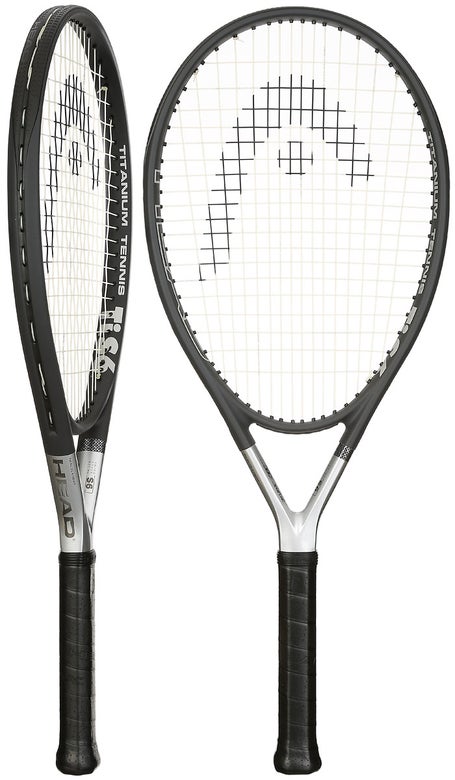
For most beginners, a light (9–10 oz), forgiving racket with an oversized 105–115 sq in head hits the sweet spot — the Head Ti.S6 at $99 is the value pick. Spend $100–$150 for a graphite frame you'll keep; you do not need a $300 racket to start.
GearScout may earn a commission when you buy through links on this page. Prices, availability, and ratings can change, so confirm details with the retailer before purchasing.
Prices last verified July 2026.
Buying your first tennis racket is weirdly stressful. The rack at the shop runs from $30 to $300, every frame lists a head size, a weight, a stiffness number and a string pattern, and most reviews are written by people comparing pro-level frames you should not touch yet. Here is the good news: as a beginner you can ignore almost all of it. What matters is a light, forgiving racket that gives you free power and does not punish off-center hits — and the racket most beginners should buy costs about $99, not $300.
Most beginners buy on looks, price, or whatever a friend swings. The real mistakes are quieter: buying a heavy "player's" frame that wrecks your arm and your consistency, or overspending on a $300 racket you cannot yet feel the benefit of. This guide is organized by the kind of beginner you are — not by a 1-to-7 ranking. Find your situation, take the pick, skip the rest. (New to racket sports in general? See the racket sports hub.)
If you only have five minutes
- Most beginners: get the Head Ti.S6 at $99 — ultralight, oversized 115 sq in head, effortless power and a huge sweet spot. It is the value default.
- Cheapest legit start: the Head Ti.Conquest at $29.95 if you are not yet sure you will stick with tennis.
- Already playing regularly: step up to a real graphite frame — the Babolat Boost Drive at $149.
- Comfort / your arm comes first: the Wilson Clash 108 v3 is famously easy on the arm — worth it only if comfort is your top priority.
- You do NOT need a $300 racket to start. Spend $100–$150 on a graphite frame and put the rest toward lessons and court time. That does far more for your tennis than any frame.
Quick Picks
Not a ranked list — each pick is the right answer for one kind of beginner. Prices are source-backed retailer prices (see the table for sources).
| If you are… | Pick | Price | Why it fits you |
|---|---|---|---|
| Not sure you will stick with tennis | Head Ti.Conquest | $29.95 | Cheapest legit frame; stable, control-leaning feel to learn on |
| Most beginners (want easy power) | Head Ti.S6 | $99 | Ultralight + oversized 115 sq in; giant sweet spot, free power |
| Playing regularly, want a real racket | Babolat Boost Drive | $149 | 100% graphite feel and durability at a value price |
| Keen to learn topspin early | Babolat Evo Drive Lite | $199 | Super-open 16x17 pattern bites the ball; light and fast |
| Want one frame to grow into | Head Boom Team 2026 | $239 | Arm-friendly and forgiving; extended length adds serve pop |
| Comfort / easy on the arm above all | Wilson Clash 108 v3 | $299 | Famously flexible (58 RA) with a forgiving oversized head |
| Athletic, know you will stick with it | Yonex EZONE 100L | $305 | Plush comfort and spin; a real intermediate frame to keep |
Comparison Table
Prices last verified July 2026. Specs are from each racket's authorized-retailer product page (Tennis Warehouse; Do It Tennis for the Ti.Conquest). "RA" is stiffness — lower is more flexible and generally more comfortable on the arm.
| Racket | Price | Head | Strung weight | Stiffness (RA) | Strings | Best for | Avoid if |
|---|---|---|---|---|---|---|---|
| Head Ti.Conquest | $29.95 | 108 sq in | 10.2 oz | not published | 18x19 | Cheapest legit start | You play weekly already |
| Head Ti.S6 | $99 | 115 sq in | 8.6 oz | 71 (stiff) | 16x19 | Most beginners / free power | You have fast hands already |
| Babolat Boost Drive | $149 | 105 sq in | 9.8 oz | 72 (stiff) | 16x19 | Regular play, graphite feel | You want plush comfort |
| Babolat Evo Drive Lite | $199 | 104 sq in | 9.5 oz | 62 (medium) | 16x17 | Learning topspin | You want a dense string bed |
| Head Boom Team 2026 | $239 | 107 sq in | 9.7 oz | 62 (medium) | 16x19 | A frame to grow into | You want the cheapest route |
| Wilson Clash 108 v3 | $299 | 108 sq in | 10.4 oz | 58 (flexible) | 16x19 | Comfort above all | You are price-sensitive |
| Yonex EZONE 100L | $305 | 100 sq in | 10.6 oz | 67 (medium) | 16x19 | Buy-once, athletic improver | You want max forgiveness |
The three things that actually matter
Ignore the marketing. For a beginner, three specs decide almost everything. Lead with the takeaway, then the reason.
1. Head size and weight — this is your forgiveness
A bigger head (104–115 sq in) and a lighter frame (roughly 9–10.5 oz) give you a larger sweet spot and an easier swing. That means more balls landing in and fewer jarring mishits while your timing is still developing. Every racket here sits in that beginner-friendly window on purpose; a 98 sq in, 11.5 oz "player's" frame is the classic first-racket mistake.
2. Stiffness — this is your comfort
Stiffness (the "RA" number) is the spec beginners never hear about and feel the most. A stiffer frame (RA 70+, like the Ti.S6 and Boost Drive) transfers more power but also more shock to the wrist and elbow. A flexible frame (RA in the high 50s, like the Wilson Clash) flexes to absorb impact and plays softer. If you have any history of arm soreness in other sports, bias toward the lower RA picks.
3. Strings and grip — the stuff nobody mentions
Every racket here comes pre-strung, so you can play day one. When it is time to restring (every few months of regular play), a soft multifilament or synthetic gut at a mid-low tension is the arm-friendly, beginner-appropriate choice — skip stiff polyester until you are swinging fast enough to need it. Grip size matters too: most adults land on 4 1/4" or 4 3/8". Too small and you squeeze; too big and you cannot maneuver. When unsure, size down and add an overgrip.
Methodology
We built this list for one reader: someone buying their first tennis racket who is overwhelmed by the choice. Picks are organized by buyer archetype rather than a single ranking, because the "best" beginner racket genuinely depends on your budget, your body, and how sure you are that you will keep playing.
Selection weighted: forgiveness (head size, sweet spot, swing weight), arm comfort (frame stiffness), value at the price, pre-strung convenience, and whether a beginner will grow with the frame instead of out of it. We deliberately excluded true player's frames (small heads, heavy static weights) — they are not beginner rackets no matter how good they are.
Two honest disclosures. First, three of the seven picks are Head. That is not sponsorship; Head genuinely owns the sub-$100 titanium-composite beginner niche (the Ti.Conquest and Ti.S6 have anchored it for years), and the Boom Team is one of the best arm-friendly improver frames. We name non-Head picks wherever they win a category. Second, this is a spec-and-source-based editorial guide, not a hands-on lab test — see the next section.
What We Checked
We are transparent about our evidence. We verified every price and every spec (head size, strung weight, balance, stiffness/RA, string pattern, length) against each racket's authorized-retailer product page on July 28, 2026, and we compared those specs across the field to place each frame with the right kind of beginner. We also confirmed that every product image loads from an official retailer source before this guide went live.
What we did not do: swing all seven in a single hitting session. GearScout has not run a controlled on-court test of these exact frames, so we do not claim hands-on impressions. Instead, the recommendations lean on published manufacturer and authorized-retailer specs plus the well-documented reputations of these lines (the Clash comfort story, the Ti.S6 power-and-forgiveness reputation, the Boom Team's arm-friendly build). Where sources disagreed — the Babolat Boost Drive is listed at 9.8 oz strung by Tennis Warehouse and 260 g unstrung by Babolat — we used the retailer's strung figure and flagged it rather than pretending to a single exact number.
Our picks in depth
Head Ti.Conquest — the cheapest legit way to start ($29.95)
At about thirty dollars, the Ti.Conquest is the honest answer to "I want to try tennis without committing." It is a titanium-composite frame with an oversized 108 sq in head and a head-light, control-leaning balance, so it is stable and forgiving to learn on. It is also, unmistakably, an entry-level racket.
- Best for: casual first-timers, someone testing whether tennis sticks before spending real money.
- Avoid if: you already play weekly — you will feel the ceiling quickly and want a livelier graphite frame.
Head Ti.S6 — best value for most beginners ($99)
The Ti.S6 has been the default beginner power racket for a long time, and it earns it. It is remarkably light (8.6 oz strung) with a big 115 sq in head and a head-heavy balance, which together deliver effortless depth and a forgiving sweet spot with almost no technique required. For most new adult players, this is the buy.
- Best for: the majority of beginners; anyone who wants free power and maximum forgiveness for $99.
- Avoid if: you have a fast, athletic swing or prior racket-sport background — the head-heavy, powerful feel can play unwieldy and low on control for stronger players.
Babolat Boost Drive — the "real racket" upgrade ($149)
If you already know you like tennis, the Boost Drive steps you into a 100% graphite frame — better feel and durability than budget composites — without paying performance-line prices. The 105 sq in head stays forgiving, and Babolat's grommet system adds a little comfort to an otherwise stiff, powerful frame.
- Best for: the beginner playing regularly who wants a graphite frame they will not outgrow in a month.
- Avoid if: you want plush comfort (it is on the stiffer side at RA 72) or the outright cheapest option.
Babolat Evo Drive Lite — best for learning spin ($199)
The Evo Drive Lite has a trick the others do not: a super-open 16x17 string pattern that bites the ball and helps you feel topspin early. It is light (9.5 oz) and fast through the air, which suits a developing swing.
- Best for: the beginner who wants to learn modern topspin from the start.
- Avoid if: you want a denser, control-oriented string bed or a heavier, more planted frame for flat hitting.
Head Boom Team 2026 — one frame to grow into ($239)
The Boom Team is the most "grown-up" beginner pick here without being a player's frame. It pairs an arm-friendly beam with a forgiving 107 sq in head and an extended 27.4" length that adds free reach and serve pop. The even balance makes it versatile as your game develops. We confirmed it in stock across grip sizes this run.
- Best for: the beginner who wants to buy once and grow into the frame over a couple of seasons.
- Avoid if: you want the cheapest way in, or you specifically want a smaller control head.
Wilson Clash 108 v3 — the comfort pick ($299)
The Clash line is famous for one thing: it is flexible and easy on the arm. The Clash 108 v3 pairs that low-stiffness (RA 58) comfort with an oversized 108 sq in head for extra forgiveness. It is a premium price for a beginner, and it is the pick when comfort genuinely matters most to you.
- Best for: comfort-first players; anyone prioritizing a soft, arm-friendly feel over saving money.
- Avoid if: you are price-sensitive, or you prefer a firmer, more classic response.
Yonex EZONE 100L — buy-once for the athletic improver ($305)
The EZONE 100L is really an intermediate frame lightened for easier handling. If you are athletic, picking the sport up fast, and confident you will stick with it, it delivers plush Yonex comfort and spin in a 100 sq in frame you will keep for years rather than replace next season.
- Best for: the athletic beginner who wants a real, lasting frame and will not miss the training wheels.
- Avoid if: you want maximum forgiveness (100 sq in is the smallest head here) or the cheapest start.
Buying Guide
Here is what competitors bury under ranked lists: the price-tier truth. You will see beginners buying $300 Clash and EZONE frames on a coach's recommendation. Most of them do not need to. Here is how the tiers actually shake out for a new player.
- Under $50 (Ti.Conquest, plus sub-$50 alloy rackets like the Wilson Tour Slam you will see at big-box stores): fine for "am I going to like this?" Aluminum big-box frames technically work, but they are stiff and lifeless; if you can, start at the Ti.Conquest instead. Only reason to go here: genuine uncertainty or a tight budget.
- The $99–$150 sweet spot (Ti.S6, Boost Drive): where most beginners should shop. Light, forgiving, powerful, and — at $149 — real graphite. For the overwhelming majority of new players, spending more does not buy more improvement. It buys a spec sheet.
- $200–$305 (Evo Drive Lite, Boom Team, Clash 108, EZONE 100L): worth it only for a specific reason: you want to learn spin (Evo), you want to buy once and grow into it (Boom, EZONE), or comfort is your genuine priority (Clash). If none of those is a clear yes, keep your money.
The plain-language shortcut: if you are unsure, buy the Head Ti.S6 for $99, take the $200 you saved, and spend it on a few lessons and court time. That is who this is for and it is the single highest-return move a beginner can make. Whatever you pick, every racket here comes pre-strung and ready to play, and every retailer link points to a live product page — confirm the price and grip size before you check out.
Common mistakes beginners make
- Buying a heavy, small-headed "player's" racket because a good player uses one. It will hurt your arm and your consistency.
- Overspending on a $300 frame before you can feel what it does. Improvement comes from reps, not RA numbers.
- Ignoring stiffness. If your arm gets sore, the frame's RA (and stiff poly strings) is usually why.
- Sizing the grip by guessing. Too big is worse than too small — size down and add an overgrip if unsure.
- Buying a "beginner set" racket from a big-box bin and assuming it is the same as a $99 Ti.S6. It is not.
FAQs
How much should a beginner spend on a tennis racket?
For most beginners, $99–$150 is the sweet spot. That range buys a light, forgiving, pre-strung frame — including real graphite at $149. Spending more only makes sense for a specific reason (spin, comfort, or buying a frame to grow into). Under $50 works for testing whether you will stick with the sport.
Do I need a "beginner" racket, or can I start with a better one?
You can start with a more advanced frame, but most beginners should not. Player's rackets are heavy with small heads and low power — they demand technique you have not built yet, punish mishits, and are hard on the arm. A forgiving beginner frame helps you keep the ball in and enjoy playing, which is what actually makes you improve.
What head size and weight should a beginner look for?
Aim for an oversized head (104–115 sq in) for a bigger sweet spot, and a lighter strung weight (about 9–10.5 oz) for an easier swing. Every pick in this guide sits in that window. Once your strokes are grooved, you can move to a smaller, heavier frame if you want more control.
Does grip size matter, and how do I choose?
Yes. Most adults use 4 1/4" or 4 3/8". A grip that is too big forces you to squeeze and strains the forearm; too small and the racket twists on contact. When you are between sizes, choose the smaller one and build it up with an overgrip.
Is buying a $30 racket a mistake?
Not if you are genuinely unsure about the sport. The Head Ti.Conquest is a legitimate, playable frame for a first-timer. But if you already know you will play regularly, skip it — you will outgrow it fast and be happier starting at the $99 Ti.S6 or the $149 Boost Drive.
New to racket sports more broadly? See our beginner pickleball paddle guide and, once you are dialing in touch, the pickleball control-paddle guide — or browse the full racket sports hub.
Common questions
Frequently asked questions
- How much should a beginner spend on a tennis racket?
- For most beginners, $99–$150 is the sweet spot. That range buys a light, forgiving, pre-strung frame — including real graphite at $149. Spending more only makes sense for a specific reason (spin, comfort, or a frame to grow into). Under $50 works for testing whether you'll stick with the sport.
- Do I need a "beginner" racket, or can I start with a better one?
- You can start with a more advanced frame, but most beginners shouldn't. Player's rackets are heavy with small heads and low power — they demand technique you haven't built yet, punish mishits, and are hard on the arm. A forgiving beginner frame helps you keep the ball in and enjoy playing, which is what actually makes you improve.
- What head size and weight should a beginner look for?
- Aim for an oversized head (104–115 sq in) for a bigger sweet spot, and a lighter strung weight (about 9–10.5 oz) for an easier swing. Every pick in this guide sits in that window. Once your strokes are grooved you can move to a smaller, heavier frame for more control.
- Does grip size matter, and how do I choose?
- Yes. Most adults use 4 1/4" or 4 3/8". A grip that's too big forces you to squeeze and strains the forearm; too small and the racket twists on contact. When you're between sizes, choose the smaller one and build it up with an overgrip.
- Is buying a $30 racket a mistake?
- Not if you're genuinely unsure about the sport — the Head Ti.Conquest is a legitimate, playable first frame. But if you already know you'll play regularly, skip it: you'll outgrow it fast and be happier starting at the $99 Ti.S6 or the $149 Boost Drive.
References
Sources
- Head Titanium Ti.S6 — Tennis Warehouse (price + specs)
- Head Ti.Conquest — Do It Tennis (price + specs)
- Babolat Boost Drive — Tennis Warehouse (price + specs)
- Babolat Evo Drive Lite — Tennis Warehouse (price + specs)
- Head Boom Team 2026 — Tennis Warehouse (price + specs)
- Wilson Clash 108 v3 — Tennis Warehouse (price + specs)
- Yonex EZONE 100L 2025 — Tennis Warehouse (price + specs)
Keep reading
Related guides

Best pickleball paddles for beginners (2026)
The best beginner pickleball paddles for control, value, tennis converts, and first tournament play.
May 29, 2026
Best pickleball paddles for control (2026): 7 soft, forgiving picks
The best control pickleball paddles for 2026, from the $99.99 Vatic Pro Prism to the premium JOOLA Perseus, ranked by soft feel, shape, and forgiveness.
Jul 28, 2026

Best Pickleball Paddles for Advanced Players (2026): 9 Ranked by Twist Weight
Nine advanced pickleball paddles ranked by published twist weight - 5.88 to 7.05 - with verified US prices from $75.00 to $279.99, checked September 2026.
Sep 2, 2026

Best Pickleball Shoes for Women (2026): 8 Picks Ranked by the Width You Can Buy
Women's pickleball shoes ranked by the widths and size runs you can actually buy - 8 verified picks from $75 to $149.95, checked August 2026.
Aug 15, 2026