
The short answer
The Callaway 2025 Supersoft is the single best golf ball for beginners: low compression (~38), forgiving flight, and available everywhere at $26.99/dozen. If you're losing more than four balls per round, spend less — the TaylorMade Distance+ at $21.99/dozen is the smarter pick until your ball-loss rate drops.
GearScout may earn a commission when you buy through links on this page. Prices, availability, and ratings can change, so confirm details with the retailer before purchasing.
Prices last verified June 2026.
Most beginner golfers walk into a golf shop, see the Pro V1 sitting there as the best ball in the store, and buy it. That's the single most common — and most expensive — beginner ball mistake. The Pro V1 is designed for tour players swinging at 95–105 mph with precise wedge technique. For everyone else learning the game, it makes slices worse, reduces distance, and costs $55/dozen.
The Callaway Supersoft is the ball most beginners should just buy and stop thinking about. It's soft enough to feel good at typical beginner swing speeds, straight-flying enough to not compound mishits, and common enough to buy at any golf retailer in the country. If you lose four-plus balls per round — totally normal as a beginner — the TaylorMade Distance+ at $21.99/dozen is the smarter move until your ball-loss rate drops.
Everything below this line is for the 20% of beginners with a specific reason to deviate from those two picks.
If you only have five minutes
Prices last verified June 2026.
- Most beginners → Callaway 2025 Supersoft ($26.99/dozen): Low compression, soft feel, widest swing-speed range, available everywhere. Just buy it.
- Losing more than 4 balls per round → TaylorMade Distance+ ($21.99/dozen): Cheapest major-brand option. Same straight-flight engineering. Stop spending premium prices until your ball-loss rate is under 3/round.
- Consistent slicer/hooker → Bridgestone e6 Soft (~$28–$32/dozen): Genuinely engineered for reduced sidespin. If your ball curves the same direction every hole, this helps more than any other pick.
- Brand-loyal to Titleist → Titleist 2026 TruFeel (~$29.99/dozen): The Titleist entry-level ball. Gets you the brand quality without Pro V1 price. But it's the most expensive in this guide.
- Want the softest possible feel → Wilson Duo Soft (~$20–$25/dozen): Compression 35, the lowest of any major ball. Softer than everything here. Excellent for arthritic hands or very slow swing speeds.
Quick Picks by buyer type
Not a ranked list — each pick is the right answer for one type of beginner.
| Buyer type | Pick | Price | Why |
|---|---|---|---|
| Most beginners (default) | Callaway 2025 Supersoft | $26.99/doz | Widest swing-speed range; available everywhere; compression ~38 |
| Budget/high ball-loss rate | TaylorMade 2025 Distance+ | $21.99/doz | Lowest price; straight-flight engineering; ionomer durability |
| Consistent slicer or hooker | Bridgestone e6 Soft | ~$28–$32/doz | Engineered to reduce sidespin; Dual Dimple technology |
| Brand-loyal Titleist buyer | Titleist 2026 TruFeel | ~$29.99/doz | Titleist quality at accessible price; TruTouch Core |
| Softest feel priority | Wilson 2025 Duo Soft | ~$20–$25/doz | Compression 35; world's softest major-brand claim |
| Mid-range step-up | Srixon Soft Feel 14 | $24.99/doz | Premium FastLayer Core; solid all-around; good value |
| TaylorMade brand preference | TaylorMade SpeedSoft 2025 | $24.99/doz | TaylorMade's softest ball; PWRCORE technology |
The three things that actually matter for beginners
1. Two-piece ionomer, not three-piece urethane
Every ball in this guide is a two-piece ionomer ball. Every ball you should avoid — Pro V1, TP5, Chrome Tour, Kirkland Signature Performance+ — is a multi-piece urethane ball. The difference: urethane covers generate more greenside spin. For beginners without grooved wedge technique, that extra spin makes your misses curve more, not less. Ionomer covers are more forgiving on mishits, more durable on cart paths and range mats, and $20–$30/dozen cheaper.
2. Compression under 70 for most beginners
Compression is how much force is needed to compress the ball at impact. Tour players generate enough clubhead speed to fully compress a high-compression ball. Beginners typically swing at 60–85 mph — the right range for compression 35–65. All of the top picks above fall in that window. You don't need to calculate your swing speed; just avoid anything marketed as a "tour" ball.
3. Budget relative to your ball-loss rate
Spending $50/dozen on balls you lose four of per round is $200/dozen effective cost. Beginners lose an average of 3–7 balls per round. The practical math: spend $21.99–$26.99/dozen until you're consistently losing fewer than 3 balls per round. Then you can consider stepping up.
Comparison Table
Prices last verified June 2026.
| Pick | Price | Compression | Cover | Best for | Avoid if |
|---|---|---|---|---|---|
| Callaway 2025 Supersoft | $26.99/doz | ~38 | Hybrid ionomer | Default pick for most beginners | 90+ mph swing speed (can step up) |
| TaylorMade 2025 Distance+ | $21.99/doz | ~77 | Ionomer | Budget buyers; high ball-loss rate | Want soft feel on irons/chips |
| Srixon Soft Feel 14 | $24.99/doz | ~50–60 | Soft ionomer | Mid-range step-up; all-around performance | Losing 5+ balls/round (spend less) |
| Wilson 2025 Duo Soft | ~$20–$25/doz | 35 | Ionomer | Softest feel; very slow swing speeds | Need guaranteed single-retailer availability |
| Titleist 2026 TruFeel | ~$29.99/doz | ~65 | TruFlex ionomer | Brand-loyal Titleist beginners | Tight budget (cheaper options exist) |
| Bridgestone e6 Soft | ~$28–$32/doz | ~44 | 2-piece seamless | Consistent slicers/hookers | Ball flight is already straight |
| TaylorMade SpeedSoft 2025 | $24.99/doz | Soft (exact n/a) | Ionomer | TaylorMade brand-loyal; feel focus | Want maximum distance over feel |
Methodology
This guide is based on research across manufacturer pages, authorized retailer listings (2nd Swing Golf, TaylorMade.com, Amazon), and published expert buyer guides from Golf Monthly, Golfstead, and GolfInfluence. Products were selected by matching the beginner buyer constraint — high ball-loss rate, limited swing-speed data, no premium green-side spin technique — against published specs (compression, cover material, piece count) and verified retail prices. No GearScout staff has personally played these balls in a controlled beginner test. Claims about performance characteristics are sourced from manufacturer pages and credible third-party editorial sources and are explicitly distinguished from hands-on testing data.
The specific differentiating angle for this guide versus competitors: archetype-organized picks instead of a generic ranked list, a clear "Pro V1 mistake" callout, and the cost-per-round math for high-loss-rate beginners that most guides skip.
What We Checked
For each product, we confirmed: (1) the current product name and generation (e.g., Callaway 2025 Supersoft vs prior year Supersoft), (2) a source-backed price or sourced range, (3) an official retailer image URL confirmed at HTTP 200, (4) retailer availability as of research date (June 2026), and (5) compression rating from manufacturer or third-party test data. We did not test any of these balls personally; editorial judgments about which pick suits which buyer archetype are based on manufacturer specifications, retailer descriptions, and credible third-party editorial sources.
Our top picks
Best overall for beginners: Callaway 2025 Supersoft
The Callaway Supersoft has been the best-selling beginners' ball for a decade because it actually solves the beginner's problem. At compression ~38, it compresses fully at swing speeds as low as 60 mph. The HyperElastic SoftFast Core delivers soft feel through every shot — iron shots feel responsive, not clicky. The HEX aerodynamic dimple pattern reduces drag and keeps the ball in the air longer, which compensates for lower clubhead speed. At $26.99/dozen from 2nd Swing Golf, it's widely available, comes in multiple colors, and if you lose three in a round, you've spent $8. That math works for beginners.
Best for: Any beginner who doesn't have a specific reason to deviate from this pick.
Avoid if: Your swing speed is consistently above 90 mph (you can step up to a mid-compression ball); you need maximum greenside stopping power (urethane tour ball required).
Best budget pick: TaylorMade 2025 Distance+
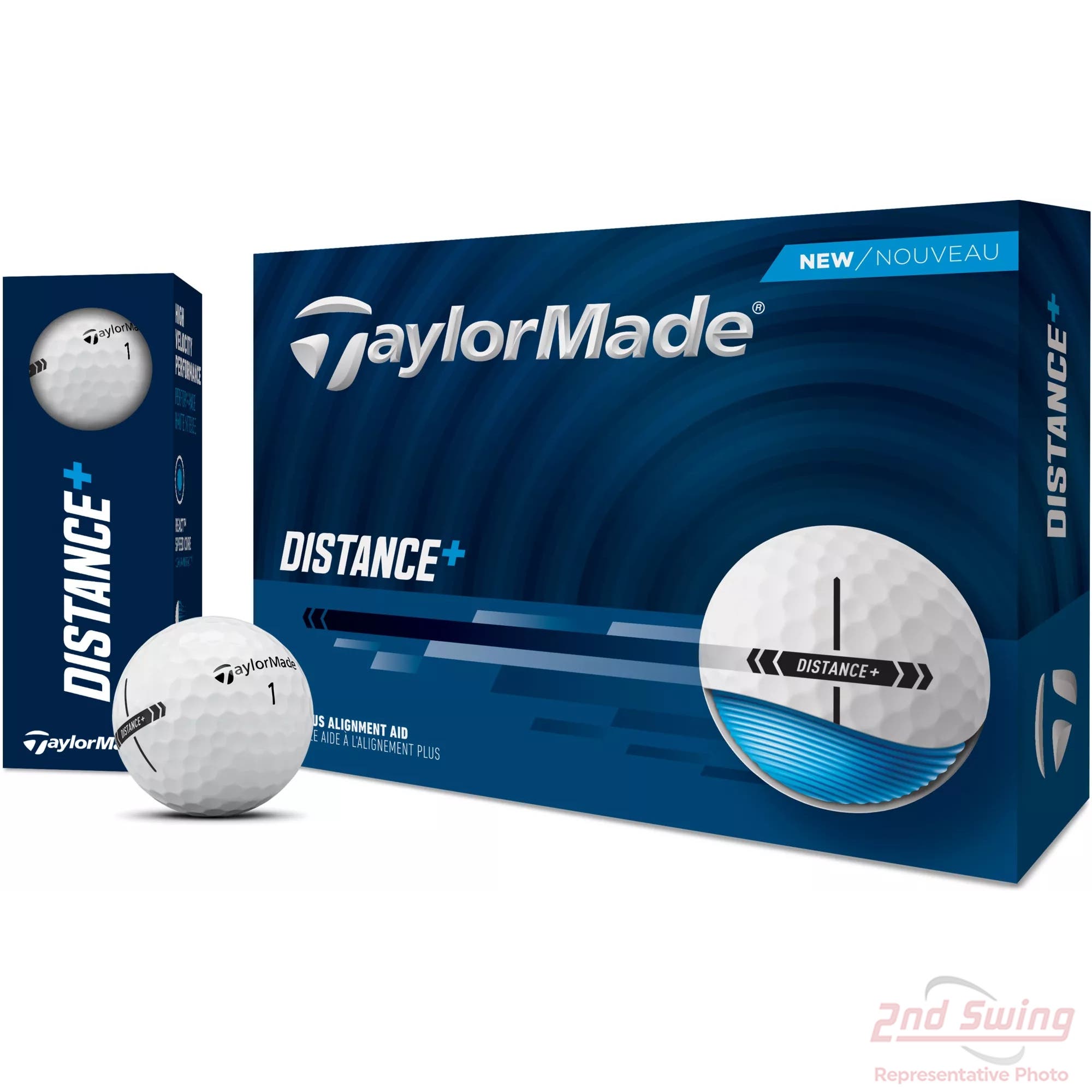
The Distance+ is the honest answer for beginners who are losing four-plus balls per round and know it. At $21.99/dozen from 2nd Swing Golf, it's the cheapest major-brand option in this guide. The REACT Speed Core pushes the ball off the face quickly, and the 322-dimple aerodynamic pattern is specifically designed for straighter flight — important when you don't yet have consistent swing mechanics. It's firmer than the Supersoft (compression ~77), which means it won't feel as soft on iron shots. But for a beginner focused on getting the ball around the course without burning through a $30 sleeve in six holes, it works.
Best for: Budget-conscious beginners; high ball-loss-rate golfers; Scramble format players who prioritize distance.
Avoid if: Soft feel on iron shots and chips matters to you (get the Supersoft or Duo Soft instead).
Best for slicers and hookers: Bridgestone e6 Soft
Bridgestone built the e6 line specifically for golfers with sidespin issues — the exact profile of most beginners. The Dual Dimple technology creates a dimple-within-a-dimple design that actively reduces sidespin at impact. The Gradational Compression Core (~44) transitions from soft inner to firmer outer, which helps maintain ball speed while the cover does the flight-correction work. If your ball curves the same direction on every hole, this is the only ball in this guide engineered to address that specific problem. Available from Amazon (ASIN B0DVTF4LD4) at approximately $28–$32/dozen (verify at time of purchase).
Best for: Beginners who consistently slice or hook; golfers who have identified a sidespin pattern they can't fix yet with swing changes.
Avoid if: Your ball flight is already reasonably straight (the flight-correction engineering won't help you); you want the softest possible feel.
Best for brand-loyal Titleist buyers: Titleist 2026 TruFeel
If you're going to buy Titleist as a beginner, the TruFeel is the correct Titleist to buy. At approximately $29.99/dozen, it's the most expensive ball in this guide — but it's still less than half the price of Pro V1. The 2026 TruFeel has a reformulated TruTouch Core for softer feel and a thicker TruFlex cover for better short-game control than prior generations. Titleist's quality control is genuinely excellent; you get consistent ball-to-ball performance across the dozen, which matters more as you develop consistency in your swing. Available directly from Titleist.com and most major retailers.
Best for: Beginners loyal to the Titleist brand; intermediate beginners ready to step up from entry-level balls.
Avoid if: You're on a tight budget (the Distance+ and Duo Soft are $8–$9/dozen cheaper); you're still losing more than 4 balls per round (the premium isn't worth it yet). See our best golf balls for high handicappers guide when you're shooting under 100 consistently.
Best softest feel: Wilson 2025 Duo Soft
At compression 35, the Wilson Duo Soft claims the title of the world's softest major-brand golf ball. That compression level makes a noticeable difference for golfers with very slow swing speeds (under 65 mph) or arthritic hands where feel and impact comfort matter. The Duo Soft's two-piece ionomer construction is extremely durable and forgiving. The main caveat: 2nd Swing Golf has discontinued carrying this SKU — buy from Amazon or Golf Galaxy and verify availability before ordering. Price approximately $20–$25/dozen, though confirm at time of purchase.
Best for: Very slow swing speeds; arthritic players; beginners who find other balls feel too clicky or firm.
Avoid if: You need to buy from a single trusted retailer; your swing speed is above 80 mph (the extreme-low compression won't benefit you over other soft options).
Best mid-range step-up: Srixon Soft Feel 14
The Srixon Soft Feel 14 is what we'd recommend to a beginner who has played 10+ rounds, is starting to break 100 consistently, and wants a ball that grows with their game. It uses Srixon's FastLayer Core — the same core technology found in their premium Z-Star tour balls — in an affordable two-piece construction. The soft thin ionomer cover and 338 Speed Dimple pattern give it good all-around performance across all shot types. At $24.99/dozen standard from 2nd Swing Golf (also available as a 24-ball double dozen for $34.99), it's better value than the Titleist TruFeel for similar performance.
Best for: Beginners transitioning into intermediate play; golfers who want a step up from pure beginner balls without the Pro V1 price.
Avoid if: You're still losing 5+ balls per round (spend less until your rate drops); you need maximum softness at the lowest price.
Best for TaylorMade brand preference: TaylorMade SpeedSoft 2025
TaylorMade's SpeedSoft is their softest ball ever, built on PWRCORE technology designed to deliver ultra-soft feel while maintaining distance. TaylorMade markets it with a "softer than every Titleist" claim based on compression comparisons. At $24.99/dozen directly from TaylorMade.com (or $45 for two dozen at launch pricing), it's competitive with the Srixon Soft Feel. If you're a TaylorMade fan from your club purchases and want the brand to carry through to your ball, this is the right pick. If you're brand-agnostic, the Callaway Supersoft gives similar soft-feel performance.
Best for: TaylorMade brand-loyal beginners; feel-focused buyers who want TaylorMade's softest option.
Avoid if: You prioritize distance over feel (get Distance+ instead); you're brand-agnostic (Supersoft is comparable and wider available).
Buying Guide
Choosing a ball as a beginner comes down to four questions. First: how many balls do you lose per round? If more than four, buy the cheapest major-brand option (TaylorMade Distance+ at $21.99/dozen) until that number drops. Second: do you have a consistent sidespin problem (slice or hook)? If yes, the Bridgestone e6 Soft is the only ball in this guide specifically engineered to address that. Third: do you care about a specific brand? If yes, buy that brand's entry-level soft ball (Titleist TruFeel, TaylorMade SpeedSoft, Srixon Soft Feel). Fourth: does feel matter? If you want the softest possible impact, Wilson Duo Soft at compression 35 is the choice. Everyone else: Callaway Supersoft, stop overthinking it.
You do not need to match your ball compression to your swing speed as a beginner. The ball matters far less than your clubs, your setup, and the consistency of your swing at this stage.
See also our full beginner equipment guides: best golf irons for beginners, best golf putters for beginners, best golf wedges for beginners, best golf GPS watches for beginners, best golf rangefinders for beginners.
Common mistakes to avoid
- Buying Pro V1 because it's "the best ball." It's the best ball for tour players. For beginners, it amplifies sidespin on mishits, reduces distance at sub-90-mph swing speeds, and costs $55/dozen — which is $22 per round if you lose four balls. Every ball in this guide outperforms Pro V1 for a beginner's actual game.
- Obsessing over compression numbers. Any ball with "Soft" in the name or compression under 65 works for beginner swing speeds. You don't need to measure your swing speed or calculate compression ratings before buying your first dozen.
- Buying expensive balls before your loss rate drops. If you're losing 4+ balls per round, spend $21–$25/dozen maximum. Move up in ball quality after you've broken 95 consistently.
- Assuming yellow balls perform differently from white. Yellow, orange, matte, and white versions of the same model are identical inside. Color is a visibility preference, not a performance spec.
- Buying used/lake balls. Used balls from water hazards have often been waterlogged or compressed unevenly. For $22/dozen new, there's no reason to risk inconsistent ball performance when you're still developing your swing.
FAQs
Should a beginner use Pro V1?
No — and this is the single most common beginner mistake. The Pro V1 is a 3-piece urethane ball optimized for swing speeds above 95 mph and skilled wedge play. For beginners, the urethane cover amplifies every miss into more sidespin, the high compression reduces distance at typical beginner swing speeds (60–85 mph), and at $55/dozen, losing four in a round is a $22 hole. Stick to a two-piece ionomer ball until you're consistently breaking 90.
What compression is best for beginners?
Compression 35–65 covers most beginners. Callaway Supersoft (~38), Wilson Duo Soft (35), and Bridgestone e6 Soft (~44) are the lowest in this guide. The practical rule: if you don't know your swing speed, pick anything with "Soft" in the name and ignore the number. Compression matters more for golfers with measured swing data — beginners don't need to optimize it yet.
Does the golf ball actually matter for beginners?
Mostly no — swing mechanics and club fit matter far more than ball choice for scores above 100. The one exception: avoid tour balls (Pro V1, TP5, Chrome Tour) because they amplify sidespin on mishits, making slices and hooks worse. Any two-piece ionomer ball in this guide is interchangeable for a true beginner.
How many golf balls should I bring for a round?
Bring at least 6, preferably a full sleeve (3) per side. Beginners lose an average of 3–7 balls per round. This is also why budget matters: a dozen Distance+ balls at $21.99 costs the same as losing three Pro V1 sleeves in one round.
What's the difference between golf balls for beginners vs for high handicappers?
Beginners (first 0–12 months) should prioritize durability, straight flight, budget, and softness — they're still learning contact. High handicappers (shooting 90–115 with some consistency) should also consider low driver spin, which is a different metric. See our guide to the best golf balls for high handicappers for that specific buyer.
Also useful as you build your beginner setup: our best golf irons for beginners, best golf putters for beginners, best golf wedges for beginners, and best golf rangefinders for beginners.
Common questions
Frequently asked questions
- Should a beginner use Pro V1?
- No — and this is the single most common beginner mistake. The Pro V1 is a 3-piece urethane ball optimized for swing speeds above 95 mph and skilled wedge play. For beginners, the urethane cover amplifies every miss into more sidespin, the high compression reduces distance at typical beginner swing speeds, and at $55/dozen, losing four in a round is a $22 hole. Stick to a two-piece ionomer ball until you're consistently breaking 90.
- What compression is best for beginners?
- Compression 35–65 covers most beginners. Callaway Supersoft (~38), Wilson Duo Soft (35), and Bridgestone e6 Soft (~44) are the lowest in this guide. The practical rule: if you don't know your swing speed, pick anything with 'Soft' in the name and ignore the number. Compression matters more for golfers with measured swing data — beginners don't need to optimize it yet.
- Does the golf ball actually matter for beginners?
- Mostly no — swing mechanics and club fit matter far more than ball choice for scores above 100. The one exception: avoid tour balls (Pro V1, TP5, Chrome Tour) because they amplify sidespin on mishits, making slices and hooks worse. Any two-piece ionomer ball in this guide is interchangeable for a true beginner.
- How many golf balls should I bring for a round?
- Beginners lose an average of 3–7 balls per round. Bring at least 6, preferably a full sleeve (3) per side. This is also why budget matters: a dozen Distance+ balls at $21.99 costs the same as losing three Pro V1 sleeves in one round.
- What's the difference between golf balls for beginners vs for high handicappers?
- Beginners (first 0–12 months) should prioritize durability, straight flight, budget, and softness — they're still learning contact. High handicappers (shooting 90–115 with some consistency) should also consider low driver spin, which is a different metric. See our guide to the best golf balls for high handicappers for that specific buyer.
References
Sources
- Callaway 2025 Supersoft — 2nd Swing Golf listing
- TaylorMade 2025 Distance+ — 2nd Swing Golf listing
- Srixon Soft Feel 14 — 2nd Swing Golf listing
- TaylorMade SpeedSoft — TaylorMade.com product page
- Bridgestone e6 Soft — Amazon listing B0DVTF4LD4
- Titleist TruFeel — Titleist.com product page
- Best Golf Balls For Beginners — Golfstead research reference
- Best Golf Balls for Beginners — Golf Monthly research reference
Keep reading
Related guides
Best Golf Balls for High Handicappers (2026): 7 Picks That Help Your Misses
The best golf balls for high handicappers are low-spin, forgiving 2-piece designs. Our 7 picks ranked by straight-flight performance, distance, and value.
Jun 5, 2026
Best Golf Irons for Beginners (2026): 7 Picks for Every Budget and Swing
The best golf irons for beginners in 2026, matched to your budget, swing speed, and biggest flaw. Plain-English picks — no fitting jargon required.
Jun 2, 2026

Best Golf Putters for Beginners (2026): 5 Picks That Help You Two-Putt
The best golf putters for beginners in 2026 — matched to your stroke type, budget, and the exact reason your starter set putter is failing you.
Jun 3, 2026
Best golf wedges for beginners (2026): if you only have five minutes, here's what matters
What beginners get wrong buying golf wedges, and the five archetype-matched picks that cover most first-time buyers — plus one budget option under $50.
Jun 4, 2026