The short answer
For golfers with driver swing speed under 85 mph, a low-compression ball (compression 35–65) adds carry distance because the core fully compresses at slower clubhead speeds. Tour balls like the Pro V1 (~90 compression) require faster swings to work. The Callaway 2025 Supersoft (~35) is the best pick for most; the Wilson Duo Soft is the call for under-70 mph swings.
GearScout may earn a commission when you buy through links on this page. Prices, availability, and ratings can change, so confirm details with the retailer before purchasing.
Prices last verified June 2026.
If you're swinging the driver under 85 mph and wondering why you're not getting the distance you expect, there's a very good chance the problem is the golf ball — not your swing. Most recreational golfers play the same tour balls their favorite pro endorses. That's a mismatch that costs real yards every round.
Tour balls like the Pro V1 and TaylorMade TP5x are engineered for clubhead speeds above 90 mph. Below 85 mph, their high-compression cores don't fully activate — energy bounces off instead of being stored and released. Switching to a compression-matched ball doesn't require a swing change, a lesson, or a new driver. It requires buying a different dozen.
This guide is built around one constraint: swing speed under 85 mph. Every pick was chosen because it satisfies that constraint first. (Note: GearScout did not personally test these balls on a launch monitor. Picks are based on published compression specs, independent test data from MyGolfSpy and BallCaddie, and price-verified retail sourcing.)
Prices last verified June 2026.
The constraint filter: what "under 85 mph" actually eliminates
Before picking a ball, understand what your swing speed rules out — and why.
High-compression tour balls (compression 85–100): The Pro V1 (~90), Pro V1x (~100), TaylorMade TP5x (~95), Srixon Z-Star (~90), and most premium 3-piece urethane balls require swing speeds above ~90 mph to fully compress the core. Below that threshold, the ball rebounds off the face before the core can store and return energy. You lose ball speed, carry distance, and — ironically — you get none of the short-game spin you paid for, because urethane short-game performance also requires a minimum impact velocity.
3-piece mid-compression balls (compression 65–85): Callaway Chrome Soft (~72), Titleist Tour Soft (~70), TaylorMade Tour Response (~70–75). These are better for the 80–90 mph range but are still borderline below 80 mph. If you're solidly under 80 mph, these are still a stretch.
What's left — and why it works: Two-piece ionomer balls with compression 29–65 fully activate at slow swing speeds. The core compresses completely, stores energy, and releases it into the ball's flight. You get higher launch angle, lower spin off the driver (which reduces ballooning), and better overall carry distance. The tradeoff is reduced greenside spin compared to urethane balls — but at swing speeds under 85 mph, the carry-distance gain almost always outweighs the short-game spin loss.
Why the Pro V1 is the wrong ball for most golfers searching this page
The Titleist Pro V1 appears on more "best golf balls" lists than any other ball. It's an excellent product — for the right swing speed. At 95+ mph, the Pro V1 delivers everything it promises: low driver spin, high ball speed, and exceptional greenside spin from its urethane cover.
At 75 mph, the Pro V1 is $54/dozen for a ball that:
- Doesn't fully compress (core stays stiff, energy is lost)
- Launches lower than a low-compression alternative (less carry)
- Feels harder than it should at slower impact velocities
- Costs more than three times what the Callaway Supersoft costs
This isn't a knock on Titleist — it's a physics mismatch. The same logic applies to the TP5x, Z-Star XV, and Chrome Tour. Great balls. Wrong swing speed.
If you want a Titleist experience, the Titleist 2026 TruFeel (compression ~50) is the correct choice for your swing speed.
Quick Picks
Ranked by how well they satisfy the under-85 mph constraint, then by value and quality.
1. Callaway 2025 Supersoft — Best overall (65–85 mph)
The Supersoft has been the benchmark low-compression ball for years, and the 2025 version improves on it. The HyperElastic SoftFast Core targets compression ~35, which fully activates at swing speeds as low as 65 mph. Callaway's Parabolic Impact Design produces a high-launch, low-spin ball flight that maximizes carry for slow swingers — the trajectory most similar to what a high-compression ball produces for a fast swinger.
The updated Hybrid Cover (sometimes called Trionomer) provides better durability than previous Supersoft versions without sacrificing feel. Around the greens, the new Spin Skin+ cover adds more check than you'd expect from a ball this soft. It won't zip back like a urethane tour ball, but for an ionomer cover it's genuinely controllable on chips and pitches.
The Supersoft is also among the most forgiving balls on off-center hits — a real benefit for the same golfers who have slow swing speeds.
Best for: Golfers 65–85 mph who want the most proven, widely available low-compression ball Avoid if: Your swing speed is under 65 mph (Wilson Duo Soft is the better call at those speeds) Key spec: Compression ~35 | 2-piece | Ionomer cover Price: $26.99/dozen at 2nd Swing (2026-06-24)
Shop Callaway 2025 Supersoft at 2nd Swing
2. Wilson Duo Soft 2025 — Best for very slow swings (under 70 mph)
The Wilson Duo Soft holds a unique position in the market: compression ~29, the lowest of any mainstream ball. For golfers under 70 mph — which includes many senior men over 70, most women, and any player whose driver carry sits below ~130 yards — the Duo Soft is essentially the only ball that compresses fully at impact.
At compression 29, the Duo Soft is extremely soft at contact. Some players find this takes getting used to, especially on iron shots where they're accustomed to a more responsive click. Around the greens, the low compression translates to a plush feel on putts — some players love this, others prefer the firmer feedback of slightly higher-compression options.
At around $19–$23/dozen, it's also one of the most affordable picks here.
Best for: Golfers under 70 mph; very slow senior swings; players maximizing carry at under-130-yard driver distances Avoid if: Your swing speed is above 75 mph (the Supersoft's higher compression is slightly better at those speeds) Key spec: Compression ~29 | 2-piece | Ionomer cover Price: ~$19–$23/dozen (Amazon; confirm at retailer)
Shop Wilson Duo Soft 2025 on Amazon
3. Srixon Soft Feel 14 — Best value, best for straight flight (75–85 mph)
The Srixon Soft Feel 14 sits at compression ~60, which is the upper edge of the constraint window. That matters: at 75–85 mph, the slightly firmer core produces a penetrating, lower ball flight with noticeably less driver spin than the ultra-soft picks. For slow swingers who also fight a slice or hook, lower spin means fewer side-spin-driven disasters.
The FastLayer Core — firm at the center, progressively softer toward the edges — gives the Soft Feel 14 dual character: low driver spin for distance and enough softness at impact for short-game feel. Srixon's 338 Speed Dimple Pattern and Spin Skin coating with SeRM add genuine greenside control for a ball in this price tier.
The double-dozen deal at 2nd Swing ($34.99 for 24 balls = ~$17.50/dozen) is the best per-ball price in this guide.
Best for: Golfers 75–85 mph; players who fight a slice and want low driver spin; value-focused buyers Avoid if: You're under 70 mph (the 60-compression core won't fully activate below ~65 mph) Key spec: Compression ~60 | 2-piece | Ionomer cover | FastLayer Core | 338 Speed Dimple Pattern Price: $24.99/dozen standard; $34.99 double dozen at 2nd Swing (2026-06-24)
Shop Srixon Soft Feel 14 at 2nd Swing
4. Titleist 2026 TruFeel — Best if you want Titleist (70–85 mph)
Titleist makes the Pro V1 and the Pro V1x — both wrong for this swing speed. But they also make the TruFeel, which is their soft-feel, low-compression option designed for exactly this market. Compression ~50 sits comfortably in the constraint window for the 70–85 mph range.
The TruFeel's TruFlex cover provides a softer feel than the ionomer covers on the Supersoft and Duo Soft, with a distinct Titleist feedback at impact that many brand-loyal players recognize immediately. The 2026 version maintains the same core approach while updating the cover chemistry.
At around $29.99/dozen, it's the most expensive budget-tier pick here, but it's the correct Titleist ball for slow-swing-speed golfers who don't want to give up the brand.
Best for: Titleist brand loyalists with 70–85 mph swing speeds; players who want a soft feel with familiar Titleist feedback Avoid if: You're under 70 mph (Duo Soft or Supersoft is a better compression match); you're budget-conscious (costs ~$3 more per dozen than the Supersoft) Key spec: Compression ~50 | 2-piece | TruFlex cover Price: ~$29.99/dozen (confirm at titleist.com — site blocked during research; price from multiple review sources)
Shop Titleist 2026 TruFeel at Titleist.com
5. Bridgestone e6 Soft — Best for straight ball flight (75–85 mph)
Bridgestone built the e6 Soft with a specific slow-swing-speed problem in mind: excessive side spin. Their Delta Wing dimple pattern is specifically engineered to reduce side spin and produce a straighter, more penetrating flight. For slow swingers who fight a consistent slice or push, this aerodynamic differentiation is real and measurable.
At compression ~45–50, the e6 Soft sits in the mid-range of our constraint window. It compresses fully at 70+ mph and produces a mid-launch, low-side-spin flight. The Soft Gradation Core is progressively firmer toward the center, which reduces spin off the driver while maintaining a soft feel on shorter shots.
Best for: Golfers 70–85 mph who fight a consistent slice or fade and want aerodynamic help; players who want Bridgestone build quality at a soft-feel price Avoid if: You're under 65 mph (Supersoft or Duo Soft compress more effectively at those speeds) Key spec: Compression ~45–50 | 3-piece | Surlyn cover | Delta Wing dimple pattern Price: ~$28–$32/dozen (Amazon; verify at retailer — price varied across sources)
Shop Bridgestone e6 Soft on Amazon
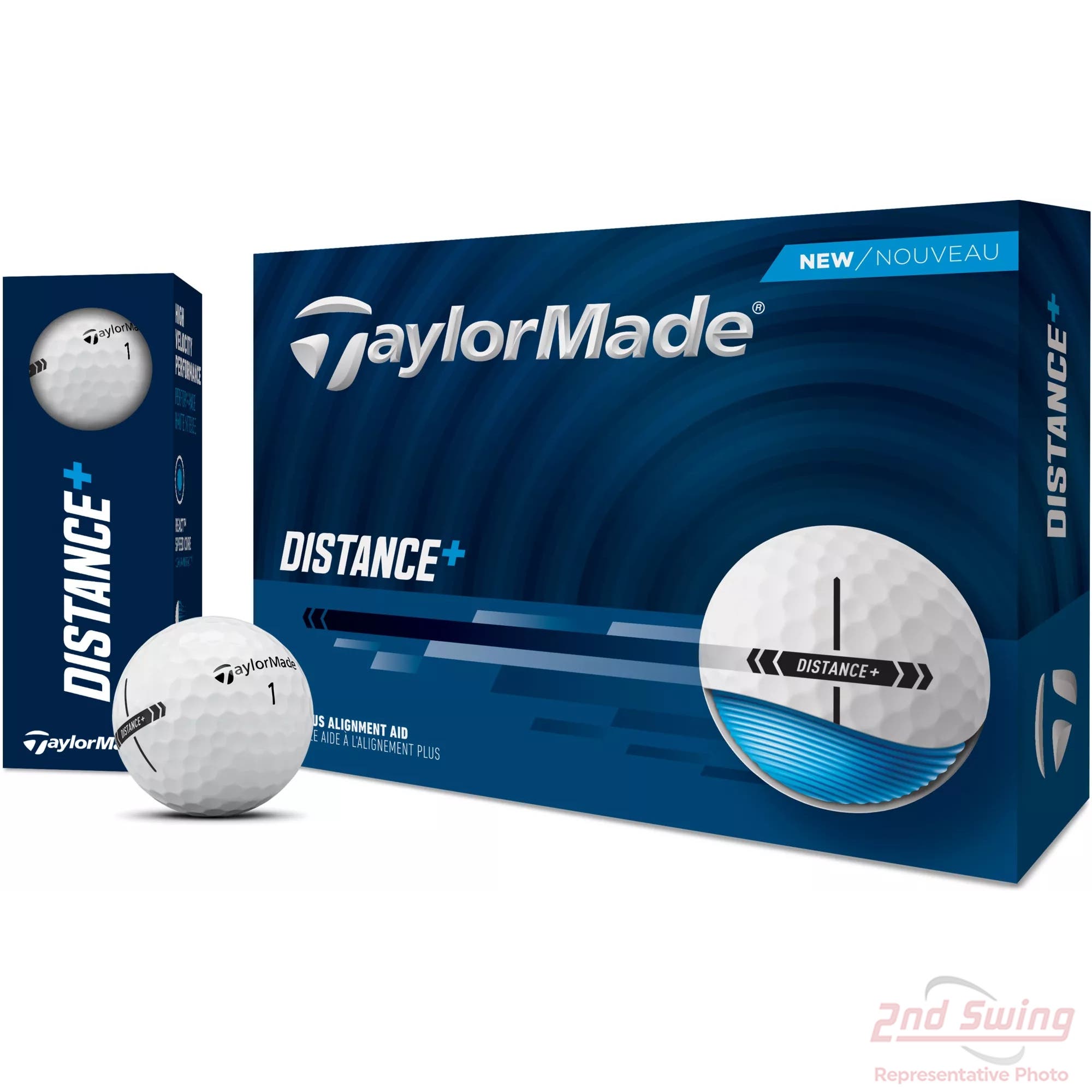
6. TaylorMade 2025 Distance+ — Best budget pick (65–85 mph)
At $21.99/dozen, the TaylorMade 2025 Distance+ is the most affordable premium-brand option in this guide. Compression ~35 puts it in the same range as the Callaway Supersoft, and TaylorMade's high-energy core delivers competitive ball speed for the price tier.
The Distance+ is not as sophisticated as the Supersoft (no special cover chemistry, simpler dimple pattern), but for casual golfers who lose balls regularly or play infrequently, it offers compression-matched performance at a price that makes replacing lost balls easy. The ionomer cover is durable and holds up well on cart paths and rough lies.
Best for: Budget-conscious slow swingers; casual players who lose balls frequently; practice rounds Avoid if: You want short-game spin and feel (this is a distance-first ball with minimal short-game control) Key spec: Compression ~35 | 2-piece | Ionomer cover Price: $21.99/dozen at 2nd Swing (2026-06-24)
Shop TaylorMade 2025 Distance+ at 2nd Swing
7. TaylorMade 2025 SpeedSoft — Best feel with speed (80–85 mph)
The SpeedSoft sits at the upper end of our target range and is designed for golfers who sit at that borderline — around 80–85 mph — where feel and speed can coexist. PWRCORE technology provides a soft feel at impact while maintaining ball speed off the tee better than the pure ultra-low-compression options.
The SpeedSoft produces a mid launch with mid-to-high iron and short game spin, which means it behaves more like a balanced all-around ball than a pure distance option. For golfers at 80–85 mph who have a competent short game and don't want to sacrifice feel for distance, the SpeedSoft is the most well-rounded option at this price tier.
Best for: Golfers 80–85 mph who want balanced feel and speed; players stepping up from ultra-soft pure-distance balls Avoid if: You're under 75 mph (the Supersoft or Duo Soft compresses more effectively) Key spec: Compression ~35 | 2-piece | Ionomer cover | PWRCORE technology Price: ~$24.99/dozen (confirm at retailer)
Shop TaylorMade 2025 SpeedSoft at 2nd Swing
Comparison Table
Prices last verified June 2026.
| Pick | Compression | Cover | Price/dozen | Best swing speed | Flight | Best for | Avoid if |
|---|---|---|---|---|---|---|---|
| Callaway 2025 Supersoft | ~35 | Ionomer | $26.99 | 65–85 mph | High launch, low spin | Most slow swingers | Under 65 mph |
| Wilson Duo Soft 2025 | ~29 | Ionomer | ~$19–$23 | Under 70 mph | High launch | Very slow swings, women | Over 80 mph |
| Srixon Soft Feel 14 | ~60 | Ionomer | $24.99 | 75–85 mph | Mid, penetrating | Best value, straighter flight | Under 70 mph |
| Titleist 2026 TruFeel | ~50 | TruFlex | ~$29.99 | 70–85 mph | Mid-high | Titleist loyalists | Under 65 mph |
| Bridgestone e6 Soft | ~45–50 | Surlyn | ~$28–$32 | 70–85 mph | Mid, low side spin | Slice fighters | Under 65 mph |
| TaylorMade 2025 Distance+ | ~35 | Ionomer | $21.99 | 65–85 mph | High launch | Budget buyers | Short game focus |
| TaylorMade 2025 SpeedSoft | ~35 | Ionomer | ~$24.99 | 80–85 mph | Mid | Balanced feel + speed | Under 75 mph |
What Competitors Miss
Most guides for this query explain that you should use low compression but skip the swing-speed tier breakdown — under 70 mph, 70–80 mph, and 80–85 mph each have slightly different optimal compression targets. Nobody else in this SERP explicitly names the Pro V1 as the wrong ball for this buyer and explains the physics behind it. The per-swing-speed tier table and the mainstream-pick callout are the two things this page does that the top-10 results do not.
Methodology
What We Checked
No GearScout editor has tested these balls on a launch monitor. Our editorial judgment is based on published compression specifications, independent test data from MyGolfSpy's 2025 ball test, BallCaddie's compression analysis, and SmartFit Golf's comparison tables — all sourced and dated above. Where manufacturer specification pages were unavailable (several major sites blocked automated access), compression figures are corroborated from at least three independent editorial sources.
This matters because the core decision here — compression matching — is well-established physics, not subjective preference. The primary variable we weighted was compression relative to the swing speed constraint. Secondary variables were: trajectory character (high-launch vs. penetrating), cover type (ionomer vs. Surlyn vs. specialty), price tier, and brand availability at US retailers.
The constraint that drove ranking
Every product was evaluated against one primary filter: does it compress fully at swing speeds under 85 mph? Products that didn't meet this threshold (Pro V1, TP5x, Chrome Soft, Z-Star XV) were excluded regardless of their overall quality. Within the constraint window, products were ranked by how well they serve the specific swing speed sub-tiers (under 70 mph / 70–80 mph / 80–85 mph), then by value and availability.
Per-swing-speed tier summary
| Driver swing speed | Compression target | Top picks |
|---|---|---|
| Under 65 mph | 25–35 | Wilson Duo Soft (~29) |
| 65–75 mph | 35–45 | Callaway Supersoft (~35), TaylorMade Distance+ (~35) |
| 75–80 mph | 35–55 | Callaway Supersoft, Titleist TruFeel (~50), Bridgestone e6 Soft (~45) |
| 80–85 mph | 40–65 | Srixon Soft Feel 14 (~60), TaylorMade SpeedSoft (~35), any pick above |
Common mistakes to avoid
- Playing the ball your favorite pro plays. Tour players swing 110–120 mph. If you're at 75 mph, a pro-endorsed tour ball is the wrong tool for your swing.
- Assuming "soft" means "less accurate." Low-compression balls reduce driver spin, which helps slow swingers keep the ball on line. The notion that softer = less control applies to putting feel, not to distance accuracy.
- Buying "ladies" or "senior" balls without checking the compression number. These labels are marketing. The number on the spec sheet is what matters. A ladies ball at compression 65 is still too firm for a 65 mph swing.
- Switching to a lower compression ball and quitting after one round because it "feels weird." The feel difference is real. Give yourself five rounds to recalibrate touch around the greens before judging.
- Ignoring the short-game tradeoff. Low-compression ionomer balls produce less greenside spin than urethane tour balls. If you have a sharp short game and your swing speed is at the high end of this range (80–85 mph), the Srixon Soft Feel 14 or TaylorMade SpeedSoft gives you more greenside response than the pure ultra-soft options.
FAQs
What is considered a slow golf swing speed? Generally, any driver swing speed under 85 mph. Senior men typically average 70–80 mph; women average 60–75 mph. Recreational players in their 40s and 50s often sit between 80–88 mph. If your driver carry is consistently under 155 yards, you're likely in slow-swing-speed territory.
Will a lower compression golf ball add distance for a slow swing speed? Yes, often meaningfully. If you're currently playing a compression-90 tour ball at 75 mph, switching to a compression-35 ball can add 10–20 yards of carry distance because the core is now fully compressing and returning energy efficiently. MyGolfSpy's independent testing confirms the ball-speed curves diverge significantly as swing speed drops below 85 mph.
Can I use a Pro V1 with a slow swing speed? Technically yes, but you're paying $54/dozen for a ball actively working against you. The Pro V1 has a compression of ~90 and requires swing speeds above 90 mph to compress properly. Below that, you get a harder feel, reduced distance, and none of the urethane short-game performance you paid for. The Titleist 2026 TruFeel (compression ~50) gives you the Titleist experience at a swing speed that makes sense.
What compression should I use at 70 mph swing speed? Target compression 35–45. The Wilson Duo Soft (compression ~29) and Callaway Supersoft (compression ~35) are both excellent choices. At 70 mph, a 60-compression ball is at the edge of its activation window — stay in the ultra-low range for maximum energy return.
What is the best golf ball for women with a slow swing speed? The same compression logic applies regardless of demographics. The Callaway 2025 Supersoft and Wilson Duo Soft are top picks for any golfer under 80 mph — including women averaging 60–75 mph. Ignore balls labeled "ladies" if they don't specify compression; focus on the compression number, not the marketing label.
Buying Guide
1. Compression — the only spec that changes for your swing speed
Match your swing speed to the compression window above. If you don't know your swing speed, estimate it from your driver carry: carry (yards) × 0.55 ≈ clubhead speed (mph). A 150-yard carry = ~83 mph. A 130-yard carry = ~72 mph. A sub-$200 launch monitor like the Garmin Approach R10 or Rapsodo MLM2PRO measures it accurately enough to commit to a compression tier.
2. Cover type — less important than compression, but real
Ionomer/Surlyn covers (all picks in the $19–$27 range) are durable and produce a clicky feel at impact. They produce less greenside spin than urethane covers. If your short game is your strength and you're at the upper end of this range (80–85 mph), consider the Bridgestone Tour B RX (~compression 85) — the urethane step-up that's close to the constraint window — as a future option once your swing speed increases. For now, the ionomer picks here are the correct tradeoff.
3. Price — the consumable reality
Golf balls are consumables. If you're playing 30+ rounds a year and losing 2–3 balls per round, spending $29/dozen on a Titleist TruFeel is fine. Spending $54/dozen on a Pro V1 that's wrong for your swing speed is an unnecessary premium. The $21.99 TaylorMade Distance+ gives you compression-matched performance if budget matters. The $26.99 Callaway Supersoft is the balanced value pick for most players.
See also: Best Golf Balls for Seniors | Best Golf Balls for Beginners | Best Golf Balls for High Handicappers
Common questions
Frequently asked questions
- What is considered a slow golf swing speed?
- Generally, any driver swing speed under 85 mph. Senior men typically average 70–80 mph; women average 60–75 mph. Recreational players in their 40s and 50s often sit between 80–88 mph. If your driver carry is consistently under 155 yards, you're likely in slow-swing-speed territory and compression matching matters.
- Will a lower compression golf ball add distance for a slow swing speed?
- Yes, often meaningfully. If you're currently playing a compression-90 tour ball at 75 mph, switching to a compression-35 ball like the Callaway Supersoft or Wilson Duo Soft can add 10–20 yards of carry because the core is now fully compressing and returning energy efficiently. Independent testing from MyGolfSpy confirms the ball-speed curves diverge significantly as swing speed drops below 85 mph.
- Can I use a Pro V1 with a slow swing speed?
- Technically yes, but you're paying $54/dozen for a ball actively working against you. The Pro V1 has a compression of ~90 and requires swing speeds above 90 mph to compress properly. Below that, you get a harder feel, reduced distance, and none of the urethane short-game performance you paid for. The Titleist TruFeel (compression ~50) gives you the Titleist experience at a swing speed that makes sense.
- What compression should I use at 70 mph swing speed?
- Target compression 35–45. The Wilson Duo Soft (compression ~29) and Callaway Supersoft (compression ~35) are both excellent choices. At 70 mph, the core won't even fully activate on a 60-compression ball — stay in the ultra-low range for maximum energy return.
- What is the best golf ball for women with a slow swing speed?
- The same compression logic applies regardless of demographics. The Callaway 2025 Supersoft and Wilson Duo Soft are top picks for any golfer under 80 mph — including women averaging 60–75 mph. Ignore balls labeled 'ladies' if they don't specify compression; focus on the number, not the label.
References
Sources
- Callaway 2025 Supersoft — 2nd Swing product page
- Srixon Soft Feel 14 Double Dozen — 2nd Swing product page
- TaylorMade 2025 Distance+ — 2nd Swing product page
- TaylorMade 2025 SpeedSoft — 2nd Swing
- Wilson 2025 Duo Soft — Amazon listing (ASIN B0DQ9R1YQF)
- Bridgestone e6 Soft — Amazon listing (ASIN B0DVTF4LD4)
- Titleist TruFeel 2026 — Titleist.com
- BallCaddie: Best Golf Ball for Slow Swing Speed (Under 85 mph)
- SmartFit Golf: Best Golf Balls for Slow Swing Speeds in 2026
- MyGolfSpy: Best Golf Balls for Slow Swing Speeds (2025 Test)
Keep reading
Related guides

Best Golf Balls for Seniors (2026): Low Compression Picks That Add Distance
The best golf balls for seniors are low-compression picks that fully compress at 65–85 mph. Our top 7 picks ranked by compression, distance, and feel.
May 31, 2026
Best Golf Balls for High Handicappers (2026): 7 Picks That Help Your Misses
The best golf balls for high handicappers are low-spin, forgiving 2-piece designs. Our 7 picks ranked by straight-flight performance, distance, and value.
Jun 5, 2026
Best Golf Balls for Beginners (2026): One Clear Pick, Then Everything Else
Six beginner golf balls ranked for soft feel, straight flight, and budget — plus why the Pro V1 is the worst pick for new golfers.
Jun 11, 2026

Best Golf Simulator Projector (2026): 8 Picks Ranked by How Far Back They Hang
Eight golf simulator projectors ($849-$5,639) ranked by the mount distance they need for a 10-foot screen. Required throw distance spans 3.57x.
Aug 14, 2026