
The short answer
For rooms with 9 ft ceilings and 10–16 ft of depth, front-placed monitors like the SkyTrak ST MAX or Rapsodo MLM2PRO work best — they sit on the mat and need no clearance behind you. The most compact complete simulator setup is the SkyTrak ST MAX SIG8 package, which fits in a 9'H × 10'W × 16'D room and costs $3,895.
GearScout may earn a commission when you buy through links on this page. Prices, availability, and ratings can change, so confirm details with the retailer before purchasing.
Prices last verified July 2026.
Most golf simulator buying guides optimize for a dream setup — 12-ft ceilings, a dedicated 20-ft-deep room, a permanent floor mount. That page is useless if your room has 9-ft ceilings, a narrow garage, or a basement with a support beam in the wrong place. This guide starts with the constraint.
We define "small space" as a room with at least one of: ceiling ≤ 9 ft, usable width ≤ 12 ft, or usable depth ≤ 15 ft. Every pick below has been evaluated against that constraint first — not as an afterthought.
The Constraint Filter: What Small Spaces Eliminate
Before any picks, here is what small rooms actually rule out and why. If a setup fails here, it doesn't appear in the picks below.
Rear-placed radar units (Garmin Approach R10, FlightScope Mevo+)
These monitors sit 6–10 ft behind the ball so the radar can capture the shot as it moves away. In a room with 15 ft of total depth, that's 8 ft behind the golfer plus 7 ft for swing arc and screen clearance in front. It's mathematically workable, but you're using your entire depth budget before you account for any enclosure depth. The front-to-rear footprint of a rear-placed radar setup is the same as a front-placed setup — the total room requirement isn't smaller, it's just arranged differently. In constrained rooms, front-placed monitors leave more buffer.
Full-size commercial enclosures (TruGolf SIG10, SIG12)
The SIG10 enclosure is 10 ft wide. The SIG12 is 12 ft wide. If your room is 11 ft wide, neither fits. The SIG8 (8'4" wide × 8'4" tall) is the only off-the-shelf professional enclosure that works in rooms under 10 ft wide.
Overhead ceiling-mounted monitors (Uneekor EYE XR, EYE XO) in low rooms
Overhead units mount 9–10 ft above the floor. At exactly 9 ft, there's no buffer for the unit plus a safe swing. These work in 9.5–10+ ft ceilings; in a true 9-ft-ceiling room, they're marginal at best.
Professional studio systems (TrackMan iO, Foresight GCQuad Pro Studio)
These start at $15,000–$49,000+ and are designed for dedicated commercial rooms. No small-space use case justifies them.
Quick Picks (Constraint-First)
Picks are ranked by how well they satisfy the space constraint, then by overall quality.
| Pick | Ceiling needed | Room depth | Monitor placement | Price | Verdict |
|---|---|---|---|---|---|
| Rapsodo MLM2PRO | 8 ft (wedges) / 9 ft (driver) | 10 ft min | Front | $599.99 | Best for the tightest budgets and smallest rooms |
| SkyTrak ST MAX | 9 ft | 10 ft min | Front | $1,995 | Best standalone monitor for small spaces |
| SkyTrak ST MAX SIG8 Package | 9 ft | 16 ft recommended | Front | $3,895 | Best complete small-space simulator |
| Uneekor EYE MINI | 9 ft | 12 ft min | Side (ground) | $2,999–$4,500 | Best for accuracy-first buyers with side clearance |
| Full Swing KIT | 9 ft | 10 ft min | Front | $3,999 | Best for brand-credibility seekers |
| Foresight Sports GC3 | 9 ft | 10 ft min | Front (side) | $5,249 | Best for accuracy without subscriptions |
Prices last verified July 2026. Confirm current pricing before purchasing.
The Mainstream Pick That Fails This Constraint
Garmin Approach R10 — Great monitor, bad small-space math
The R10 appears on every golf simulator list. At ~$599, it's priced like an impulse buy. The problem is placement: it's a rear-placed radar unit that needs 8 ft behind the ball to read shots accurately. In a 12-ft-deep room with a standard 5-ft-deep net/enclosure setup in front, you have 7 ft of hitting space behind the ball — short of the 8-ft minimum. In a 10-ft-deep room, it's nearly unusable. The R10 is a genuinely good outdoor range monitor. For tight indoor rooms, front-placed units win on space efficiency.
Comparison Table
Prices last verified July 2026.
| Pick | Price | Placement | Min ceiling | Min depth | Screen included | Sim software | Best for | Avoid if |
|---|---|---|---|---|---|---|---|---|
| Rapsodo MLM2PRO | $599.99 | Front (mat) | 8 ft* | 10 ft | No | 30,000+ courses (phone app) | Tightest budgets and rooms | You need club data for fitting |
| SkyTrak ST MAX | $1,995 | Front (mat) | 9 ft | 10 ft | No | E6, Trackman (subscription) | Standalone small-space LM | Budget buyers (LM only, no screen) |
| SkyTrak ST MAX SIG8 | $3,895† | Front (mat) | 9 ft | 16 ft | Yes (SIG8 enclosure) | E6, Trackman (subscription) | Complete plug-and-play | Room ≤ 8'4" wide |
| Uneekor EYE MINI | $2,999–$4,500‡ | Side (ground) | 9 ft | 12 ft | No | GSPro, E6 (Pro subscription) | GC3-level accuracy, smaller budget | Price clarity needed before buying |
| Full Swing KIT | $3,999 | Front (mat) | 9 ft | 10 ft | No | 15 E6 courses included | Brand credibility + E6 included | Price-to-value vs. SkyTrak SIG8 |
| Foresight Sports GC3 | $5,249 | Front (side) | 9 ft | 10 ft | No | FSX Play + E6/GSPro (3rd party) | No-subscription premium accuracy | Course-entertainment focus |
*8 ft works for short irons; driver swing requires 9 ft for most golfers. †Sale price as of July 2026 from The Indoor Golf Shop; MSRP ~$5,045. Verify before buying. ‡Price conflict between retailers — verify current pricing before purchasing.
Best Golf Simulators for Small Spaces: Full Reviews
Best for the Tightest Budget and Smallest Rooms: Rapsodo MLM2PRO
At $599.99, the MLM2PRO is the closest thing in golf simulators to a real budget entry point. It's a dual-camera unit that sits on the mat in front of the ball — no clearance behind you, no room to carve out for a radar footprint.
You connect it to your phone (iOS or Android), and it feeds shot data plus a 3D ball flight view to the app. With 30,000+ virtual courses, it doubles as a simulation platform without requiring a separate PC. For third-party sims, it connects to GSPRO, E6 Connect, and Awesome Golf.
The catch is spin measurement: spin accuracy requires Titleist Pro V1 or Callaway RPT balls (around $30–$37/dozen), which are marked for camera tracking. Without them, spin data is estimated. For someone practicing iron distances and checking launch angles, this is a non-issue. For someone who wants fitting-grade spin axis data, step up.
Best for: Golfers who need the smallest footprint and lowest price; shared-use rooms where setup/takedown speed matters; anyone comfortable using their phone as the display.
Avoid if: You want a standalone display without a phone; you need club-speed fitting accuracy; you want an always-mounted permanent setup.
Best Standalone Small-Space Launch Monitor: SkyTrak ST MAX
The SkyTrak ST MAX ($1,995) is the sweet spot between price and accuracy for front-placed small-space setups. It uses dual Doppler Radar plus photometric cameras — the combination means it tracks ball and club data without requiring special ball markings and without a rear-radar footprint.
Place it on the mat in front of the ball, connect to a phone, tablet, or PC, and it starts reading immediately. Pair it with a basic hitting net (not included) and you have a functional small-space training setup for under $2,500 total.
The included SkyTrak Essential Plan gives you a 14-day trial of virtual course play (Sweetens Cove) plus practice tools. For full course simulation, a Core or Elite plan adds E6 Connect and Trackman courses — those are subscription-based costs to factor in.
The exclusive is GOLFTEC Speed Training integration: guided speed drills with feedback are built into the ST MAX software. No other unit at this price offers this.
Best for: Golfers building a small-space setup in stages — buy the LM now, add screen + enclosure later; anyone who wants dual-technology accuracy without paying for a complete package.
Avoid if: You need a complete plug-and-play solution today (this is a standalone monitor only).
Best Complete Small-Space Simulator: SkyTrak ST MAX SIG8 Package
If you want to order one box and have a working simulator within a weekend, this is the pick. The SkyTrak ST MAX SIG8 pairs the ST MAX launch monitor with The Indoor Golf Shop's SIG8 enclosure — at 8'4" high × 8'4" wide, it's the smallest professional-grade enclosure available off the shelf.
Everything is included: the ST MAX launch monitor, SIGPRO Premium Screen (handles balls up to 250 MPH), hitting mat, and landing pad. Projector is optional (available as an add-on). The complete recommended room size is 9 ft ceiling × 10 ft wide × 16 ft deep.
As of July 2026, The Indoor Golf Shop was running a Father's Day Sale at $3,895 (regular ~$5,045). That price may not persist — verify at checkout.
The SIG8 is handcrafted in the USA and can be stepped up to the SIG10 if your room is at least 10'10" wide. If you're right at the minimum, the SIG8 is your enclosure.
Best for: First-time simulator buyers who want a complete setup; golfers with exactly the right room dimensions (9'H × 10'W × 16'D).
Avoid if: Your room is narrower than 8'4" (the SIG8 won't fit); you want an overhead ceiling-mounted launch monitor.
Best for Accuracy-First Buyers: Uneekor EYE MINI
The EYE MINI is Uneekor's ground-mounted dual-camera photometric unit — the portable version of their ceiling-mounted lineup. It sits to the side of the ball on the ground, and its cameras track ball and club with accuracy that independent testing puts within 1.4 yards of the much pricier Foresight GC3 on driver carry.
For small spaces, the key advantage is that it doesn't require rear or overhead clearance. You need 9 ft of ceiling for your swing (same as any other unit), 12+ ft of total room depth, and enough side clearance for the unit to sit next to the hitting mat.
The pricing situation is worth flagging directly: Top Shelf Golf lists the EYE MINI at $2,999; an independent review on Golf Simulator Source (2026) shows $4,500. Before committing, verify the current price at the retailer you plan to use. The annual Pro subscription ($199/yr) is required to unlock third-party simulation software (GSPro, E6 Connect).
Best for: Buyers who prioritize GC3-comparable accuracy; golfers who need seamless left/right switching; iPad users (the EYE MINI is the only Uneekor ground unit with iPad support).
Avoid if: Price uncertainty makes you uncomfortable (resolve pricing before buying); you need full club-fitting accuracy beyond what ground-mounted cameras provide.
Best for Brand Credibility: Full Swing KIT
The Full Swing KIT is the launch monitor Tiger Woods and Rory McIlroy use. For golfers who care about whose name is on the box, that credibility is real. At $3,999, it's a front-placed dual-radar unit that connects to an app and includes 15 E6 Connect courses out of the box — no additional software subscription needed for course play on day one.
For small spaces, it earns its spot: front-placed, compact footprint, works in rooms as shallow as 10 ft of depth. The limitation is what the $3,999 buys — a standalone monitor, no enclosure or screen. For roughly the same money as the SkyTrak ST MAX SIG8 complete package, you're getting just the KIT monitor. The value comparison favors SkyTrak if you need a full setup.
Best for: Golfers motivated by the Full Swing brand and Tiger/Rory credibility; buyers who want 15 E6 courses without a subscription.
Avoid if: You're comparing dollar-for-dollar — the SkyTrak SIG8 package delivers more complete setup value at a similar price point.
Best for No-Subscription Premium Accuracy: Foresight Sports GC3
The GC3 is the only unit on this list with a zero-subscription accuracy guarantee: tour-validated Triscopic camera tracking with all ball and club data included at no annual fee. At 6"×5"×12" and 5 lbs, it's also the most physically compact premium monitor available — front-placed, fits anywhere.
At $5,249 (from $6,999 as of July 2026), it's the most expensive pick here. What justifies the premium for a small-space buyer: no subscription cost amortization, outdoor use parity with indoor, Link-enabled integration with the Bushnell Golf Pro X3 LINK rangefinder, and a future upgrade path toward the GCQuad.
FSX Play simulation software has a weaker course library than E6 or GSPro. Serious course-play users typically pair the GC3 with a GSPro or E6 subscription for best results — an added cost to factor in.
Important: The GC3 is sold to US customers only via foresightsports.com. There's a 24-hour no-penalty cancellation window after purchase.
Best for: Coaches, fitters, and serious practitioners who want tour-validated accuracy with no ongoing subscription; golfers who want the best data for the smallest physical device.
Avoid if: Budget is a concern; you want course entertainment as the primary use case (FSX native software is limited).
What We Checked
This article is research-based, not hands-on tested. No GearScout team member has personally reviewed these specific simulator setups in a controlled environment. We sourced product data from manufacturer pages (rapsodo.com, skytrakgolf.com, foresightsports.com), authorized retailer pages (shopindoorgolf.com, rainorshinegolf.com, topshelfgolf.com), and independent review sites (golfsimulatorsource.com, golfstead.com). All prices were captured directly via retailer JSON product endpoints on July 1, 2026. Our room depth requirements come from manufacturer documentation and the independent golfsimulatornerd.com room-size guide (March 2026). Where owner feedback conflicted with marketing specs, we noted the conflict rather than resolving it by assumption (see Uneekor EYE MINI price note).
Methodology
This article is research-based, not hands-on tested. No GearScout team member has personally reviewed these specific simulator setups in a controlled environment. We evaluated each product based on:
- Confirmed space requirements from manufacturer documentation and authorized retailer descriptions, cross-referenced with SERP competitor articles (golfstead.com, golfsimulatorsource.com)
- Price verification directly from manufacturer product pages and authorized retailer product data, captured July 2026
- Monitor placement type (front vs. rear vs. overhead) as the primary constraint-satisfaction criterion
- Enclosure dimensions for complete packages
- Included software and subscription requirements from official product pages
- Owner and community data from published reviews at golfstead.com, golfsimulatorsource.com, and topshelfgolf.com to corroborate specs
The ranking prioritizes constraint-satisfaction first: a lower-accuracy monitor that fits in your room ranks above a higher-accuracy monitor that doesn't. General quality and value are secondary sorting criteria.
For image sources, we used authorized retailer Shopify CDN images (official manufacturer and dealer product images). FlightScope Mevo+ and Garmin Approach R10 were researched but excluded due to unavailable price or image confirmation at time of writing.
Buying Guide
For small-space buyers, the decision tree is simpler than it looks:
Step 1 — Measure your room and test your swing first. Get a tape measure and your longest club. Record ceiling height, room width, and room depth (floor to back wall). Then take a full driver backswing in your planned hitting direction. If you scrape the ceiling, a 9-ft-ceiling room is your constraint, not your minimum.
Step 2 — Decide if you want a screen (full simulator) or just a net (data only). Net-only setups work in shallower rooms (10 ft depth) and cost less. Full simulator setups need 14–16 ft depth minimum, plus projector placement above or behind the golfer.
Step 3 — Choose your monitor type based on room depth. If you have ≤12 ft of usable room depth, use a front-placed monitor (SkyTrak ST MAX, Rapsodo MLM2PRO, Foresight GC3). If you have ≥14 ft and want ground-side camera tracking, the Uneekor EYE MINI works. Avoid rear-placed radar in rooms under 14 ft.
Step 4 — Decide on subscription costs upfront. Most monitors require annual subscriptions for full course simulation. Factor 2–3 years of subscription into your total budget. The GC3 is the only premium unit with no subscription requirement.
Step 5 — For complete packages, buy from an authorized dealer. The SkyTrak ST MAX SIG8 from The Indoor Golf Shop comes with USA-built enclosures and a clear warranty path. Verify whether the sale price you see is current before purchasing.
Common Mistakes to Avoid
Measuring your room once and ordering Measure total room depth, then subtract 5 ft for an enclosure, then test your full-length driver backswing to the back wall. Most people underestimate how much space a driver backswing takes. A 6-ft golfer needs 10–11 ft of width for a full swing without wall contact.
Buying a rear-placed radar unit for a shallow room The Garmin R10 and FlightScope Mevo+ need 6–10 ft behind the ball. In a room with only 12 ft of depth, that's almost the entire room before you account for the screen or net in front. Front-placed monitors solve this completely.
Ignoring subscription costs in the total price The Rapsodo MLM2PRO costs $599.99 to buy but requires a Premium Membership for full simulation. The Uneekor EYE MINI requires a $199/yr Pro subscription for third-party software. The Foresight GC3 requires no subscription for full data but FSX Play's course library is limited. Factor in 2–3 years of subscription cost when comparing total cost of ownership.
Assuming any 9-ft-ceiling room works Ceiling height is one constraint. Width matters too: a room that's only 9 ft wide is dangerously narrow for a full driver swing — you'll make contact with the side walls on follow-through. Minimum comfortable width for a right-handed golfer is 10 ft; 12 ft is ideal.
Buying the enclosure before testing the swing Before ordering any enclosure — especially a SIG8 at 8'4" wide — take your longest club, step into the space you plan to use, and take a full swing in all directions. This takes five minutes and prevents a $1,500+ mistake.
FAQs
Common questions
Frequently asked questions
- What is the minimum room size for a golf simulator?
- The absolute minimum for a functional setup is 10 ft wide, 10 ft deep, and 9 ft of ceiling height. At those dimensions you can swing a driver without hitting the ceiling or walls and place a standard 5-ft-wide impact screen. For comfortable full-driver play with a projector screen, aim for 12 ft wide × 16 ft deep × 9.5 ft ceiling.
- Can I use a golf simulator in a room with 8-foot ceilings?
- An 8-ft ceiling is tight for driver swings for most golfers — a 6-ft golfer at full backswing can easily scrape drywall. That said, shorter irons and wedges work fine at 8 ft. If you're primarily practicing irons and want ball-flight data without a full driver swing, an 8-ft-ceiling net setup with a Rapsodo MLM2PRO or SkyTrak ST MAX is viable. Always do a physical backswing test before buying any enclosure.
- What is the difference between front-placed and rear-placed launch monitors?
- Front-placed monitors (SkyTrak, Rapsodo, Foresight GC3) sit on the mat a few inches ahead of the ball. They don't require clearance behind the golfer, making them space-efficient. Rear-placed radar units (Garmin Approach R10, FlightScope Mevo+) sit 6–8 ft behind the ball. In a 12-ft-deep room, a rear unit consumes most of your depth budget before you even account for swing arc — a real constraint problem.
- Do I need a projector and impact screen for a golf simulator?
- No. A launch monitor plus a practice net is the smallest, cheapest setup — you watch ball data on your phone or the monitor's display. Adding a projector screen turns it into a visual simulator where you see virtual courses. The net-only approach works in tighter rooms and costs several hundred dollars less, but you lose the course-play experience.
- Is the Rapsodo MLM2PRO accurate enough for serious practice?
- For the money, yes. It measures ball speed, launch angle, carry, spin (with Titleist/Callaway RPT balls), club path, and angle of attack. It's not GC3-grade for club fitting, but for swing feedback, distance benchmarking, and virtual course play at $599, it punches well above its price. If you need reliable spin without special ball markings and want standalone accuracy, step up to the SkyTrak ST MAX.
References
Sources
- Rapsodo MLM2PRO product page
- SkyTrak ST MAX product page
- SkyTrak ST MAX SIG8 package — The Indoor Golf Shop
- Uneekor EYE MINI review — Golf Simulator Source 2026
- Uneekor launch monitor lineup — Top Shelf Golf 2026
- Full Swing KIT — Rain or Shine Golf
- Foresight Sports GC3 product page
- Best Golf Simulators for Small Spaces — Golfstead 2026
- Golf simulator room size requirements — Golf Simulator Nerd 2026
- Uneekor Eye Mini review — Golf Simulator Source 2026
Keep reading
Related guides

Best golf launch monitors for home simulators (2026)
The best launch monitors for home golf simulators, with picks for budget bays, serious practice, and premium sim rooms.
May 28, 2026

Best Golf Simulator Projector (2026): 8 Picks Ranked by How Far Back They Hang
Eight golf simulator projectors ($849-$5,639) ranked by the mount distance they need for a 10-foot screen. Required throw distance spans 3.57x.
Aug 14, 2026

Best Golf Hybrids for Seniors (2026): 7 Lightweight, High-Launch Picks
The best golf hybrids for seniors in 2026: seven lightweight, high-launch picks in senior and light flex, ranked for slower swing speeds.
Jul 27, 2026
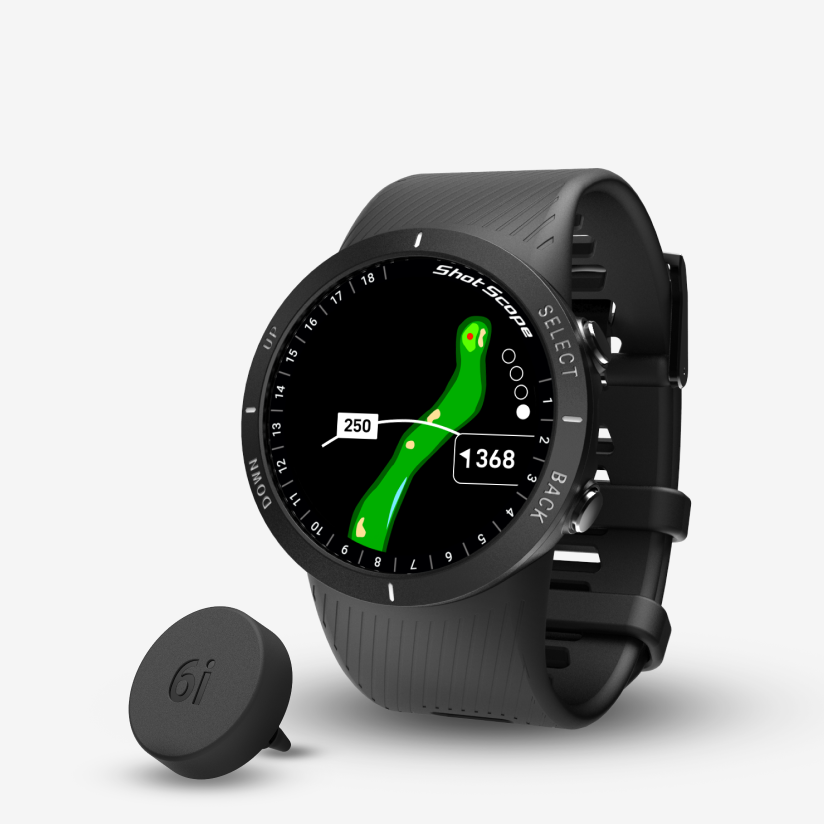
Best golf GPS watches for walking 18 holes: battery life is what matters (2026)
5 GPS watches ranked by battery life for walking golfers. The one pick that survives a slow 6-hour round — and the popular watch that doesn't.
Jul 1, 2026