The short answer
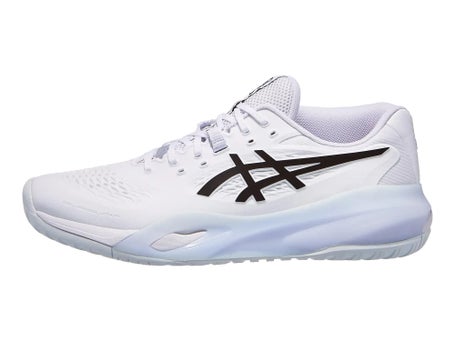
For hard courts, the ASICS Gel-Resolution X ($164.95) is the best all-round pick: stable, ultra-durable, and backed by a 6-month outsole guarantee. Cheaper? The Wilson Rush Pro 4.5 at $79 on sale. Toughest value? The Prince T22. Roomiest fit? The K-Swiss Hypercourt Express 3. For sliders, Nike's Air Zoom Vapor Cage 4.
GearScout may earn a commission when you buy through links on this page. Prices, availability, and ratings can change, so confirm details with the retailer before purchasing.
Prices last verified July 2026.
Hard courts are the most common surface in American tennis, and they are also the hardest on your shoes. That acrylic-painted concrete grips and grinds on every push-off, and it wears an outsole down far faster than clay or grass ever will. That is why "the best tennis shoe" and "the best tennis shoe for hard courts" are not the same question. A hard-court shoe has to survive abrasion: a tough outsole rubber, reinforcement in the drag zones where you brake and slide, and — on most of the picks below — a 6-month outsole durability guarantee that replaces the shoe if you actually wear through it. This guide ranks six hard-court shoes from $79 to $170 by exactly that: how durable the outsole is, whether it is warrantied, how stable and comfortable the shoe is, and who each one fits.
Every price, spec, stock status, and image here was verified on July 29, 2026 against Tennis Warehouse, and each product image links to an official authorized-retailer asset. The honest headline up front: five of these six shoes carry a 6-month outsole durability guarantee, and the one that does not — the K-Swiss — earns its spot on a genuinely tough outsole compound instead. We have not run a controlled on-court durability test of these exact six shoes ourselves; where a figure is a maker's spec or an independent lab's measurement rather than something we measured, we say so.
Quick Picks
| Best for | Pick | Why it wins |
|---|---|---|
| Best overall for hard courts | ASICS Gel-Resolution X | Stable, ultra-durable AHAR Plus outsole with a 6-month guarantee — the safe answer for most players |
| Best value (cheapest way in) | Wilson Rush Pro 4.5 | A light, quick all-court shoe with the same 6-month outsole guarantee, on sale at $79 |
| Most durable for the money | Prince T22 | The PRC 1000 outsole "wears like iron," and it is warrantied — for $109 |
| Best stability workhorse | adidas Barricade 14 | The benchmark hard-court stability shoe, now lighter, still guaranteed |
| Most comfortable (and wide feet) | K-Swiss Hypercourt Express 3 | Plush, roomy, 2E available; a tough Aosta 7.0 outsole (no warranty) |
| Best for sliders (max durability) | Nike Air Zoom Vapor Cage 4 | Kurim-reinforced outsole built for players who slide, plus a 6-month guarantee |
Comparison Table
Prices last verified July 2026. Two of these are current sale or reduced prices (the Wilson and the adidas) that sit below list, and tennis-shoe prices move — so confirm the live price at the retailer before you buy.
| Shoe | Price | 6-mo outsole guarantee | Weight | Outsole | Best for | Watch-out |
|---|---|---|---|---|---|---|
| Wilson Rush Pro 4.5 | $79.00 (sale) | Yes | about 14.0 oz | Duralast | Value, quick all-court | Sale price; not a max-stability shoe |
| Prince T22 | $109.00 | Yes | 16.7 oz | PRC 1000 | Durability per dollar | Heaviest here; plain cushioning |
| adidas Barricade 14 | $127.95 | Yes | 14.1 oz | Lighttraxion | Stability workhorse | Firm ride; reduced-from price |
| K-Swiss Hypercourt Express 3 | $130.00 | No | 15.1 oz | Aosta 7.0 | Comfort, wide feet | No warranty (durable compound) |
| ASICS Gel-Resolution X | $164.95 | Yes | 16.1 oz | AHAR Plus | Best all-round | Heavy; roomy fit |
| Nike Air Zoom Vapor Cage 4 | $170.00 | Yes | 15.6 oz | Rubber + Kurim | Sliders, durability | Priciest; heaviest Nike |
Weights are each maker's or Tennis Warehouse's published figure for the men's shoe (around size 10.5). Wilson lists the Rush Pro 4.5 weight as to be confirmed, so the roughly 14 oz figure reflects its playtest weight rather than a published number.
Methodology
We ranked these six shoes for hard-court play specifically — not clay, not grass, and not "tennis shoes in general." Hard courts reward one thing above all: an outsole that survives abrasion. So the order is driven first by durability (outsole compound, drag-zone reinforcement, and whether the shoe carries a 6-month outsole durability guarantee), then by stability and support for lateral movement, then by comfort and fit, and finally by value at the price.
We checked every Tennis Warehouse product page on July 29, 2026 for the model, US price, key specs, in-stock depth, and a live product image; we confirmed each image link returned an official authorized-retailer asset (HTTP 200); and we cross-referenced durability against independent lab testing (RunRepeat) and Tennis Warehouse's own playtest reputation where available. We treated a maker's weight or a lab's durometer reading as a claim, not our own measurement. We deliberately kept only shoes that were genuinely in stock across a normal size range this run — which is why a couple of well-known models that were down to clearance sizes did not make the list.
What We Checked
What competitors miss is the one spec that matters most on this surface and gets buried every time: the outsole warranty. Hard courts wear outsoles out, and the tennis industry quietly answers that with a 6-month outsole durability guarantee — but only on some shoes, and the ranked lists rarely tell you which. Here is the plain version, and it is the spine of this guide.
- What the guarantee actually is. In Tennis Warehouse's words, it "provides a one-time replacement pair for shoes worn through the outsole within six months of purchase." In practice: if you grind through the rubber to the midsole foam within six months, you get one replacement pair. You usually have to claim within about 180 days, the outsole has to be worn through (a hole where the midsole shows), and it covers the outsole only — not the toe-guard or the upper.
- Which of these six carry it. Five do: the Wilson Rush Pro 4.5, Prince T22, adidas Barricade 14, ASICS Gel-Resolution X, and Nike Air Zoom Vapor Cage 4. One does not: the K-Swiss Hypercourt Express 3 — which is still one of the more durable outsoles here on compound alone, just without the safety net.
- Why it is the real buying signal on hard courts. A warranty is a manufacturer betting its own money that the outsole will last. On the surface most likely to shred it, that bet is worth more than any marketing adjective.
Who this is for: hard-court players — leagues, clubs, high-school and college players, and anyone whose home courts are acrylic-over-concrete — who are tired of buying a shoe that looks great and is bald in two months. We did not hands-on test all six in a controlled block; this is researched editorial judgment built from manufacturer and authorized-retailer specs, independent lab durability data, published owner feedback (the Prince T22's "wears like iron" reputation is a good example), and the price, stock, and images we confirmed on July 29, 2026.
What actually matters in a hard-court tennis shoe
Outsole durability and the 6-month guarantee
On hard courts, the outsole is the part that dies first. Two things extend its life: a hard, abrasion-resistant rubber compound (ASICS AHAR Plus, adidas Lighttraxion, Prince PRC 1000, K-Swiss Aosta 7.0, and Nike's Kurim-reinforced rubber are all built for this), and reinforcement in the specific zones where you drag and brake. The warranty is the tiebreaker: when two shoes look similar on paper, the one with a 6-month outsole guarantee is the safer bet, because the maker is standing behind the wear.
Stability and support
Tennis is a lateral sport, and hard courts do not give — so a shoe that holds your foot over the footbed on hard cuts protects both your ankles and your consistency. The Barricade's claw chassis, the Gel-Resolution X's DYNAWALL, and the Vapor Cage's wraparound cage are all stability structures. Heavier, more supportive shoes (Resolution X, Prince T22) feel the most planted; lighter shoes (Rush Pro 4.5, Barricade 14) trade a little of that for speed.
Cushioning
Hard courts transmit impact, so cushioning here is about comfort over a two- or three-hour match, not softness for its own sake. The picks run from firm-and-connected (Barricade, Resolution X) to plush (K-Swiss Hypercourt Express, Nike Vapor Cage). More cushion usually means more weight — which is the trade-off you are managing on this list.
Weight
Durable, stable hard-court shoes are not light. Five of these six sit between 14 and 17 ounces, and that is normal for the category; the reinforcement that makes a shoe last is the same reinforcement that adds grams. The Wilson Rush Pro 4.5 (about 14 oz) and the adidas Barricade 14 (14.1 oz) are the quickest here; the Prince T22 (16.7 oz) and Gel-Resolution X (16.1 oz) are the most planted.
Fit and width
A shoe that is durable but does not fit your foot is a bad buy. The K-Swiss Hypercourt Express 3 is the roomiest, most forgiving fit here and comes in a 2E wide; the Gel-Resolution X also runs roomier than older Resolutions. Narrower feet tend to prefer the Barricade and the Nike. Whatever you pick, hard-court shoes should fit snug through the midfoot with a little room at the toe — you do not want your foot sliding inside the shoe when the shoe grips the court.
Our top picks
Best overall: ASICS Gel-Resolution X ($164.95)
The Gel-Resolution X is the shoe most hard-court regulars should buy. It is ASICS' benchmark stability shoe: a full-length AHAR Plus outsole (their most durable rubber) with a PGuard toe drag protector and a redesigned DYNAWALL for lateral support, and it carries the 6-month outsole durability guarantee. Independent lab testing rated its toe and guard zones at the maximum for durability. It is heavy at 16.1 oz and the X runs roomier than older Resolutions, but if you want one shoe that is stable, protective, and built to outlast the surface, this is it.
Best for: most hard-court players; baseliners and grinders who want stability plus durability.
Avoid if: you want a light or narrow shoe — look at the Barricade 14 or the Wilson.
Best value: Wilson Rush Pro 4.5 ($79.00, on sale)
The Rush Pro 4.5 is Wilson's flagship, and at its current sale price it is the value of this list. It is the lightest, quickest pick here (about 14 oz), with a Duralast rubber outsole and — importantly for a value shoe — the same 6-month outsole durability guarantee the premium picks carry. You give up the maximally planted feel of the heavier stability shoes, but you get a fast, comfortable all-court shoe that is warrantied against wear. Note the $79 is a sale price below list, so confirm it before you buy.
Best for: value buyers who want a light, quick, warrantied all-court shoe.
Avoid if: you want maximum stability, or a stably-priced shoe (this is a sale).
Most durable for the money: Prince T22 ($109.00)
The Prince T22 is the durability cult pick. Its PRC 1000 outsole compound in a herringbone pattern has a long-standing "wears like iron" reputation — owners who play five times a week and rotate two pairs report getting the better part of a year out of them — and it is backed by the 6-month guarantee. The trade-off is weight and simplicity: at 16.7 oz it is the heaviest shoe here, and the cushioning is functional rather than plush. For a player who just wants an outsole that refuses to die, at a mid price, it is hard to beat on value.
Best for: baseline grinders who want the most durable outsole per dollar.
Avoid if: you want a light shoe or plush cushioning.
Best stability workhorse: adidas Barricade 14 ($127.95)
The Barricade 14 is the current version of the most famous stability shoe in tennis, and adidas has made it lighter without giving up the signature lockdown. A Lighttraxion outsole and the Barricade claw chassis deliver the lateral support aggressive movers want, Lightstrike Pro cushioning adds some pop, and it carries the 6-month outsole durability guarantee. At 14.1 oz it is genuinely quick for a stability shoe. It is firm rather than plush, and the current $127.95 is reduced from a higher list price, but as a durable, stable, all-around hard-court shoe it is a lot of shoe for the money.
Best for: aggressive movers who want the benchmark stability shoe, now lighter.
Avoid if: you want a soft, plush ride.
Most comfortable (and best for wide feet): K-Swiss Hypercourt Express 3 ($130.00)
The Hypercourt Express 3 is the comfort pick, and the one honest exception to the warranty spine of this guide: it does not carry the 6-month outsole guarantee. What it does have is a genuinely tough Aosta 7.0 outsole compound and the roomiest, most forgiving fit here — plush Surgelite+ cushioning, an Ortholite liner, and a 2E wide option — which makes it the obvious choice for wide feet and for club players who value all-day comfort over a race-day feel. Durable by compound, comfortable by design; just without the replacement safety net.
Best for: wide feet, and comfort-first club players.
Avoid if: you specifically want the warranty safety net (this model does not have it).
Best for sliders: Nike Air Zoom Vapor Cage 4 ($170.00)
The Air Zoom Vapor Cage 4 is Nike's durability answer, built for players who slide on hard courts. Its generative-design outsole blends rubber with Kurim for extra durability in the high-wear zones, a wraparound cage locks the foot down, forefoot Zoom Air adds a responsive pop, and it carries the 6-month outsole durability guarantee. It is the heaviest shoe in Nike's tennis line at 15.6 oz and the priciest pick here, and some players size up half a size, but if you slide into shots and keep destroying outsoles, this is the Nike built to take it.
Best for: players who slide and want maximum outsole durability from Nike.
Avoid if: you want a light, low-to-the-court shoe or the lowest price.
Buying Guide
Start with the surface reality: hard courts wear shoes out, so on this surface durability is not a nice-to-have, it is the whole point. If you want the safe, do-it-all answer and only want to decide once, the ASICS Gel-Resolution X at $164.95 is the best all-round pick — stable, protected, and warrantied. Want the same durability story for less? The Wilson Rush Pro 4.5 at $79 on sale and the Prince T22 at $109 both carry the 6-month guarantee at a fraction of the price.
Then adjust for how you play and how your foot is shaped. Aggressive movers who want lockdown should look at the adidas Barricade 14; wide feet and comfort-first players should start with the K-Swiss Hypercourt Express 3; and if you slide into your shots, the Nike Air Zoom Vapor Cage 4 is built to survive it.
A word on budget. There is a real sub-$75 tier — entry shoes like the ASICS Gel-Dedicate line — and it is worth knowing about, but stock rotates fast and those shoes skip the warranty and the durable premium compounds, so on a surface this abrasive they wear out quickest. Right now the smarter value play is the on-sale Wilson at $79, which gets you a warrantied outsole for entry-tier money. If you play more than once a week on hard courts, the durability you pay for at $109 to $170 pays you back in shoes that last.
New to the sport or still choosing a frame? Start with our beginner tennis racket guide, and if you also play pickleball, see our beginner pickleball paddle guide and the pickleball control-paddle guide — or browse everything in the racket sports hub.
Common mistakes
- Buying "the best tennis shoe" instead of the best hard-court shoe. A shoe optimized for clay or a lightweight speed shoe can wear out fast on abrasive hard courts.
- Ignoring the outsole warranty. On the surface most likely to shred an outsole, a 6-month wear-through guarantee is the single most useful spec — and most guides never mention which shoes have it.
- Assuming lighter is better. Durable, stable hard-court shoes run 14 to 17 oz; the reinforcement that makes them last adds the weight. Chasing the lightest shoe often means chasing the least durable one.
- Sizing too small, or ignoring width. Feet swell during a match; a hard-court shoe should be snug in the midfoot with room at the toe. Wide feet should look at the K-Swiss or a 2E option rather than forcing a narrow last.
- Paying full price without checking. Sale and reduced prices (like the Wilson and adidas here) move — and so do the shoes that are in stock in your size. Confirm the live price and your size before you check out.
- Buying on looks alone. The prettiest colorway is often the one left in your size because everyone who plays a lot already bought the durable one.
Common questions
Frequently asked questions
- What makes a tennis shoe good for hard courts?
- Durability first. Hard courts (acrylic over concrete) are the most abrasive common surface and wear outsoles out fastest, so a good hard-court shoe pairs a tough, abrasion-resistant outsole compound with reinforcement in the drag zones, plus the lateral stability and impact cushioning tennis demands. The strongest buying signal is a 6-month outsole durability guarantee, which most premium hard-court shoes carry.
- What is the 6-month outsole durability guarantee, and how do I claim it?
- It is a one-time replacement pair if you wear through the outsole within six months of purchase. In practice you claim within about 180 days, the outsole must be worn through to the midsole (a visible hole), and it covers the outsole only — not the toe-guard or the upper. Keep your receipt and file the claim through the retailer or brand you bought from.
- How long should tennis shoes last on hard courts?
- It depends on how often and how hard you play. Frequent players and sliders can wear through an outsole in a few months on hard courts, while a durable or warrantied outsole and rotating two pairs stretches that out. Prince T22 owners who play about five times a week and rotate pairs report getting close to a year, which is exceptional for the category.
- What is the difference between hard-court, all-court, and clay-court tennis shoes?
- Hard-court and all-court shoes use durable rubber, often in a modified-herringbone pattern, built to resist abrasion. Clay-court shoes use a full herringbone tread to grip loose clay and keep it out of the sole, with softer rubber (clay is gentler on shoes). Most shoes in this guide are labeled all court (hard), which is exactly what you want for hard courts.
- Are heavier tennis shoes more durable?
- On hard courts, often yes: the thicker outsole rubber and drag-zone reinforcement that resist abrasion also add weight, which is why the most durable picks here (the Prince T22 and ASICS Gel-Resolution X) are also the heaviest. That said, fit and stability matter more than shaving an ounce — do not buy a shoe that does not fit just to save weight.
- I have wide feet — which hard-court shoe should I get?
- The K-Swiss Hypercourt Express 3 is the roomiest fit here and comes in a 2E wide, which makes it the easy call for wide feet. The ASICS Gel-Resolution X also runs roomier than older Resolutions. Avoid forcing your foot into a narrow last — a poor fit wears unevenly, hurts, and undoes the durability you paid for.
References
Sources
- ASICS Gel-Resolution X — price, specs, image (Tennis Warehouse, authorized retailer)
- Wilson Rush Pro 4.5 — price, specs, image (Tennis Warehouse)
- Prince T22 — price, specs, image (Tennis Warehouse)
- adidas Barricade 14 — price, specs, image (Tennis Warehouse)
- K-Swiss Hypercourt Express 3 — price, specs, image (Tennis Warehouse)
- Nike Air Zoom Vapor Cage 4 — price, specs, image (Tennis Warehouse)
- Best Durable Tennis Shoes — 6-month outsole durability guarantee (Tennis Warehouse gear guide)
- 7 Best Hard Court Tennis Shoes — independent lab durability testing (RunRepeat)
Keep reading
Related guides
Best Tennis Rackets for Beginners: Picks by Buyer Type (2026)
The best beginner tennis rackets by buyer type: a $30 first frame, the $99 value champ, and arm-friendly picks you'll grow into — plus what to skip.
Jul 29, 2026

Best pickleball paddles for beginners (2026)
The best beginner pickleball paddles for control, value, tennis converts, and first tournament play.
May 29, 2026
Best pickleball paddles for control (2026): 7 soft, forgiving picks
The best control pickleball paddles for 2026, from the $99.99 Vatic Pro Prism to the premium JOOLA Perseus, ranked by soft feel, shape, and forgiveness.
Jul 28, 2026

Best Pickleball Paddles for Advanced Players (2026): 9 Ranked by Twist Weight
Nine advanced pickleball paddles ranked by published twist weight - 5.88 to 7.05 - with verified US prices from $75.00 to $279.99, checked September 2026.
Sep 2, 2026