The short answer
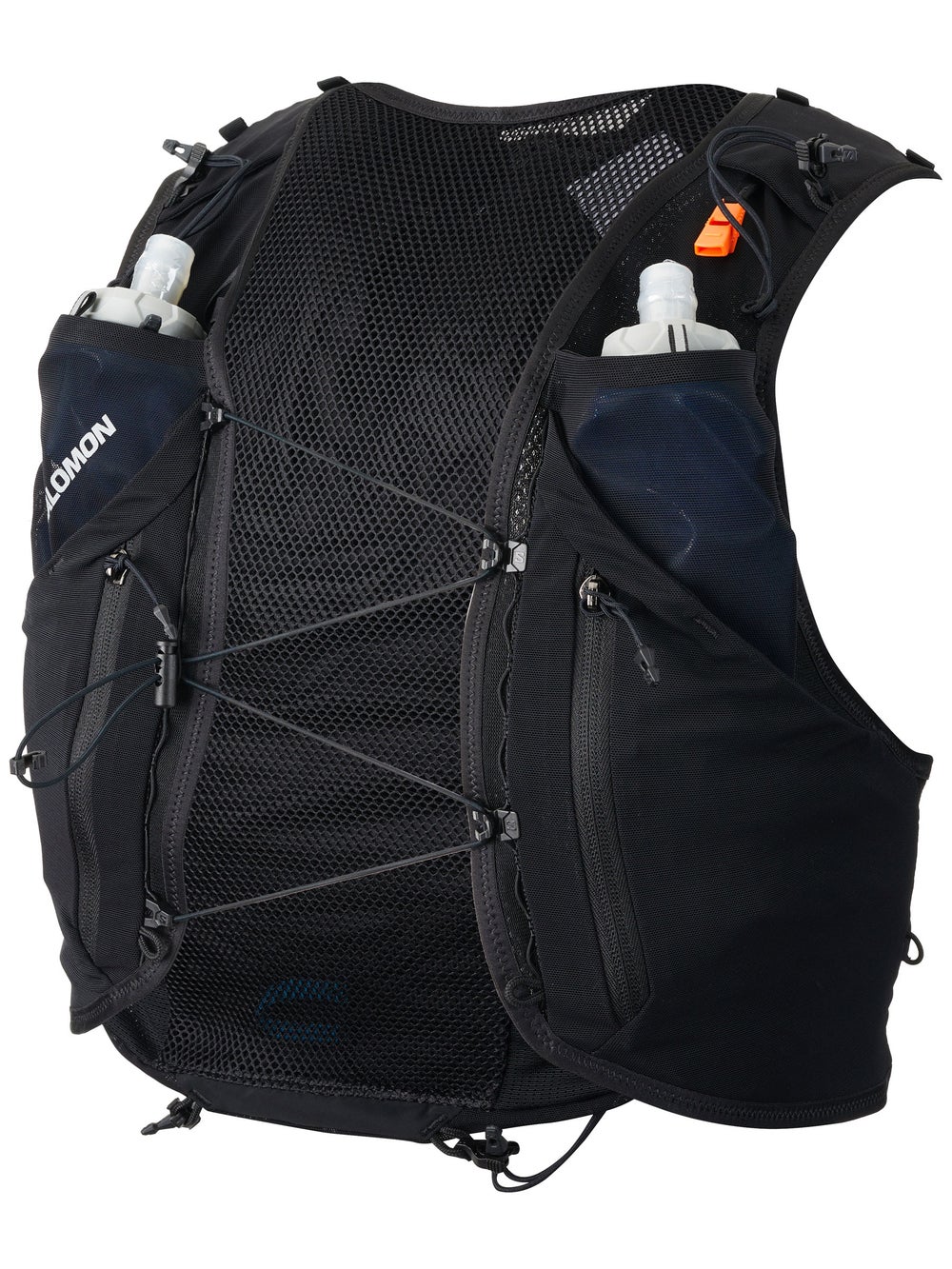
For most runners, an 8-liter soft-flask vest like the Salomon Active Skin 8 ($114.95) is the sweet spot. Match capacity to run length: 4L to 5L for runs under two hours, 8L for marathons and all-day efforts, 12L only for ultras. Fit matters more than liters — a bouncy vest is the one you stop wearing.
GearScout may earn a commission when you buy through links on this page. Prices, availability, and ratings can change, so confirm details with the retailer before purchasing.
Prices last verified August 2026.
A hydration vest is what turns a two-hour long run or a hot marathon from a survival exercise into a normal one. But most guides rank vests by capacity as if bigger is better — which is exactly backwards for the road, long-run, and marathon runners who make up most of this market. This guide ranks seven running vests from $89.95 to $174.95 by what actually decides a good buy: how much capacity you truly need for your run length, how the vest fits and whether it bounces, and what it ships with — because a vest that includes flasks or a bladder is a very different value than one that leaves you buying them separately.
Every price, spec, and image here was verified on August 4, 2026 against Running Warehouse, an authorized retailer, and each product image links to an official retailer asset. The honest headline up front: most runners buy more capacity than they need, and the $89.95 vest carries roughly the same liter of on-body water as the $164.95 one — you pay up for pack space, pockets, and race-cut fit, not for water. Where a number is the manufacturer's spec rather than something we measured, we say so.
Quick Picks
| Best for | Pick | Why it wins |
|---|---|---|
| Best overall (long runs & ultras) | Salomon ADV Skin 12 | The 12L race benchmark: reference fit, huge usable storage, two flasks included |
| Best for most runners | Salomon Active Skin 8 | An 8L race-cut vest with two flasks and a dialed fit at $114.95 |
| Best budget / first vest | Nathan QuickStart 3.0 4L | Cheapest way in, and it ships a 1.5L bladder so you buy nothing else |
| Best for road & short runs | CamelBak Circuit Run Vest | A 1.5L reservoir, 6 oz, and one secure phone pocket |
| Best for hot weather | Nathan Pinnacle Breeze 4L | Breathable woven "Breeze" mesh against your back, plus two flasks |
| Best for maximum storage | Ultimate Direction Ultra Vest | 10.3L and 8-plus pockets for long, self-supported mountain days |
| Best minimalist (no bounce) | Naked HC Running Vest | A chest-sized stretch band at about 3.5 oz that disappears against the body |
Comparison Table
Prices last verified August 2026. Vest prices and per-size stock move — two picks below were already thin on stock when we checked — so confirm the live price and your size at the retailer before you buy.
| Vest | Price | Capacity | Water in the box | Weight | Best for | Watch-out |
|---|---|---|---|---|---|---|
| Nathan QuickStart 3.0 4L | $89.95 | 4L | 1.5L bladder | Not listed | Budget / first vest | One-size fit; rear bladder, no front flasks |
| CamelBak Circuit Run Vest | $98.95 | 5L | 1.5L reservoir | 6 oz | Road & short runs | Front flasks sold separately |
| Salomon Active Skin 8 | $114.95 | 8L | Two 500ml flasks | 6.7 oz | Most runners | Thin stock in some sizes |
| Nathan Pinnacle Breeze 4L | $139.95 | 4L | Two 14 oz flasks | Not listed | Hot weather | Pricey for a 4L |
| Salomon ADV Skin 12 | $164.95 | 12L | Two 500ml flasks | 12.9 oz | Ultras & long days | More capacity than road runners need |
| Ultimate Direction Ultra Vest | $174.95 | 10.3L | Two 500ml flasks | 8.1 oz | Maximum storage | Priciest here |
| Naked HC Running Vest | $150.00 | 3-plus L | Two 500ml flasks | 3.5 oz | Minimalist, no bounce | Very thin stock; little structure |
Weights are each maker's published spec where listed; Nathan does not publish a weight for the QuickStart 3.0 or the Pinnacle Breeze, so we leave those blank rather than guess. The ADV Skin 12 figure includes its flasks; the Ultra Vest figure is without bottles.
How much capacity you actually need
The single most useful thing this guide can tell you: match liters to how long you are out, not to how prepared you want to feel. The wall of near-identical vests on most "best of" lists exists because reviewers rank by capacity, and capacity is the spec you should decide first and then mostly ignore.
- Under two hours on roads: 4L to 5L is plenty. You need a soft flask or two, a phone, a key, and a gel or three. The Nathan QuickStart 3.0, CamelBak Circuit, and Nathan Pinnacle Breeze all live here.
- Marathons and all-day efforts: 8L is the sweet spot. Enough room for a packable jacket, more fuel, and a second bottle without turning into a backpack. The Salomon Active Skin 8 is the pick.
- Ultras and self-supported mountain runs: 10L to 12L earns its space when you carry layers, mandatory kit, and hours of food. The Salomon ADV Skin 12 and Ultimate Direction Ultra Vest are built for it.
And the water math most lists skip: the soft flasks here hold about 500ml each, so two flasks is roughly a liter of water on your chest, and the bladders are 1.5L. On-body water barely changes from the cheapest vest to the most expensive. When you spend more, you are buying pack volume, pocket layout, and a better fit — not more to drink.
What We Checked
What competitors miss is that a hydration vest is bought on fit and logistics, not liters — and the SERP is full of lists that rank by capacity and never mention the two things that decide whether you keep wearing it. Here is what we actually checked, and what it changes:
- Fit is by chest circumference, not shirt size. Salomon sizes the Active Skin and ADV Skin XS to XL by a 33-to-45-inch chest; Naked uses a numbered 1-to-12 band; Nathan splits SM/MD and LG/XL. A vest that rides loose bounces, and a bouncy vest is the one that ends up in a drawer. Measure your chest before you buy.
- What ships in the box changes the real price. The QuickStart and CamelBak Circuit include a 1.5L bladder; the two Salomons, the Ultra Vest, the Naked HC, and the Pinnacle Breeze include two soft flasks; some premium vests include neither. A "cheaper" vest that makes you buy $40 of flasks is not cheaper.
- Stock is thin on two picks, and we say so. When we checked on August 4, the Naked HC was down to a single size and the Salomon Active Skin 8 was thin in SM with a longer lead time on LG. Both are still worth buying if your size is live — just confirm it first.
Who this is for: road, long-run, marathon, and trail runners buying a first or next vest, on a budget or stepping up. We did not hands-on test these seven vests in one controlled block, and we do not publish bounce or breathability scores we cannot verify. Rankings are researched editorial judgment built from manufacturer specs, authorized-retailer data, and published review consensus — Running Warehouse's own gear guide, GearJunkie, and Switchback Travel among the sources we read — plus the live price, stock, and images we confirmed on August 4, 2026.
Methodology
We ranked these seven for running specifically — not hiking or biking hydration, which optimize for different loads and carry positions. Four things drove the order: capacity matched to real running use, fit and bounce control, pocket and flask layout, and value for the money. We treated large capacity as a benefit only for the runners who need it (ultra and all-day) and as a drawback for those who do not (road and short), which is why an 8L vest, not the 12L one, is our pick for most people.
We read every Running Warehouse product page on August 4, 2026 for the current model, price, key specs, and a live product image; confirmed each product image link returned an official authorized-retailer asset (HTTP 200); and where a figure is the maker's spec — capacity, flask volume, weight — we treat it as a claim, not a measurement. Two Nathan vests do not publish a weight, so we do not list one for them rather than fill the gap with a guess.
The seven best hydration vests for running
Best overall: Salomon ADV Skin 12
The ADV Skin is the vest most experienced runners point to when someone asks what to buy, and the 12L version is the do-everything benchmark. You get Salomon's reference SensiFit wrap and sternum system — the fit other brands are measured against — two 500ml soft flasks in the box, and a genuinely deep set of pockets: dual bottle holsters, dual stretch dump pockets, front zips, and a large expandable rear. It is the heaviest vest here at 12.9 oz with flasks, and 12L is more than a road runner will ever fill. But for ultras, all-day mountain runs, and anyone who wants one vest that never runs out of room, it is the safe answer, and every size was in stock when we checked.
Best for: ultras, long trail days, and runners who want the benchmark fit with room to spare.
Avoid if: you only run one to two hours on roads — you will pay for and carry capacity you never use. The Active Skin 8 is the smarter buy.
Best for most runners: Salomon Active Skin 8
The Active Skin 8 is the ADV Skin's sensible sibling and the vest most runners should actually buy. It keeps the SensiFit fit, real XS-to-XL sizing, and two included 500ml flasks, but trims to a road-and-marathon-friendly 8L and a light 6.7 oz for $50 less than the ADV Skin 12. That is enough room for a packable jacket, a phone, and a long run's worth of fuel without the bulk of an ultra pack. The only catch is stock: SM was down to one and LG showed a longer lead time when we checked, so confirm your size is live.
Best for: the majority of runners — long training runs, marathons, and everything short of a self-supported ultra.
Avoid if: your size is out of stock, or you truly need ultra capacity — then size up to the ADV Skin 12.
Best budget / first vest: Nathan QuickStart 3.0 4L
The QuickStart 3.0 is the cheapest sensible way into a hydration vest, and it is smarter than its price looks because it ships with a 1.5L bladder — so unlike pricier flask-only vests, you buy nothing else to start running with it. You get 4L of space, a large rear compartment, adjustable sternum and side straps, and reflective detailing. The trade-offs are real: it is one-size rather than chest-fitted, so the fit is less dialed than a Salomon, and it feeds from a rear hose rather than front flasks. For a first vest, a backup, or a runner who just wants water on their back without fuss, it is hard to beat at $89.95.
Best for: first-time buyers and anyone who wants a complete, ready-to-run vest for the least money.
Avoid if: you want a precise race fit or prefer sipping from front flasks — step up to the Active Skin 8.
Best for road and short runs: CamelBak Circuit Run Vest
The Circuit is built for the road runner who wants hydration handled without thinking about it. It comes with CamelBak's 1.5L Crux reservoir, weighs just 6 oz, and puts a genuinely secure phone pocket and a rear stash pocket where you want them, all wrapped in breathable 3D vent mesh. At $98.95 it undercuts most flask vests. The honest catch is that its front harness pockets fit soft flasks, but the flasks are sold separately — so if you prefer flasks to a bladder, factor that in. For hose-fed road miles, it is a light, comfortable, well-priced pick.
Best for: road runners and shorter efforts who want a light reservoir vest with a great phone pocket.
Avoid if: you want front flasks included, or you need big cargo room for layers and long-run kit.
Best for hot weather: Nathan Pinnacle Breeze 4L
The Pinnacle Breeze earns its name and its place here on one axis: airflow. Its soft, breathable woven mesh is built to sit cooler against a sweaty back than a denser vest, which is exactly what you want in July. You also get two 14 oz flasks in the box, a Quick-Fit adjustment system with sternum slider cords, and a sensible pocket layout for a 4L. At $139.95 it costs more than the QuickStart or Circuit for similar capacity, so you are paying specifically for the breathability and the dialed fit. In a hot climate, that can be the difference that keeps the vest on your body instead of in your hand.
Best for: summer running and hot-climate runners who prioritize back ventilation.
Avoid if: you want the cheapest 4L vest — the QuickStart does the basics for $50 less.
Best for maximum storage: Ultimate Direction Ultra Vest
If your problem is organization on long days, the Ultra Vest solves it. Its 10.3L splits across eight-plus pockets — stash holsters, zip pockets, and a big main rear compartment — and it holds up to a 2.0L reservoir on top of the two included 500ml Body Bottle II flasks. Ultimate Direction's Comfort Cinch 2.0 lets you tune the fit on the move, and at 8.1 oz without bottles it is lighter than the similarly-sized ADV Skin 12. At $174.95 it is the priciest vest here, and it is more than a road runner needs, but for runners who want every item in its own pocket on a long mountain outing, nothing else here matches the layout.
Best for: long, self-supported runs where pocket organization and total storage matter most.
Avoid if: you want a simple, light vest — this is a lot of pockets to manage for a short run.
Best minimalist: Naked HC Running Vest
The Naked HC is the vest for runners who hate the feeling of a vest. Instead of buckles and panels it is a single stretchy chest band of Exopower mesh that expands to hold your gear yet compresses to kill bounce, sized precisely by chest circumference on a numbered 1-to-12 scale. It comes with two 500ml flasks and weighs about 3.5 oz — the lightest vest here by far. The compromises are its 3-plus L of minimal structure (this is not a layer-hauler) and, right now, stock: only one size was live when we checked. If your size is available and you want a race vest that disappears against your body, it is uniquely good.
Best for: minimalist racers and anyone who wants a true no-bounce, barely-there fit.
Avoid if: your size is sold out, or you need to carry a jacket and lots of kit — get the Active Skin 8 or Ultra Vest.
Buying Guide
Start with run length and budget, because together they answer most of the question. For the majority of runners — long training runs and marathons — the Salomon Active Skin 8 at $114.95 is the right first choice: race-cut fit, two flasks, and 8L that covers everything short of an ultra. Want the same idea for the least money? The Nathan QuickStart 3.0 at $89.95 comes with a bladder and is ready to run out of the box. Running mostly short road miles? The light, reservoir-based CamelBak Circuit is built for exactly that.
Then adjust for your conditions and distance. Hot climate? Prioritize the breathable Nathan Pinnacle Breeze. Going long in the mountains with mandatory kit? Step up to the Salomon ADV Skin 12 or the pocket-rich Ultimate Direction Ultra Vest. Hate the feel of a vest? The barely-there Naked HC is the no-bounce answer.
Finally, get the fit right, because it decides everything. Vests are sized by chest circumference, not your shirt size, so measure your chest and buy to that number. A vest should sit snug with no bounce when you jump on the spot with full flasks, and the flasks should ride high on your chest, not sag at your stomach. If you are new to running fuel and pacing on long days, pair your vest with the right watch in our marathon GPS watch guide, put it over the right shoes from our max-cushion long-run shoe guide, and if you are heading off-road, start with our beginner trail running shoe guide. You can browse everything in our running guides.
Common mistakes
- Buying capacity out of fear. A 12L ultra vest for a runner who never goes past two hours is heavier, hotter, and more expensive than the 8L or 4L vest you would actually use.
- Sizing to your shirt size. Vests fit by chest circumference — measure your chest, and if you are between sizes, the snugger one bounces less.
- Ignoring what is in the box. A flask-only vest that makes you buy flasks separately can cost more than a pricier vest that includes them; check whether flasks or a bladder are included before you compare prices.
- Skipping the bounce test. Loose side and sternum straps are the number-one reason a vest chafes and bounces; cinch it with full flasks and jump before your first run, not during it.
- Not confirming your size is in stock. Popular vests sell through by size — two picks here were already thin — so verify your size is live before you count on it.
- Using a running vest as a hiking pack. These are cut for a runner's forward lean and light loads; if you need to haul heavy gear for miles, that is a different pack.
Common questions
Frequently asked questions
- How much water do I actually need to carry on a run?
- Match it to time on feet, not distance. For runs under about an hour in mild weather, a handheld or nothing is fine. From one to two hours, one 500ml flask or a 1.5L bladder covers most runners. For marathons, all-day efforts, and hot weather, plan on two flasks (about a liter) plus the option to refill. Carrying more water than you will drink just adds weight and bounce.
- Soft flasks or a bladder (reservoir) — which is better for running?
- Front soft flasks are the running default: you can see how much is left, refill fast at aid stations, and the weight rides high on your chest. A rear bladder holds more, sits out of the way, and lets you sip hands-free from a hose, which road runners often prefer. In this guide the Salomon, Ultimate Direction, and Naked vests ship with flasks; the Nathan QuickStart and CamelBak Circuit ship with a 1.5L bladder.
- How should a running hydration vest fit, and how do I stop it bouncing?
- A vest should fit like a snug layer, not a backpack. Vests are sized by chest circumference, so measure your chest and buy to that number rather than your shirt size. Cinch the sternum and side straps so that when you jump on the spot with full flasks there is no bounce, and make sure the flasks ride high on your chest instead of sagging at your stomach. A loose vest is the single biggest cause of chafing and bounce.
- What size vest should I get — 4L, 8L, or 12L?
- For most road, long-run, and marathon runners, 4L to 8L is the right range: 4L to 5L for runs under two hours, 8L for marathons and all-day training. Reserve 10L to 12L for ultras and self-supported mountain runs where you carry layers, mandatory kit, and hours of food. Buying a 12L vest for two-hour road runs means paying for and carrying space you never fill.
- Can I use a running vest for hiking or cycling too?
- You can, but it is a compromise. Running vests are cut for a forward lean and light loads, with flasks up front and minimal frame. Hiking packs carry heavier loads lower and on a hip belt; cycling hydration sits on the back. A running vest works for light, fast hikes, but if you regularly haul heavy gear for miles, a dedicated pack will be more comfortable.
- Do I need to buy the flasks or bladder separately?
- It depends on the vest, and it changes the real price. The Nathan QuickStart 3.0 and CamelBak Circuit include a 1.5L bladder; the Salomon Active Skin 8 and ADV Skin 12, the Ultimate Direction Ultra Vest, the Nathan Pinnacle Breeze, and the Naked HC include two soft flasks. Some premium vests include neither, so a lower sticker price can cost more once you add $30 to $40 of flasks.
References
Sources
- Salomon ADV Skin 12 — price, specs, image (Running Warehouse, authorized retailer)
- Salomon Active Skin 8 — price, specs, image (Running Warehouse)
- Ultimate Direction Ultra Vest — price, specs, image (Running Warehouse)
- Nathan Pinnacle Breeze 4L — price, specs, image (Running Warehouse)
- Nathan QuickStart 3.0 4L — price, specs, image (Running Warehouse)
- CamelBak Circuit Run Vest — price, specs, image (Running Warehouse)
- Naked HC Running Vest — price, specs, image (Running Warehouse)
- Best Hydration Vests & Running Belts of 2026 (Running Warehouse gear guide)
- The 13 Best Running Hydration Packs & Vests of 2026 (GearJunkie)
- Best Running Hydration Vests of 2026 (Switchback Travel)
Keep reading
Related guides
Best GPS watches for marathon training (2026): 7 picks by battery and training depth
The best GPS watches for marathon training in 2026, from the $249 COROS Pace 4 to the Garmin Forerunner 970 — ranked by battery, training depth, and price.
Jul 28, 2026
Best max cushion running shoes for long runs (2026): 7 plush picks by cushion and weight
The best max-cushion running shoes for long runs in 2026, from the $155 Nike Vomero 18 to the HOKA Skyward X 2 — ranked by cushion, weight, and price.
Jul 29, 2026
Best Trail Running Shoes for Beginners: Picks by Buyer Type (2026)
Beginner trail running shoes by buyer type: a ~$120 all-rounder, the grippiest do-everything pick, wide-foot and road-to-trail options, and what to skip.
Jul 29, 2026
Best headlamp for running (2026): 8 picks ranked by the light you can actually hold
Eight running headlamps from $69.95-$249.95 ranked by sustained lumens you can hold for a whole run, not the boost figure printed on the box.
Aug 17, 2026