The short answer
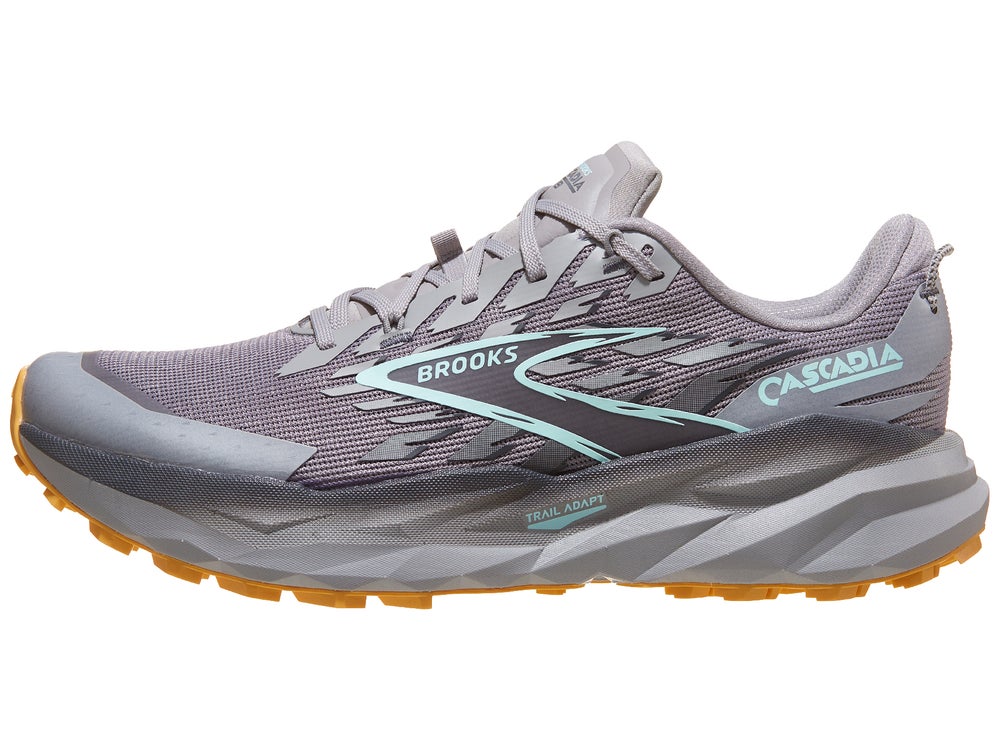
For most beginners, a cushioned trail shoe with moderate 3.5–4mm lugs and a rock plate or shield — like the Brooks Cascadia 19 at about $120 — hits the sweet spot for mixed dirt, gravel, and roots. Prioritize fit, grip you can trust, and underfoot protection over aggressive traction, and you don't need to spend more than $150 to start.
GearScout may earn a commission when you buy through links on this page. Prices, availability, and ratings can change, so confirm details with the retailer before purchasing.
Prices last verified July 2026.
Buying your first pair of trail running shoes is confusing on purpose. Trail marketing throws jargon at you — lug depth, heel-to-toe drop, rock plates, stack height — and most "best trail shoe" lists rank aggressive mountain and ultra-racing shoes you should not touch yet. Here is the good news: as a new trail runner you can ignore almost all of it. What matters is a cushioned, protected shoe with grip you can trust on the terrain you actually run — and the shoe most beginners should buy costs about $120, not $170.
The real beginner mistakes are quieter: buying a low-drop mountain shoe that feels harsh and unstable, ignoring underfoot protection and bruising your soles on the first rocky mile, or overspending on a $170 pair when a $120 one suits your trails better. This guide is organized by the kind of beginner you are — mostly-road, wide-footed, technical-terrain, or fast — not by a 1-to-6 ranking. Find your situation, take the pick, skip the rest. (New to running shoes in general? Start with our beginner road-shoe guide or the running hub.)
If you only have five minutes
- Most beginners (mixed dirt, gravel, roots): the Brooks Cascadia 19 at about $120 (on clearance) — stable, cushioned, rock-protected, road-to-trail friendly. Best value here.
- You want ONE shoe that grips everything: the Saucony Peregrine 16 at $150 — Vibram Megagrip lugs plus a rock plate, the do-everything pick.
- You mostly run roads to reach the trail: the HOKA Challenger 8 at $155 — max cushion, low lugs, smooth on pavement.
- Wide feet, or you hate a snug toe box: the Altra Lone Peak 9 at $145 — roomy fit and zero drop (ease into it).
- You do NOT need the $170 pair. Spend about $120–$150, get the fit and protection right, and put the rest toward trail time. That does more for your running than any spec sheet.
Quick Picks by buyer type
Not a ranked list — each pick is the right answer for one kind of beginner. Prices are source-backed Running Warehouse prices (see the comparison table for details).
| If you are… | Pick | Price | Why it fits you |
|---|---|---|---|
| Most beginners / want one do-it-all value shoe | Brooks Cascadia 19 | $119.96 | Stable, cushioned, Ballistic Rock Shield; road-to-trail; best price here |
| After the most trustworthy grip and protection | Saucony Peregrine 16 | $149.95 | 4mm Vibram Megagrip lugs + rock plate; handles mud, rock, wet roots |
| Mostly a road runner dipping onto trails | HOKA Challenger 8 | $154.95 | Max cushion, low 4mm lugs, smooth on pavement; wide available |
| Wide-footed or want a natural, roomy fit | Altra Lone Peak 9 | $144.95 | Roomy toe box + full-length StoneGuard; zero drop (adapt gradually) |
| Nervous about low-drop trail shoes | Nike Wildhorse 10 | $164.95 | 9.5mm drop feels like a road shoe; cushioned + forefoot rock plate |
| Faster/athletic and want light and nimble | Nike Kiger 10 | $169.95 | Lightest here (9.1oz), responsive, low to the ground |
What actually matters on trails (and what doesn't yet)
Ignore most of the marketing. For a beginner, three things decide almost everything. Lead with the takeaway, then the reason.
1. Grip (lugs) — match it to your terrain, don't max it out
Lugs are the rubber teeth on the outsole. Deeper, sharper lugs bite loose dirt and mud; shallower lugs roll smoother on hardpack and pavement. Beginners rarely need aggressive mud lugs — a moderate 3.5–4mm multidirectional pattern (Peregrine 16, Challenger 8, Kiger 10) grips confidently on the dirt, gravel, and packed singletrack most new runners actually run. Save the deep-lug soft-ground shoes for when you are chasing muddy races.
2. Underfoot protection — the spec beginners skip and feel first
Trails hide rocks and roots. A rock plate (Peregrine 16, Wildhorse 10) or rock shield (the Cascadia 19's Ballistic Rock Shield, the Kiger 10, and Altra's StoneGuard) is a thin firm layer that stops a sharp rock from bruising your foot. Max-cushion shoes like the Challenger 8 lean on stack height instead — fine for buffed trail, less ideal on sharp technical rock. If your trails are rocky, prioritize a plate.
3. Drop and cushion — comfort now, adapt later
Heel-to-toe drop is the height difference from heel to forefoot. Higher drop (the Wildhorse 10 at 9.5mm) feels most like a normal road shoe — the easiest transition. Lower and zero drop (the Peregrine 16 at 4mm, the Lone Peak 9 at 0mm) put you closer to the ground for stability but ask your calves and Achilles to adapt gradually. Do not switch to zero drop and run long the same week. Cushion is comfort: more (the Challenger 8) protects on longer efforts; moderate (the Peregrine and Cascadia) gives better ground feel and stability. And above all — fit first: your feet swell on the trail, so leave a thumb's width at the toe, lock the heel, and make sure there are no arch hot spots. Fit beats every other spec.
Comparison Table
Prices last verified July 2026 at Running Warehouse (authorized retailer). Specs are from each shoe's Running Warehouse product page. "Drop" is heel-to-toe drop; lower sits you closer to the ground. Where a maker does not publish lug depth, we say so rather than guess ("n/p" = not published).
| Shoe | Price | Drop | Weight | Lugs | Underfoot protection | Widths | Best for | Avoid if |
|---|---|---|---|---|---|---|---|---|
| Brooks Cascadia 19 | $119.96* | 6mm | 10.6oz | moderate (n/p) | Ballistic Rock Shield | D, 2E | Value do-it-all | Your clearance size is gone |
| Altra Lone Peak 9 | $144.95 | 0mm | 10.4oz | MaxTrac (n/p) | Full-length StoneGuard | D, 2E | Wide feet / natural fit | You won't adapt to zero drop |
| Saucony Peregrine 16 | $149.95 | 4mm | 10.0oz | 4mm Vibram Megagrip | Forefoot rock plate | D | Grip + do-everything | You mostly run pavement |
| HOKA Challenger 8 | $154.95 | 7mm | 9.7oz | 4mm low | None (max cushion) | D, 2E | Road-to-trail cushion | Trails are sharp/rocky |
| Nike Wildhorse 10 | $164.95 | 9.5mm | 10.8oz | 4mm | Forefoot rock plate | D | Easiest road transition | You want a wide fit |
| Nike Kiger 10 | $169.95 | 5mm | 9.1oz | 3.5mm | Rock shield | D | Light + responsive | You want max cushion/mud grip |
*The Cascadia 19 price is a clearance price (was $149.95); the Cascadia 20 is arriving as a $159.95 pre-order, so grab your size in the 19 while it lasts.
Methodology
We built this list for one reader: someone buying their first pair of trail running shoes who is overwhelmed by the choice. Picks are organized by buyer archetype rather than a single ranking, because the "best" beginner trail shoe genuinely depends on your terrain, your feet, and your budget.
Selection weighted, in order: fit and forgiveness, underfoot protection (rock plate or shield), grip appropriate to beginner terrain (not maximal mud lugs), an approachable drop, value at the price, and in-stock availability across a real range of sizes. We deliberately excluded aggressive mountain-racing and ultra shoes — they are excellent, but they are not what a new trail runner should start in. Two honest disclosures: two of the six picks are Nike (they cover two genuinely different beginner needs — a road-like higher drop and a light, fast ride), and this is a spec-, source-, and reputation-based editorial guide, not a hands-on lab test. Exactly what we checked is next.
What We Checked
We are transparent about our evidence. On July 29, 2026 we verified every price, spec (stack, drop, weight, lug depth where published, rock protection, and widths), and in-stock size range against each shoe's authorized-retailer product page at Running Warehouse, and we compared those specs across the field to match each shoe to the right kind of beginner. We also confirmed that every product image loads from the official Running Warehouse source before this guide went live.
What we did not do: run all six on the same loop of trail. GearScout has not conducted a controlled on-trail test of these exact shoes, so we do not claim hands-on impressions. Instead the picks lean on published manufacturer and retailer specs plus the well-documented reputations of these lines — the Cascadia's long run as the beginner-friendly all-rounder, the Peregrine's status as a do-everything trail shoe, the Challenger as the canonical road-to-trail cushioned shoe, and the Lone Peak's roomy zero-drop following. Where a maker does not publish a number (the Cascadia 19 and Lone Peak 9 lug depths), we describe the outsole qualitatively rather than invent a measurement.
Our picks in depth
Brooks Cascadia 19 — best value for most beginners ($119.96, clearance)
The Cascadia 19 has been the default "just give me a trail shoe that works" pick for years, and on clearance at about $120 it is the easy call for most beginners. A stable, wide platform, a Ballistic Rock Shield for rock protection, and a moderate 6mm drop make it forgiving on mixed dirt, gravel, and roots, and it is smooth enough to run road-to-trail. It is the outgoing model — the Cascadia 20 is arriving as a $159.95 pre-order — so clearance sizes are limited.
- Best for: most new trail runners; anyone who wants one protected, stable do-it-all shoe at the best price here.
- Avoid if: your exact size has already sold out of the clearance run, or you want the newest version.
Saucony Peregrine 16 — the do-everything grip pick ($149.95)
If you want ONE shoe that grips confidently on everything, the Peregrine 16 is it. Its 4mm Vibram Megagrip lugs bite mud, rock, and wet roots, and a forefoot rock plate protects without much weight penalty (10.0 oz). At 33/29mm with a 4mm drop it sits lower and firmer than the max-cushion picks, which gives you better trail feel and stability — a good habit-builder for a beginner learning footing.
- Best for: the beginner who wants trustworthy grip and protection across varied, technical, or wet terrain.
- Avoid if: you mostly run pavement to reach the trail (the firmer, lower ride is less plush on roads), or you need a wide in this colorway.
HOKA Challenger 8 — best road-to-trail cushion ($154.95)
The Challenger 8 is the canonical door-to-trail shoe: a big 44/37mm stack of soft cushion that feels great on pavement, with shallow 4mm lugs that handle buffed dirt and gravel. It is light for the cushion (9.7 oz) and comes in a 2E wide. The tradeoff is honest — there is no rock plate, so it leans on stack height for protection, and the low lugs give up grip in mud or on sharp technical rock.
- Best for: beginners whose "trails" are mostly pavement, bike path, and smooth dirt, and who want maximum comfort.
- Avoid if: your trails are rocky or muddy — you will want a rock plate and deeper lugs.
Altra Lone Peak 9 — best for wide feet and a natural fit ($144.95)
The Lone Peak 9 is the roomy, foot-shaped option. Its wide toe box lets your toes splay (a relief if other shoes pinch), a full-length StoneGuard protects underfoot, and it also comes in a 2E wide. The catch is the zero-drop (0mm) platform: it is a wonderful, ground-connected feel, but if you are coming from cushioned road shoes you must ease in gradually or your calves and Achilles will complain.
- Best for: wide feet, bunions, and toe-splay fans; runners who want a natural zero-drop feel for trail and hiking.
- Avoid if: you are unwilling to adapt to zero drop, or you want a locked-down performance fit.
Nike Wildhorse 10 — the easiest jump from road shoes ($164.95)
If low-drop trail shoes make you nervous, the Wildhorse 10 is the friendliest transition here: its 9.5mm drop feels closest to a normal road shoe, so nothing about the geometry is unfamiliar. It is cushioned (38/28.5mm), has a forefoot rock plate for protection, and grips fine on typical trail with 4mm lugs. The downsides: it is the heaviest pick (10.8 oz) and comes in standard D width only.
- Best for: road runners who want trail protection without changing the drop they are used to.
- Avoid if: you need a wide fit, or you specifically want a lower, more grounded trail feel.
Nike Kiger 10 — light and responsive for the faster beginner ($169.95)
The Kiger 10 is the light, quick option — at 9.1 oz it is the lightest shoe here, low to the ground (29/24mm, 5mm drop) and responsive for faster runs and non-technical trail. It still has a rock shield for protection. It is the pick for an athletic beginner who runs road quickly and wants that same lively feel on dirt. Just know the 3.5mm lugs are the shallowest here (weakest in mud) and it is D width only.
- Best for: faster, athletic beginners who want a light, nimble ride on smoother trail.
- Avoid if: you want maximum cushion, a wide fit, or grip for mud and loose terrain.
Buying Guide
Here is what competitors bury under ranked lists: the price-tier truth. New trail runners routinely buy the $170 pair because it sits at the top of a list. Most do not need to. Here is how the tiers actually shake out.
- About $120 (Cascadia 19 on clearance): where most beginners should shop right now. Stable, cushioned, rock-protected, road-to-trail. For the majority of new trail runners, this is the buy — spend the savings on trail time.
- $145–$155 (Lone Peak 9, Peregrine 16, Challenger 8): the sweet spot for a specific need — a roomy zero-drop fit (Lone Peak), do-everything Vibram grip (Peregrine), or max road-to-trail cushion (Challenger). Pay here when your terrain or your feet ask for it.
- $165–$170 (Wildhorse 10, Kiger 10): worth it for one reason — a road-like higher drop for an easy transition (Wildhorse) or a light, fast ride (Kiger). If neither is a clear yes, keep your money.
- Under $100: big-box and older-model trail shoes live here. They can work for occasional light-trail use, but we did not ship one as a headline pick this run because we could not cleanly verify current stock and an official image — if you find a well-reviewed prior-model Cascadia, Peregrine, or Wildhorse on closeout in your size, that is a legitimate budget move.
The plain-language shortcut, and who this is for: if you are unsure, buy the Cascadia 19 at about $120, dial in the fit, and go run. That is the single highest-return move a new trail runner can make. Whatever you choose, every link here points to a live product page — confirm your size, width, and the price before you check out, because prices (especially on the clearance Cascadia) can change.
Common mistakes new trail runners make
- Buying an aggressive mountain or mud shoe for buffed local trails — deep lugs feel clunky and unstable on hardpack.
- Ignoring underfoot protection and bruising your soles on the first rocky run. If your trails have rocks, get a rock plate.
- Jumping to zero drop and immediately running long — ease into low or zero drop or your calves will let you know.
- Sizing to your street-shoe size. Feet swell on trails; leave a thumb's width at the toe.
- Overspending on the $170 pair when a $120 one suits your terrain better. Reps on the trail beat spec sheets.
- Wearing brand-new trail shoes on a big first outing. Walk and run a few short sessions to break them in first.
FAQs
Do I really need trail shoes, or will my road shoes work?
On packed dirt and gravel bike paths, a stable road shoe is fine. Trail shoes earn their keep once you hit loose dirt, mud, roots, and rock: the lugs grip where road outsoles slip, and the rock plate or shield and reinforced upper protect your feet. If you are heading onto real singletrack, trail shoes are worth it.
How much should a beginner spend on trail running shoes?
For most beginners, about $120–$150 is the sweet spot — enough for a cushioned, protected, grippy shoe from a proven line (the roughly $120 clearance Cascadia 19 or the $150 Peregrine 16). Spending $165–$170 only makes sense for a specific need. You do not need the most expensive pair to start.
What lug depth and drop should a beginner look for?
A moderate 3.5–4mm multidirectional lug grips the dirt, gravel, and packed trail most beginners run without feeling clunky on firmer ground. For drop, if you are coming from road shoes, a higher drop (the Wildhorse 10's 9.5mm) transitions easiest; 4–7mm is a versatile middle; zero drop (the Lone Peak 9) is great but needs gradual calf and Achilles adaptation.
Are waterproof (GORE-TEX/GTX) trail shoes worth it for a beginner?
Usually not as a first pair. GTX keeps light splashes out but runs hotter and dries slower once water comes over the collar. Most beginners are better served by a breathable non-waterproof shoe that drains and dries fast. Consider GTX only if you routinely run cold, wet, or snowy conditions.
I have wide feet — which of these fits best?
The Altra Lone Peak 9 has the roomiest toe box here and also comes in a 2E wide. The Brooks Cascadia 19 and HOKA Challenger 8 also offer a 2E width. The two Nikes (Wildhorse 10 and Kiger 10) are standard D width only, so skip them if you need extra room.
How long do trail running shoes last?
Roughly 300–500 miles, like road shoes, but abrasive and rocky terrain wears lugs and uppers faster. Watch for worn-smooth lugs (grip loss) and packed-out cushioning. Rotating two pairs and rinsing off mud after muddy runs both extend their life.
New to running gear more broadly? See our beginner road running shoe guide, the max-cushion long-run guide, and the stability shoes for flat feet guide — or browse the full running hub.
Common questions
Frequently asked questions
- Do I really need trail shoes, or will my road shoes work?
- On packed dirt and gravel bike paths, a stable road shoe is fine. Trail shoes earn their keep once you hit loose dirt, mud, roots, and rock: the lugs grip where road outsoles slip, and the rock plate or shield and reinforced upper protect your feet. If you are heading onto real singletrack, trail shoes are worth it.
- How much should a beginner spend on trail running shoes?
- For most beginners, about $120–$150 is the sweet spot — enough for a cushioned, protected, grippy shoe from a proven line (the roughly $120 clearance Cascadia 19 or the $150 Peregrine 16). Spending $165–$170 only makes sense for a specific need. You do not need the most expensive pair to start.
- What lug depth and drop should a beginner look for?
- A moderate 3.5–4mm multidirectional lug grips the dirt, gravel, and packed trail most beginners run without feeling clunky on firmer ground. For drop, if you are coming from road shoes, a higher drop (the Wildhorse 10's 9.5mm) transitions easiest; 4–7mm is a versatile middle; zero drop (the Lone Peak 9) is great but needs gradual calf and Achilles adaptation.
- Are waterproof (GORE-TEX/GTX) trail shoes worth it for a beginner?
- Usually not as a first pair. GTX keeps light splashes out but runs hotter and dries slower once water comes over the collar. Most beginners are better served by a breathable non-waterproof shoe that drains and dries fast. Consider GTX only if you routinely run cold, wet, or snowy conditions.
- I have wide feet — which of these fits best?
- The Altra Lone Peak 9 has the roomiest toe box here and also comes in a 2E wide. The Brooks Cascadia 19 and HOKA Challenger 8 also offer a 2E width. The two Nikes (Wildhorse 10 and Kiger 10) are standard D width only, so skip them if you need extra room.
- How long do trail running shoes last?
- Roughly 300–500 miles, like road shoes, but abrasive and rocky terrain wears lugs and uppers faster. Watch for worn-smooth lugs (grip loss) and packed-out cushioning. Rotating two pairs and rinsing off mud after muddy runs both extend their life.
References
Sources
- Brooks Cascadia 19 — Running Warehouse (price + specs)
- Altra Lone Peak 9 — Running Warehouse (price + specs)
- Saucony Peregrine 16 — Running Warehouse (price + specs)
- HOKA Challenger 8 — Running Warehouse (price + specs)
- Nike Wildhorse 10 — Running Warehouse (price + specs)
- Nike Kiger 10 — Running Warehouse (price + specs)
- Best Trail Running Shoes 2026 — Fleet Feet buyer's guide
- Saucony Peregrine 16 review — Believe in the Run
Keep reading
Related guides

Best running shoes for beginners (2026)
The best beginner running shoes for easy miles, walk-run plans, wide feet, and budget-conscious new runners.
May 29, 2026
Best max cushion running shoes for long runs (2026): 7 plush picks by cushion and weight
The best max-cushion running shoes for long runs in 2026, from the $155 Nike Vomero 18 to the HOKA Skyward X 2 — ranked by cushion, weight, and price.
Jul 29, 2026

Best stability running shoes for flat feet (2026)
Supportive running shoes for flat feet and overpronation, compared by stability approach, width options, price, and fit risk.
May 29, 2026
Best headlamp for running (2026): 8 picks ranked by the light you can actually hold
Eight running headlamps from $69.95-$249.95 ranked by sustained lumens you can hold for a whole run, not the boost figure printed on the box.
Aug 17, 2026