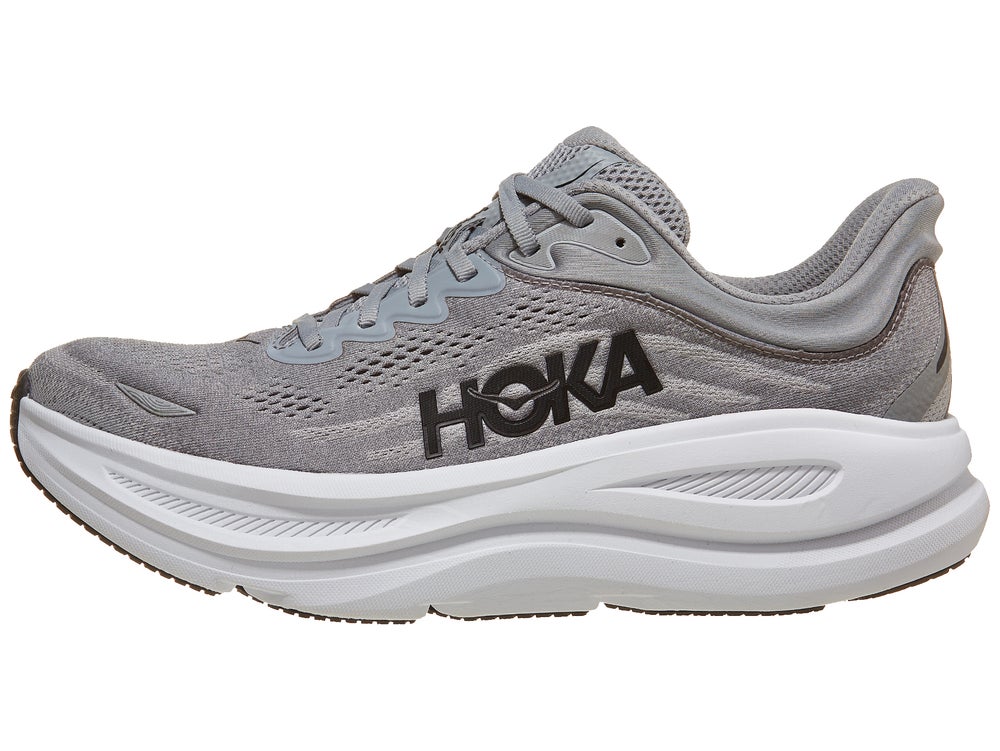
The short answer
For long runs, the HOKA Bondi 9 ($174.95) is the best max-cushion shoe for most runners: 44mm of protective foam built for time on feet. Want it lighter? The Saucony Triumph 24 at 8.6 oz. Softest value? The ASICS Gel-Nimbus 27. Cheapest way in? The Nike Vomero 18. Maximum stack and propulsion? The HOKA Skyward X 2.
GearScout may earn a commission when you buy through links on this page. Prices, availability, and ratings can change, so confirm details with the retailer before purchasing.
Prices last verified July 2026.
A long run is where a shoe earns its place in your rotation. Two to three hours of repetitive impact rewards protective foam and punishes anything thin, harsh, or unstable. This guide ranks seven max-cushion road shoes from $154.95 to $224.95 by what actually matters when the miles pile up: how the foam feels late in a run, how tall and stable the platform is, how much the shoe weighs, and whether a plate is worth paying for.
Every price, spec, and image here was verified on July 28, 2026 against Running Warehouse, the brand, or an independent lab, and each product image links to an official authorized-retailer asset. The honest headline up front: most runners are best served by the $155 to $175 tier, and the $200-plus super-max shoes earn their price only for specific runners. Where a number is the manufacturer's spec rather than something we measured, we say so.
Quick Picks
| Best for | Pick | Why it wins |
|---|---|---|
| Best overall for long runs | HOKA Bondi 9 | 44mm of protective supercritical foam built for time on feet |
| Best value (cheapest way in) | Nike Vomero 18 | Real max cushion — 44mm ZoomX over ReactX — at the lowest price here |
| Best lightweight plush | Saucony Triumph 24 | 8.6 oz of premium ATPU foam: plush without the weight penalty |
| Softest classic (best on sale) | ASICS Gel-Nimbus 27 | Pillowy FF Blast+ ECO with a gel heel; discounts often |
| Best for heavier runners | New Balance Fresh Foam X More v6 | Widest, most stable base; low 4mm drop; 2E width available |
| Best super-max without a plate | Brooks Glycerin Max 2 | 48mm of DNA Tuned foam and a smooth rocker, no plate |
| Best premium (cushion + propulsion) | HOKA Skyward X 2 | 49mm stack with a carbon plate for late-run pop |
Comparison Table
Prices last verified July 2026. Running-shoe prices move often — especially ASICS and Nike, which discount regularly — so confirm the live price at the retailer before you buy.
| Shoe | Price | Heel stack | Drop | Weight | Best for | Watch-out |
|---|---|---|---|---|---|---|
| Nike Vomero 18 | $154.95 | 44mm | 10mm | 10.5 oz | Value entry to max cushion | Not the tallest or lightest |
| New Balance More v6 | $159.95 | 42mm | 4mm | 11.0 oz | Heavier runners, wide base | Heaviest traditional pick |
| ASICS Gel-Nimbus 27 | $165 | 43.5mm | 8mm | 10.8 oz | Softest classic feel | Soft, not responsive |
| Saucony Triumph 24 | $169.95 | 42mm | 10mm | 8.6 oz | Lightweight plush | Traditional 10mm drop |
| HOKA Bondi 9 | $174.95 | 44mm | 5mm | 10.8 oz | Time on feet, recovery | Firm-ish and heavy for its stack |
| Brooks Glycerin Max 2 | $199.95 | 48mm | 6mm | 11.1 oz | Super-max plush, no plate | Heaviest shoe here |
| HOKA Skyward X 2 | $224.95 | 49mm | 5mm | 10.0 oz | Premium cushion + plate | Priciest; structured ride |
Stack and weight figures are each maker's published specs (men's shoe). Independent lab measurements can run a millimeter or two under the manufacturer number — the ASICS Gel-Nimbus 27 is one example, where lab stack lands about 1mm below ASICS' figure.
Methodology
We ranked these seven shoes for long, high-mileage runs specifically — not for speedwork or racing. Four things drove the order: how protective and stable the foam feels late in a run, stack height and platform width, weight, and value for the money. We treated a carbon plate or aggressive rocker as a bonus only when it helps a long-run ride, not as a reason to pay more on its own.
We checked every Running Warehouse or brand product page on July 28, 2026 for current model, price, key specs, and a live product image; cross-checked stack and weight against independent lab data (RunRepeat) where available; and confirmed each image link returned an official authorized-retailer asset (HTTP 200). Where a figure is the maker's spec — like stack height or weight — we treat it as a claim, not a measurement. We did not run the ASICS retailer's own product page directly (it blocked automated access), so we sourced that price from Fleet Feet and RunRepeat instead of guessing.
What We Checked
What competitors miss is that "max cushion" is not one thing, and more stack is not automatically better for long runs. Two shoes with the same 44mm heel can feel completely different depending on the foam and the geometry. The distinctions that actually change a long run are the ones most lists skip:
- Foam chemistry beats stack height. A supercritical PEBA foam (the HOKA Skyward X 2) stays springy for hours; a traditional supercritical-EVA foam (the HOKA Bondi 9) is protective but firmer and heavier; New Balance's Fresh Foam X and ASICS' FF Blast+ ECO sit in between. The number on the spec sheet tells you less than the material does.
- Softer is not always better late in a run. Very soft, tall foam can feel unstable and mushy after 90 minutes, which is why platform width and a little structure — the More v6's wide base, the Skyward X 2's plate — matter more for heavier runners and truly long efforts.
- Weight is the hidden cost of cushion. Most max-cushion shoes weigh over 10 oz. The Saucony Triumph 24 (8.6 oz) is the exception that proves grams are optional at this stack height.
Who this is for: runners logging long or high-mileage days who want protection and comfort, from a first-timer building to a half marathon to a marathoner on easy recovery miles. We did not hands-on test all seven in one controlled block, and we do not publish wear-mileage or energy-return numbers we cannot verify. Rankings are researched editorial judgment built from manufacturer specs, independent lab measurements, published review consensus, and the current price, stock, and images we confirmed on July 28, 2026.
What actually matters in a long-run cushion shoe
Foam type, not just the stack number
Stack height tells you how much foam is underfoot; the foam itself tells you how it will feel at mile 15. Supercritical PEBA and TPU foams (Skyward X 2, Triumph 24, Glycerin Max 2) stay lively and resist "packing out"; classic supercritical EVA (Bondi 9) is protective and durable but firmer. If you want a soft, forgiving ride, chase the material, not the millimeters.
Stability and platform width
A tall soft stack can feel tippy. The shoes that hold up best over hours have a wide base or a touch of structure: the New Balance More v6's broad platform, the Skyward X 2's plate, the Bondi 9's flared midsole. Heavier runners and anyone who has felt a plush shoe "roll" late in a run should prioritize this.
Weight — the cost you feel at mile 15
Grams you cannot notice in the store add up over two hours. Nearly every max-cushion shoe sits above 10 oz; if a lighter long-run shoe matters to you, the Triumph 24 (8.6 oz) and the plated Skyward X 2 (10.0 oz) are the standouts, while the Glycerin Max 2 (11.1 oz) and More v6 (11.0 oz) trade weight for maximum foam.
Drop and rocker — how the shoe rolls forward
Heel-to-toe drop ranges widely here, from the low 4mm More v6 to the traditional 10mm Vomero 18 and Triumph 24. Lower drops load the calf and Achilles more; higher drops feel more familiar to most road runners. A rocker geometry (Bondi 9's MetaRocker, Glycerin Max 2's GlideRoll) helps a heavy shoe roll through the stride, which matters more the longer you are out.
Plate or no plate
A plate is not required for long runs. In this cushioned context it adds a firmer, more propulsive, more stable feel — worth it in the HOKA Skyward X 2 if you want cushion that still moves you forward, and skippable if you just want to sink into the foam (the Glycerin Max 2 and Bondi 9 are the unplated plush picks).
Our top picks
Best overall: HOKA Bondi 9
The Bondi is the shoe most people mean when they say "max cushion," and the Bondi 9 is the definitive long-run and time-on-feet trainer. It pairs 44mm of protective supercritical-EVA foam with HOKA's MetaRocker geometry to roll you through the stride, and at a low 5mm drop it feels planted rather than tippy. Two honest knocks: at 10.8 oz it is heavy for its stack, and the EVA-based foam is protective rather than bouncy, so it feels more "cushioned" than "springy." For long slow miles, easy days, and runners who want maximum protection underfoot, that is exactly the point.
Best for: long runs, recovery days, and anyone who wants the most protective, plant-and-go ride.
Avoid if: you want a light or lively shoe — look at the Triumph 24 or Skyward X 2.
Best value: Nike Vomero 18
The Vomero 18 is the cheapest verified way into real max cushion. For $154.95 you get a genuinely tall 44mm stack that pairs a layer of Nike's premium ZoomX foam over a durable ReactX base, so it feels softer and more premium than its price. It is a do-everything soft daily trainer that happily handles long runs. You give up the tallest stack and the lightest weight, but not the plush, protected feel that makes this category worth buying.
Best for: runners who want max-cushion comfort for the lowest outlay, or a versatile soft daily trainer.
Avoid if: you specifically want the tallest super-max stack (Glycerin Max 2, Skyward X 2).
Best lightweight plush: Saucony Triumph 24
The Triumph 24 is the shoe that breaks the "cushion means heavy" rule. Its new incrediLUX foam delivers a plush 42mm stack at just 8.6 oz — well under most of this field — so it feels light and lively on a long run while still protecting you late. The trade-off is a traditional 10mm drop, which some runners love and others have moved away from. If you want to cover long distance with some pep instead of sinking into the foam, this is the pick.
Best for: plush long runs where you still want to change pace; runners who hate a heavy shoe.
Avoid if: you prefer a low drop or a maximal, sink-in feel.
Softest classic (best on sale): ASICS Gel-Nimbus 27
The Gel-Nimbus 27 is ASICS' plushest daily trainer and one of the softest classic rides you can buy. Its FF Blast+ ECO foam and PureGEL heel insert soak up impact for a pillowy, forgiving feel that suits long easy efforts and recovery miles. At $165 MSRP it is fairly priced, and it discounts often (we have seen it near $124), which makes it a strong value when it does. Independent lab stack runs about a millimeter under ASICS' 43.5mm figure — a footnote, not a dealbreaker.
Best for: runners who want the softest, most forgiving classic ride, especially on sale.
Avoid if: you want a firm or responsive shoe — soft is the whole personality here.
Best for heavier runners: New Balance Fresh Foam X More v6
The More v6 is the most stable max-cushion platform in this guide. Its 42mm stack sits on an unusually wide base with a low 4mm drop, so a big pile of Fresh Foam X still feels planted rather than wobbly — the combination heavier runners and anyone who has felt a plush shoe roll late in a run should look for. It comes in D and 2E widths, another win for bigger feet. The cost is weight: at 11.0 oz it is the heaviest traditional pick here.
Best for: heavier runners, wide feet, and anyone who wants a stable low-drop cushion platform.
Avoid if: you want a light or snappy ride.
Best super-max without a plate: Brooks Glycerin Max 2
If you want the tallest possible pile of soft foam and no plate telling your foot what to do, the Glycerin Max 2 is it. A 48mm stack of Brooks' DNA Tuned nitrogen-infused foam plus the GlideRoll rocker gives a deeply cushioned, smooth-rolling ride that shines on long, easy days. At 11.1 oz it is the heaviest shoe here and at $199.95 it is a step up in price, but for runners who want super-max plushness in its purest, unplated form, nothing else on this list delivers it.
Best for: runners who want a super-max stack of soft foam with a smooth rocker and no plate.
Avoid if: you want a light shoe or a firmer, more connected ride.
Best premium: HOKA Skyward X 2
The Skyward X 2 is the pick when you want maximum cushion that still moves you forward. It stacks 49mm of PEBA superfoam over a supercritical-EVA frame and adds a convex carbon plate, so the ride is tall and protective but propulsive and stable rather than mushy — and at 10.0 oz it is impressively light for a super-max shoe. At $224.95 it is the most expensive here and the plated, structured feel is not for everyone, but for long runs where you want cushion and pop, it is the top of this range.
Best for: runners who want super-max cushion plus a plate's propulsion and stability on long efforts.
Avoid if: you want to spend the least, or you dislike a firm, plated ride — the Bondi 9 or Glycerin Max 2 are the plush, unplated alternatives.
Buying Guide
Start with your budget and how you run. If you want the most protective, do-it-all long-run shoe and only want to decide once, the HOKA Bondi 9 at $174.95 is the safe answer for most runners. Want the same idea for less? The Nike Vomero 18 at $154.95 is the value play, and the ASICS Gel-Nimbus 27 is the softest pick — especially when it drops near $124.
Then adjust for your body and stride. Heavier runners or anyone who wants a stable platform should look at the New Balance Fresh Foam X More v6 and its wide base and 2E width. Runners who hate a heavy shoe should start with the 8.6 oz Saucony Triumph 24.
Only step up to the $200-plus super-max tier for a specific reason. Choose the Brooks Glycerin Max 2 if you want the tallest, softest, unplated ride, or the HOKA Skyward X 2 if you want cushion plus a plate's propulsion. For most runners, the mid-priced picks do the job — the premium shoes are an upgrade, not a requirement.
New to running or not sure a max-cushion shoe is right for you? Our beginner running shoe guide covers neutral daily trainers, and if you overpronate, cushion alone will not fix it — see our stability shoes for flat feet. Training for 26.2? Pair your long-run shoe with the right watch in our marathon GPS watch guide, and browse everything in our running guides.
Common mistakes
- Chasing the tallest stack number instead of the right foam. A 49mm shoe with the wrong foam can feel worse at mile 15 than a 42mm shoe with great foam.
- Assuming softer is always better. Very soft, tall foam can feel unstable late in a long run — platform width and a little structure matter.
- Ignoring weight. Grams you cannot feel in the store add up over two hours; the Triumph 24 shows you do not have to give up cushion to save weight.
- Paying for a plate you do not need. A plate helps a cushioned shoe feel propulsive, but it is optional for easy long runs — do not overpay for one out of habit.
- Buying at full price without checking. ASICS and Nike in particular discount often, so confirm the live price before you buy.
- Using a max-cushion shoe for speedwork. These are long-run and easy-day tools; a lighter, firmer shoe is better for intervals and racing.
Common questions
Frequently asked questions
- What counts as a max-cushion running shoe, and do I need one for long runs?
- Broadly, a max-cushion shoe pairs a tall midsole (roughly 40mm or more at the heel) with soft, protective foam. You do not strictly need one for long runs, but many runners find the extra foam more comfortable over two to three hours and on recovery days. If your current shoes feel harsh late in a long run, a max-cushion trainer is the most direct fix.
- Do cushioned shoes hurt my form or make me slower?
- For easy and long runs, no — comfort and protection are the goal, and a small weight penalty barely matters at conversational pace. Where max cushion is the wrong tool is speedwork and racing, when a lighter, firmer, more responsive shoe is better. Most runners rotate: a plush shoe for long and easy days, something lighter for fast days.
- HOKA Bondi vs Brooks Glycerin vs ASICS Gel-Nimbus — which plush shoe should I pick?
- The HOKA Bondi 9 is the most protective, planted, roll-through ride and our best-overall pick. The Brooks Glycerin Max 2 is a taller, softer super-max shoe with a smooth rocker (and a higher price). The ASICS Gel-Nimbus 27 is the softest, most pillowy classic and the best value when it goes on sale. Pick Bondi for protection, Glycerin Max for maximum plush, Nimbus for softness on a budget.
- Do I need a carbon plate in a long-run cushion shoe?
- No. A plate is optional in this category. In a cushioned shoe it adds a firmer, more propulsive, more stable feel — the HOKA Skyward X 2 uses one well — but plenty of the best long-run shoes are unplated (Bondi 9, Glycerin Max 2, Vomero 18). Buy a plate because you want cushion that still moves you forward, not out of habit.
- How much should I spend, and is the $200-plus super-max tier worth it?
- Most runners are well served by the $155 to $175 tier — the Nike Vomero 18, ASICS Gel-Nimbus 27, Saucony Triumph 24, and HOKA Bondi 9 all live there and do the job. The $200-plus super-max shoes (Brooks Glycerin Max 2, HOKA Skyward X 2) are an upgrade for a specific want: the tallest stack, or cushion plus a plate. They are worth it if you value those things, not by default.
- How long do max-cushion running shoes last before I replace them?
- A common guideline is roughly 300 to 500 miles, depending on your weight, gait, and the surfaces you run on. Soft supercritical foams can start to feel flat toward the top of that range. Track mileage and watch for a firmer, less protective feel or visible midsole creasing — for a long-run shoe, comfort fading late in a run is the signal to rotate in a fresh pair.
References
Sources
- HOKA Bondi 9 — price, specs, image (Running Warehouse, authorized retailer)
- HOKA Skyward X 2 — price, specs, image (Running Warehouse)
- Brooks Glycerin Max 2 — price, specs, image (Running Warehouse)
- Saucony Triumph 24 — price, specs, image (Running Warehouse)
- New Balance Fresh Foam X More v6 — price, specs, image (Running Warehouse)
- Nike Vomero 18 — price, specs, image (Running Warehouse)
- ASICS Gel-Nimbus 27 — price and availability (Fleet Feet, authorized retailer)
- ASICS Gel-Nimbus 27 — independent lab specs (RunRepeat)
Keep reading
Related guides

Best running shoes for beginners (2026)
The best beginner running shoes for easy miles, walk-run plans, wide feet, and budget-conscious new runners.
May 29, 2026

Best stability running shoes for flat feet (2026)
Supportive running shoes for flat feet and overpronation, compared by stability approach, width options, price, and fit risk.
May 29, 2026
Best GPS watches for marathon training (2026): 7 picks by battery and training depth
The best GPS watches for marathon training in 2026, from the $249 COROS Pace 4 to the Garmin Forerunner 970 — ranked by battery, training depth, and price.
Jul 28, 2026
Best headlamp for running (2026): 8 picks ranked by the light you can actually hold
Eight running headlamps from $69.95-$249.95 ranked by sustained lumens you can hold for a whole run, not the boost figure printed on the box.
Aug 17, 2026