The short answer
For wide feet, buy a shoe offered in a true wide (2E) or extra-wide (4E) width — not a standard shoe sized up, which only makes it longer. Our best overall is the Brooks Ghost 17, offered up to 4E; the New Balance 1080v15 is the plush pick; Altra and Topo suit runners who want a roomy anatomical toe box.
GearScout may earn a commission when you buy through links on this page. Prices, availability, and ratings can change, so confirm details with the retailer before purchasing.
Prices last verified July 2026.
If you have wide feet, most "best running shoes" guides are useless to you. They rank single-width flagship trainers and tell you to just size up when they pinch — advice that makes the shoe longer without making it any wider, so your forefoot stays just as numb, now with a heel that slips too. This guide starts from the constraint instead. Every pick here is either offered in a true wide (2E) or extra-wide (4E) width, or built on a naturally roomy anatomical last, and we rank them by how much room they give first, everything else second.
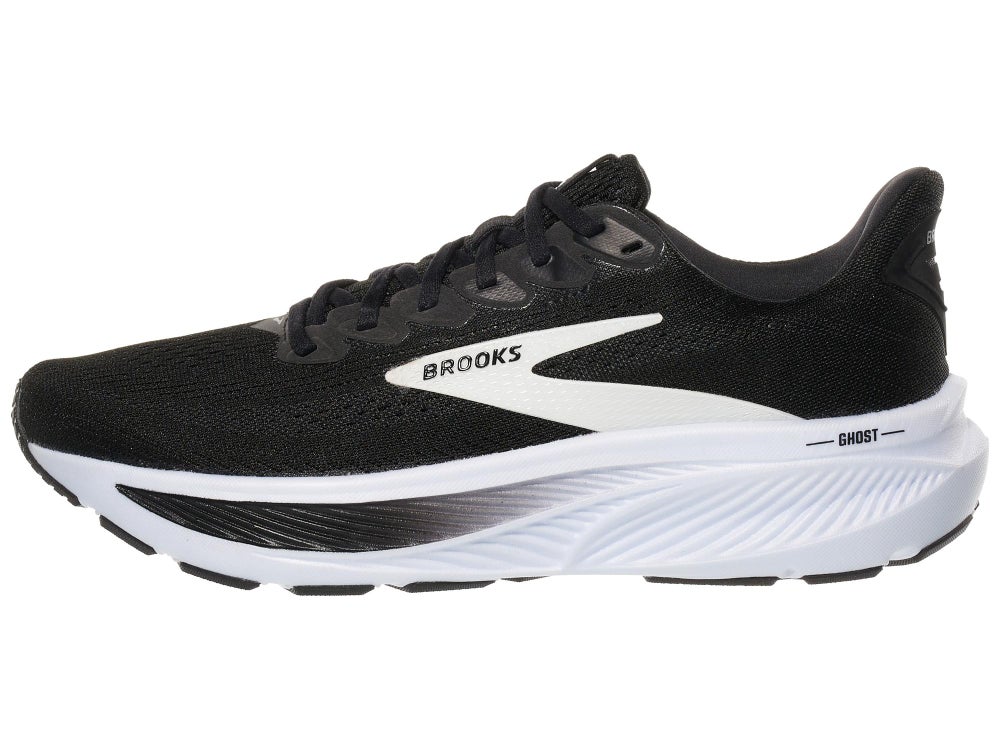
Our best overall — and the best value — is the Brooks Ghost 17 at $112.50 on sale, a safe neutral daily that comes in four widths all the way to 4E. The New Balance 1080v15 is the plush premium pick; the Brooks Adrenaline GTS 25 adds support if you also overpronate; the HOKA Bondi 9 is maximum cushion; and if your toes want to splay rather than fit a wider box, the zero-drop Altra Torin 9 and 5mm-drop Topo Phantom 4 take a different route entirely.
We have not run in all six pairs ourselves — where a fit or width claim is a maker's spec or an independent reviewer's finding rather than something we measured, we say so. Every price, in-stock width, and product image here was verified on July 30, 2026 against Running Warehouse and Fleet Feet, both authorized retailers.
The width problem: what standard shoes get wrong
A running shoe is built around a last — the foot-shaped mold that sets its length, width, and volume. Most trainers are sold on one medium last (a D width for men, B for women). If your foot is wider than that mold, the shoe becomes a vise: the widest part of your forefoot, across the ball and the metatarsal heads, gets squeezed against the upper until your toes go numb, your little toe rubs raw, and hot spots bloom on long runs. That is the constraint. Before the picks, here is what it rules out and why.
You probably have wide feet if: your little toe presses or rubs the side of the upper; the ball of your foot goes numb or tingles after a few miles; you loosen the laces and the shoe still feels tight across the foot rather than along it; the sides of your forefoot bulge over the midsole; or you already buy wide (2E/4E) street shoes. Trace your foot on paper late in the day, when it is at its widest, measure the ball in millimeters, and check it against each brand's width chart — width, not length, is the number that decides fit here.
Why "just size up" is the wrong fix. Going up a half or full size lengthens the last and adds a little height, but the widest point barely changes. You end up with a long shoe that still clamps the ball of your foot, plus a heel that now slips and a tongue you have to cinch down to stop it — which crushes the top of your foot on top of the sides. Sizing up trades one hot spot for three. The only real fix is more room where your foot is actually wide.
The part most guides skip: "wide" comes in two forms. They are not interchangeable, and buying the wrong one is why runners give up and blame the brand.
- A true wide width (2E) or extra-wide (4E). The same shoe, the same length, built on a wider last with more room across the forefoot (and usually the midfoot). This is what Brooks, New Balance, HOKA, Saucony, and ASICS mean by "Wide" and "X-Wide." Best when your whole forefoot — bones and all — is simply broad, and you want a normal, secure heel.
- A naturally roomy anatomical last. Standard width, but shaped foot-like: a wide, rounded toe box that lets your toes splay, with a snugger heel and midfoot. This is Altra's FootShape and Topo Athletic's roomy forefoot. Best when it is your toes that need to spread, not your whole foot, or when even wide-width shoes feel pointy at the very front.
The constraint eliminates single-width flagship trainers and the size-up hack. Everything below is a shoe you can actually buy in a true wide/extra-wide width, or on a genuinely roomy anatomical last, today.
Quick Picks
| Best for | Pick | Why it fits a wide foot |
|---|---|---|
| Best overall + best value | Brooks Ghost 17 | True 2E and 4E widths, safe neutral cushioning, and the lowest price here |
| Best plush premium | New Balance 1080v15 | Soft, tall daily on NB's full B–4E width matrix, up to extra-wide |
| Best for wide feet + overpronation | Brooks Adrenaline GTS 25 | GuideRails support in true 2E/4E widths |
| Best max cushion | HOKA Bondi 9 | A 44mm stack in D/2E/4E — the most underfoot in a real wide |
| Best anatomical toe box (zero drop) | Altra Torin 9 | Roomy FootShape last lets toes splay; standard width |
| Best anatomical toe box (easy drop) | Topo Phantom 4 | Altra-like room with a familiar 5mm drop |
Comparison Table
Prices last verified July 2026. The Brooks Ghost 17 price is a Fleet Feet sale ($150 MSRP) and can end; the New Balance 1080v15 4E extra-wide ships from New Balance or Zappos rather than the linked colorway. Confirm your width and size are in stock before buying.
| Shoe | Widths / fit type | Price | Drop | Weight (men's) | Cushion | Best for |
|---|---|---|---|---|---|---|
| Brooks Ghost 17 | B/D/2E/4E (true wide) | $112.50 sale | 10 mm | 10.1 oz | Moderate | Best overall + value |
| New Balance 1080v15 | B/D/2E/4E (true wide) | $169.95 | 6 mm | 9.1 oz | Plush / tall | Premium daily |
| Brooks Adrenaline GTS 25 | B/D/2E/4E (true wide) | $154.95 | 10 mm | 10.6 oz | Moderate + support | Overpronators |
| HOKA Bondi 9 | D/2E/4E (true wide) | $174.95 | 5 mm | 10.8 oz | Max (44 mm) | Max cushion |
| Altra Torin 9 | Standard width, FootShape | $159.95 | 0 mm | 9.2 oz | Moderate | Toe splay, zero drop |
| Topo Phantom 4 | Standard width, roomy toe box | $149.95 | 5 mm | 9.3 oz | Moderate-plus | Toe splay, easy drop |
Notice the table leads with the width and fit type, not the price — for a wide foot that is the column that decides whether the shoe works at all. Stack, drop, and weight are each maker's own figures.
Methodology
We ranked these for one job: fitting a wide foot without giving up a shoe you would actually want to run in. So the first filter was hard — the shoe has to be offered in a genuine wide/extra-wide width, or built on a naturally roomy anatomical last. That is why most popular flagships are absent: they are sold on one medium width only.
Within that filtered set, we ordered picks by how much room they give and how well they solve a specific foot problem (broad forefoot, splay-happy toes, wide plus overpronation, wide plus a need for max cushion), then by cushioning, weight, drop, and price. We checked every product page on July 30, 2026 for the current model, US price, in-stock widths, stack height, drop, weight, and midsole; we confirmed each product image returned an authorized-retailer asset (HTTP 200, image content-type); and we confirmed each buy link resolved. Where width behavior came from a brand's own spec or from independent testers (RunRepeat, Doctors of Running, Believe in the Run), we treated it as a cited claim, not our own measurement.
What We Checked
What competitors miss is that width is the whole game for this reader, and most guides bury it under stack numbers and foam names. We built the entire ranking around the fit mechanism — and around three honest truths a generic listicle skips.
- There are two kinds of "wide," and they are not the same purchase. We separated true wide widths (Brooks, New Balance, HOKA — 2E and 4E) from naturally roomy anatomical lasts (Altra's FootShape, Topo's roomy toe box) because they fix different feet. A 4E Bondi and a standard-width Altra both "fit wide feet," but a broad-forefoot runner and a splay-toed runner should not buy the same one.
- "Wide" is not a universal standard, and a true 4E is rarer than it looks. Plenty of shoes stop at 2E. We flag which of these actually reach a true 4E extra-wide (the Ghost, Adrenaline, and Bondi do; the 1080 does through New Balance and Zappos) so the widest feet are not stranded at 2E.
- Sale prices and stock are real and moving. The Ghost 17 is a current shoe on a genuine Fleet Feet sale right now, which makes it both our best overall and the cheapest pick — but that is a sale, not a permanent price, so we say so.
Who this is for: runners whose feet go numb, burn, or splay over the midsole in standard-width shoes and who are tired of being told to size up. On a budget, the Ghost 17 gets most people there for the least money. We did not wear-test these six pairs; this is researched editorial judgment from manufacturer and authorized-retailer specs, independent wide-fit reviews, and the prices, widths, and images we confirmed on July 30, 2026.
Why the shoe everyone recommends can fail wide feet
Open almost any "best running shoes" list and the top picks are single-width flagships — a standard Ghost, a Nike Pegasus, an ASICS Novablast — crowned for ride and value. Those are good shoes. On a wide foot, the standard-width version of any of them can be the exact shoe that numbs your toes at mile four, because a great midsole does nothing about a narrow last.
Then comes the trap advice: "if it is snug, size up." As covered above, that lengthens the shoe without widening the ball, so you get a longer shoe that still clamps across the forefoot and now slips at the heel. The fix is not a bigger standard shoe — it is a wider width or a roomier last. The good news: several of those same flagships offer exactly that. The Ghost, Adrenaline, Bondi, and 1080 all come in true wide widths; you just have to select 2E or 4E instead of trusting the default D. The lesson is not "avoid the brand," it is "buy the wide width and ignore anyone who tells you to size up instead."
What actually matters in a wide running shoe
Width vs anatomical shape
Decide first whether your whole forefoot is broad or just your toes want to splay. A broad forefoot wants a true wider width — 2E or 4E from Brooks, New Balance, or HOKA. Toes that want to spread, on an otherwise normal foot, are often happier on a roomy anatomical last (Altra, Topo) at standard width. Buying a width when you needed shape, or the reverse, is the most common wide-foot mistake.
How wide is wide enough (2E vs 4E)
A 2E ("Wide") suits most self-identified wide feet. A 4E ("X-Wide") is for genuinely broad or swelling feet, bunions, or runners who already wear 4E in street shoes. Fewer models reach 4E, so if that is you, start your search from the shoes that offer it — here, the Ghost, Adrenaline, and Bondi, plus the 1080 through New Balance and Zappos.
Heel and midfoot hold
A roomy forefoot is only comfortable if the heel and midfoot still lock down; otherwise you slide forward into the very toe box you paid for. This is where the anatomical shoes earn their keep — Altra and Topo pair a wide toe box with a snug heel — and why a true wide width, which widens the whole shoe proportionally, can suit a foot that is broad all over.
Drop and cushioning
Width does not change how a shoe rides. A 10mm drop (Ghost, Adrenaline) feels familiar to most runners; 5 to 6mm (Bondi, 1080, Phantom) is a touch more natural; and zero drop (Altra) demands a real transition as your calves and Achilles adapt. Match the ride to what you already run in, then get it in your width.
Upper and materials
Engineered mesh and knit uppers give a little but mostly hold their shape, so the underlying width matters more than the fabric's stretch. A structured knit (Bondi) or a plush, accommodating mesh (the 1080) can relieve pressure over the top of a high-volume foot, but none of it substitutes for the right last.
Our top picks
Best overall and best value: Brooks Ghost 17 ($112.50 sale)
The Ghost 17 is the shoe most wide-footed runners should try first. It is a genuinely neutral, do-everything daily trainer — nitrogen-injected DNA Loft v3 cushioning, a smooth 10mm-drop ride, nothing weird to adapt to — and, crucially, Brooks offers it in four widths: Narrow B, Regular D, Wide 2E, and X-Wide 4E, all in stock at Fleet Feet when we checked. A true 4E extra-wide is rare in a mainstream neutral trainer, which is exactly why the Ghost is the safe default: whether your foot is a little wide or a lot, there is a width for it. At $112.50 on a current Fleet Feet sale (MSRP $150) it is also the cheapest pick here, which makes the choice easy — start with the Ghost, and only spend up if you need something it does not do.
Best for: most wide-footed runners who want one safe, roomy daily trainer in a true 2E or 4E width without overthinking it.
Avoid if: you want maximum cushioning (look at the Bondi) or a naturally splay-friendly toe box more than a wider whole shoe (look at Altra or Topo).
Best plush premium: New Balance 1080v15 ($169.95)
The 1080v15 is New Balance's flagship plush daily, and New Balance is the brand most serious about width — it builds the 1080 across a full B / D / 2E / 4E matrix, so a wide or extra-wide foot gets the same soft, tall ride as everyone else. The v15 rides on a new Infinion foam (a supercritical TPEE-and-EVA blend) at a 38mm heel / 32mm forefoot stack and a moderate 6mm drop, with a plush knit upper that is forgiving over the top of the foot. Reviewers note the standard-width forefoot runs narrow — which is precisely the point of choosing 2E or 4E. One honest caveat: Running Warehouse's colorway carries D and 2E; for the 4E extra-wide, order from New Balance or Zappos.
Best for: runners who want a soft, premium, high-mileage daily and value New Balance's full width range, up to 4E.
Avoid if: you want a firmer or lower ride, or you need the 4E and would rather not shop around for a colorway that stocks it.
Best for wide feet that also overpronate: Brooks Adrenaline GTS 25 ($154.95)
Wide feet and overpronation often travel together, and the Adrenaline GTS 25 is the pick when they do. It takes the Ghost's cushioning and adds Brooks' GuideRails — a support system that gently guides your knee and ankle rather than jamming a hard post under your arch — so it steadies an overpronating stride without feeling like a medical device. Like the Ghost, it comes in the full B/D/2E/4E width range, so you are not forced to choose between support and room. It is a firmer, heavier, higher-drop (10mm) shoe than the neutral picks, which is the trade for the stability.
Best for: wide-footed runners who overpronate or want a steadier, more supported daily in a true 2E or 4E width.
Avoid if: you have a neutral gait — the support is wasted weight; get the Ghost. And if your main problem is arch collapse rather than width, see our stability running shoes for flat feet guide first.
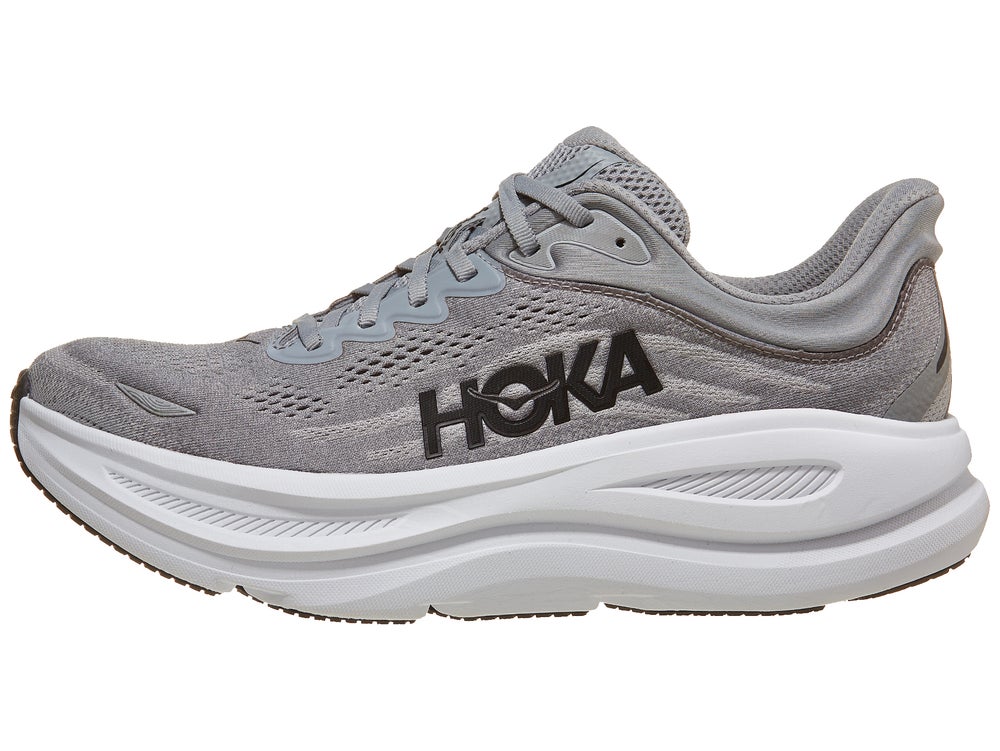
Best max cushion: HOKA Bondi 9 ($174.95)
When you want the most shoe underfoot in a real wide, the Bondi 9 is it. It is HOKA's max-cushion flagship — a towering 44mm heel / 39mm forefoot stack of soft supercritical EVA at a 5mm drop — and, unusually for a shoe this cushioned, it comes in D, 2E (Wide), and 4E (Extra Wide). That combination is hard to find: most pillow-soft trainers stop at a standard width. The structured knit toe box adds a bit of room over the toes on top of the wide fit. At 10.8 oz it is heavy and built for easy days, recovery runs, and long time on feet rather than speed, and a few reviewers feel the "wide" runs slightly less wide than expected — so size and width carefully.
Best for: wide-footed runners who want maximum cushioning for easy and recovery miles, up to a true 4E.
Avoid if: you want a light, responsive shoe, or you find very tall stacks unstable.
Best anatomical toe box (zero drop): Altra Torin 9 ($159.95)
The Torin 9 solves wide feet from a completely different direction. Instead of a wider width, every Altra is built on a foot-shaped "FootShape" last with a wide, rounded toe box that lets your toes spread naturally — and a zero-drop platform that sits your heel and forefoot at the same height. For a runner whose toes are the problem (they splay, they hit the end and the sides of normal shoes) more than the whole forefoot, this can feel like relief a wider-width shoe never quite delivers, because it is shaped for splay rather than just enlarged. The Torin is Altra's cushioned road daily — P35X foam, a balanced 28mm/28mm stack, 9.2 oz. The honest caveat is the zero drop: it loads your calves and Achilles differently, so if you are new to Altra, transition gradually over several weeks rather than racing in them on day one.
Best for: runners whose toes need to splay, or who want a natural-shaped, standard-width alternative to wide-width shoes.
Avoid if: you are not willing to adapt to zero drop, or your whole foot (not just your toes) is broad — a true 2E/4E may fit better.
Best anatomical toe box with an easy drop: Topo Phantom 4 ($149.95)
The Phantom 4 is the answer for runners who love the idea of Altra's roomy toe box but do not want to relearn how to run. Topo builds the same generous, anatomical forefoot — plenty of room for your toes to splay — but pairs it with a secure heel and midfoot and a familiar 5mm drop, so there is no zero-drop adaptation period. It is a cushioned neutral daily (single-piece ZipFoam, a 37mm/32mm stack, 9.3 oz) that rides much like a conventional trainer while staying roomy where it counts. Because the room comes from the last's shape rather than a 2E option, a very broad midfoot might still prefer a true wide width — but for splay-happy toes on an otherwise normal foot, it is ideal.
Best for: runners who want a roomy, toe-splay-friendly forefoot without zero drop's learning curve.
Avoid if: you need a true 2E/4E width across the whole foot, or you want maximum cushioning.
Buying Guide
Start by naming your problem, because "wide" hides two of them. If your whole forefoot is broad, you need a true wider width — go 2E, or 4E if you wear extra-wide in street shoes. The Brooks Ghost 17 is the best and cheapest place to start; add support with the Adrenaline GTS 25 if you overpronate, plush cushioning with the New Balance 1080v15, or maximum cushioning with the HOKA Bondi 9. If instead it is your toes that need to splay, you want a roomy anatomical last: the zero-drop Altra Torin 9 if you will adapt to it, or the easier 5mm-drop Topo Phantom 4 if you will not.
Then set your budget honestly. You do not need a $175 shoe to fit wide feet — the Ghost 17 covers most runners for $112.50 on its current sale, and even at full price the widths that matter are the same $150 as the standard shoe. Spend up only for a specific reason: support (Adrenaline), plush height (1080), max cushion (Bondi), or a natural-shaped last (Altra, Topo).
Finish the fit off the shelf: order your normal length and change only the width, and lace with a wide-foot pattern (skip an eyelet over a high spot; use the runner's loop at the top to lock the heel). If your real issue is arch collapse or overpronation more than width, start with the stability shoes for flat feet guide; if you just want the softest possible ride, the max-cushion long-run guide goes deeper on that; and if you are building your first setup, the beginner running shoe guide and the rest of the running hub cover what comes next.
Common mistakes
- Buying a standard width and sizing up to fix it. It lengthens the shoe, not the ball width, and adds heel slip. Choose a 2E/4E width or a roomier last instead.
- Confusing a wide width with a wide toe box. A 4E Bondi widens the whole shoe; an Altra just shapes the front for splay. Match the fix to whether your forefoot is broad or your toes need room.
- Assuming every shoe comes in 4E. Many stop at 2E. If you need extra-wide, start from the models that actually offer it.
- Trusting the default D width because the model "comes in wide." You have to select 2E or 4E at checkout — the standard listing is still the medium last.
- Overtightening the laces to stop heel slip in a roomy shoe. That crushes the top of your foot. Use a heel-lock lacing pattern instead, or get a shoe with a snugger heel (Altra, Topo).
- Jumping into zero-drop Altras and running your usual mileage on day one. Transition gradually or you will feel it in your calves and Achilles.
- Buying on a sale price without checking that your width and size are in stock. Widths sell out independently; confirm the live listing before you count on it.
FAQs
How do I know if I actually have wide feet?
Trace your foot on paper late in the day, when it is at its widest, and measure across the ball in millimeters, then check it against each brand's width chart — length is not the number that matters here. The everyday signs: your little toe presses the side of the upper, the ball of your foot goes numb after a few miles, the sides bulge over the midsole, the shoe still feels tight across (not along) the foot after you loosen the laces, and you already buy wide street shoes.
Does sizing up fix wide feet?
No. Going up a size lengthens the shoe and adds a little height, but the widest point barely changes, so the ball of your foot is still pinched — now in a longer shoe with a slipping heel. Buy a true wide (2E) or extra-wide (4E) width, or a roomier anatomical last, instead. That is the only real fix.
What is the difference between a 2E width and Altra or Topo's wide toe box?
A 2E (or 4E) width is the same shoe built on a wider last — more room across the whole forefoot, with a normal heel. Altra's FootShape and Topo's roomy forefoot are standard width but shaped foot-like, with a wide, rounded toe box that lets your toes splay and a snugger heel. Pick a wide width if your whole forefoot is broad; pick the anatomical last if it is mainly your toes that need room.
Which brands make a true 4E extra-wide running shoe?
In this guide, the Brooks Ghost 17 and Adrenaline GTS 25 and the HOKA Bondi 9 all reach a true 4E, and New Balance offers the 1080v15 up to 4E through its own site and Zappos. Beyond these, Brooks, New Balance, HOKA, Saucony, and ASICS all offer at least some models in 4E — but many shoes stop at 2E, so if you need extra-wide, start from the models that list it.
Do I need a wide shoe if I overpronate?
Not necessarily — overpronation (your arch rolling inward) and foot width are different things. Plenty of wide-footed runners have neutral gaits and just need room. If you both overpronate and have wide feet, the Brooks Adrenaline GTS 25 gives you GuideRails support in a true 2E/4E width. If your main issue is arch collapse rather than width, start with our stability shoes for flat feet guide instead.
Are wide running shoes more expensive?
Usually not — a wide is the same model on a wider last at the same price as the standard version, not a premium tier. A true wide daily trainer starts around $112.50 here (the Ghost 17 on sale; $150 at full price, the same as the D width). You spend more only for what the shoe does — support, plush height, max cushion — not for the extra width itself.
Common questions
Frequently asked questions
- How do I know if I actually have wide feet?
- Trace your foot on paper late in the day, when it is at its widest, and measure across the ball in millimeters, then check it against each brand's width chart — length is not the number that matters. The everyday signs: your little toe presses the side of the upper, the ball of your foot goes numb after a few miles, the sides bulge over the midsole, the shoe still feels tight across (not along) the foot after you loosen the laces, and you already buy wide street shoes.
- Does sizing up fix wide feet?
- No. Going up a size lengthens the shoe and adds a little height, but the widest point barely changes, so the ball of your foot is still pinched — now in a longer shoe with a slipping heel. Buy a true wide (2E) or extra-wide (4E) width, or a roomier anatomical last, instead. That is the only real fix.
- What is the difference between a 2E width and Altra or Topo's wide toe box?
- A 2E (or 4E) width is the same shoe built on a wider last — more room across the whole forefoot, with a normal heel. Altra's FootShape and Topo's roomy forefoot are standard width but shaped foot-like, with a wide, rounded toe box that lets your toes splay and a snugger heel. Pick a wide width if your whole forefoot is broad; pick the anatomical last if it is mainly your toes that need room.
- Which brands make a true 4E extra-wide running shoe?
- In this guide, the Brooks Ghost 17 and Adrenaline GTS 25 and the HOKA Bondi 9 all reach a true 4E, and New Balance offers the 1080v15 up to 4E through its own site and Zappos. Beyond these, Brooks, New Balance, HOKA, Saucony, and ASICS all offer at least some models in 4E — but many shoes stop at 2E, so if you need extra-wide, start from the models that list it.
- Do I need a wide shoe if I overpronate?
- Not necessarily — overpronation (your arch rolling inward) and foot width are different things. Plenty of wide-footed runners have neutral gaits and just need room. If you both overpronate and have wide feet, the Brooks Adrenaline GTS 25 gives you GuideRails support in a true 2E/4E width. If your main issue is arch collapse rather than width, start with our stability shoes for flat feet guide instead.
- Are wide running shoes more expensive?
- Usually not — a wide is the same model on a wider last at the same price as the standard version, not a premium tier. A true wide daily trainer starts around $112.50 here (the Ghost 17 on sale; $150 at full price, the same as the D width). You spend more only for what the shoe does — support, plush height, max cushion — not for the extra width itself.
References
Sources
- Brooks Ghost 17 men's — price, B/D/2E/4E widths, specs (Fleet Feet, authorized retailer, verified Jul 30, 2026)
- New Balance 1080v15 men's — price, Infinion foam, specs, image (Running Warehouse, verified Jul 30, 2026)
- New Balance 1080v15 — full B/D/2E/4E width range incl. 4E extra-wide (Zappos, verified Jul 30, 2026)
- Brooks Adrenaline GTS 25 men's — price, GuideRails, B/D/2E/4E widths, specs, image (Running Warehouse, verified Jul 30, 2026)
- HOKA Bondi 9 men's — price, D/2E/4E widths, 44mm stack specs, image (Running Warehouse, verified Jul 30, 2026)
- Altra Torin 9 men's — price, zero-drop FootShape specs, image (Running Warehouse, verified Jul 30, 2026)
- Topo Athletic Phantom 4 men's — price, roomy toe box + 5mm drop specs, image (Running Warehouse, verified Jul 30, 2026)
Keep reading
Related guides

Best stability running shoes for flat feet (2026)
Supportive running shoes for flat feet and overpronation, compared by stability approach, width options, price, and fit risk.
May 29, 2026
Best max cushion running shoes for long runs (2026): 7 plush picks by cushion and weight
The best max-cushion running shoes for long runs in 2026, from the $155 Nike Vomero 18 to the HOKA Skyward X 2 — ranked by cushion, weight, and price.
Jul 29, 2026

Best running shoes for beginners (2026)
The best beginner running shoes for easy miles, walk-run plans, wide feet, and budget-conscious new runners.
May 29, 2026
Best headlamp for running (2026): 8 picks ranked by the light you can actually hold
Eight running headlamps from $69.95-$249.95 ranked by sustained lumens you can hold for a whole run, not the boost figure printed on the box.
Aug 17, 2026